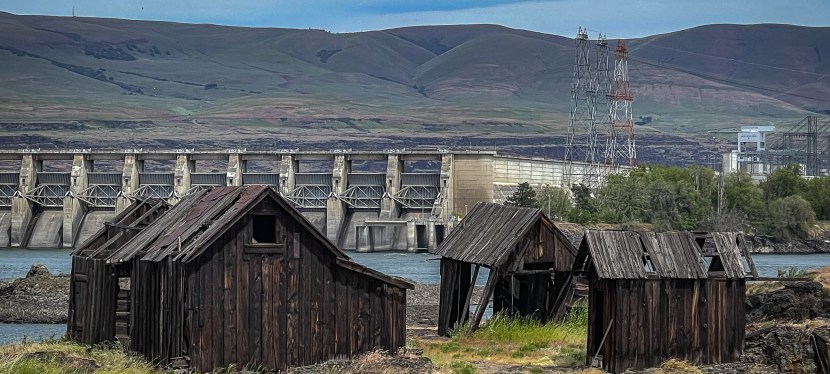
Northwest Outdoor Writers Association Gathered in The Dalles, Oregon

The Northwest Outdoor Writers Association (NOWA) held its annual conference Friday, May 2nd through Sunday, May 4th, at the Columbia River Hotel in The Dalles, Oregon. For three days, some of the Northwest’s top outdoor writers, authors, photographers, videographers, and radio and podcast personalities gathered to discuss the future of their industry and craft.

The conference opened with a fine meal at the Portage Grill, followed by a keynote speech by author, poet, and publisher, Rick Steber, who exemplified excellence in storytelling. Rick is not only gifted in his ability to research people and history and share those stories in engaging detail, but the delivery of his many favorite interviews of historical figures (including voice impersonations) was both comical and fascinating.

Image of the twisting historic Oregon Route 30 taken from Rowen Crest with the Columbia River and the rugged Columbia Gorge in the background.

Trumbo captured this image while hiking at dawn on Rowen Crest just south of The Dalles, Oregon.

Over the following days, NOWA members sprinkled across the Columbia River Gorge to experience all The Dalles has to offer, such as the National Neon Sign Museum, hiking among the wildflowers and scrub oaks of the rugged river corridor, visiting ancient petroglyphs at Horsethief Lake, and fishing the spring Chinook salmon rodeo at Washington’s Drano Lake.

When not collecting memories, photographs, and fodder for future publications and videos, the outdoor media professionals gathered to share tips and tricks on improving one’s engagement and reach – facets of “Excellence in Craft”- and share business model ideas and successes. Excellence in Craft presentations included George Krumm, editor of Fish Alaska and Hunt Alaska magazines, who discussed how to land pitches and build relationships with editors. Brad Trumbo shared his rise in the outdoor writing and photography realm and engagement with his readers, thanks to his Llewellin setter bird dogs.

NOWA held its annual Excellence in Craft awards banquet Saturday, May 3rd, where 61 achievements were recognized, ranging from “Column of the Year” to the best outdoor photos, videos and humor pieces. The awards banquet offers an opportunity to see where talented outdoor content creators stand among their peers, provides “street cred” for marketing, and offers a fine payout for those who rank high in many categories. It’s a coveted experience for this highly talented group to share camaraderie with friendly competition.

This year’s Excellence in Craft award winners can be found here: https://nowaoutdoors.com/eic-winners-by-category/.

Black-chinned hummingbird hovering over a burgundy Columbine flower.

Trumbo’s image of a black-chinned hummingbird hovering over Columbine flowers took 1st place in NOWA’s Excellence in Craft “Fauna” photo category.

The weekend closed with NOWA President Troy Rodakowski presiding over Sunday morning’s membership and business meeting. During this meeting, Rodakowski assumed the position of NOWA’s Chairman of the Board of Directors as he passed the gavel to NOWA’s incoming President, Brad Trumbo. 

With the annual conference behind them, NOWA’s new year begins with anticipation of next year’s conference, which is already being planned. Additionally, Trumbo brings new ideas to NOWA’s structure and attempts to engage younger generations as the organization adapts to the evolution of outdoor media.

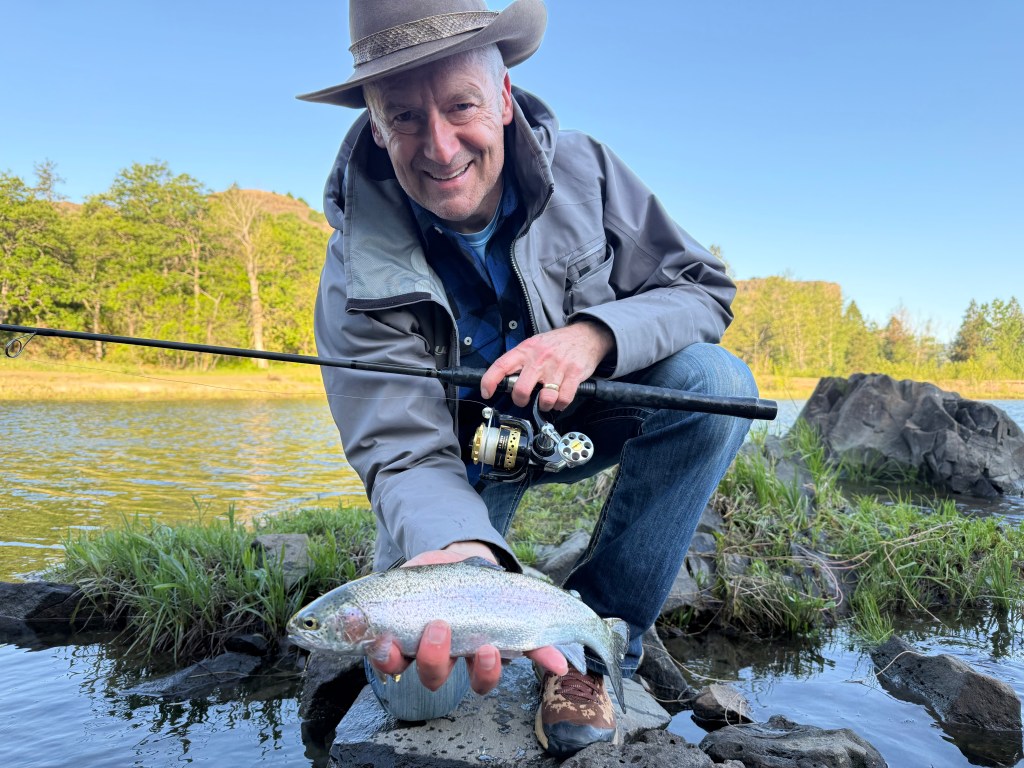
Gary Lewis, award winning author, freelance writer, podcaster, and host of the Frontier Unlimited TV show, found time for trout fishing before the Sunday morning meeting.

If you’re an outdoor content creator living in Oregon, Washington, Idaho, Montana, or BC Canada and want to learn from and contribute to this charismatic and savvy collection of media professionals, email NOWA’s Executive Director, Keith Szafranski, at photogsz@msn.com. Your creativity and energy will be welcomed by this prestigious cadre.

###

            The Northwest Outdoor Writers Association is a society of professional outdoor communicators dedicated to the pursuit of excellence in outdoor media. NOWA strives to further the improvement of professional communications skills and encourage their ethical employment. NOWA also provides a network of professional assistance and support, keeps members informed of news and information pertinent to outdoor activities and industries, and supports the conservation of natural and recreational resources. Visit https://nowaoutdoors.com/ and find us on Instagram @NOWAOutdoors.

Steppe Outside – Home Waters Flow Gentle on My Mind 

Published in the Walla Walla Union Bulletin November 9th, 2024

A mountain trout stream gently winds through the back of my mind. Its headwaters begin near the Oregon border and drop precipitously north. Picking up tributaries as it rolls, the creek reaches third-order status, where it begins building year-round trout habitat. Its twists and turns, log jams, and pools are all familiar. 

My parents would tell you that I was a fishing addict as a kid, which I cannot argue, but the fact that a trout creek flows into my stream of consciousness at the height of the upland bird season is telling. I’ve suffered as a “jack of all trades” my entire life, meaning I find fulfillment in nearly anything fish, wildlife, and outdoors related, especially now with a love for photography. As an adult, however, the closest thing I’ve experienced to addiction is upland bird hunting. 

This trout stream is near home and was my muse before my first setter pup arrived. We saw each other weekly, regardless of whether the fishing season was open. It’s close enough to be worth the trip but far enough to require commitment. Too far for killing a half-hour, but a morning, afternoon, even a whole day can be amply invested.

I cut my trout teeth on the blue lines descending from the George Washington National Forest and Shenandoah National Park. Eventually, one stream took priority – my home stream. The stream that I could see from my parents’ front room vista. It wasn’t the best or easiest fishing around, but it was close and offered a mile of worthy wild trout water. To say that I knew that water well would be an understatement. It was hard to leave it when I moved west, and even harder in 2020 when I caught my last Appalachian brook trout in those stair-step plunge pools. My beloved valley home overlooking the drainage sold a month later. 

The beauty of home waters is the intimacy one can establish with them. It is not entirely different from the intimacy between lovers, although the relationship appears one-sided on the surface. The angler walks the banks, noting the curves, the sweet spots and transition zones, the seasonal moods, where to tread lightly, and where to take charge. Meanwhile, the stream flows with the lifeblood that the mountain feeds it. It rearranges the furniture here and there and thrusts a hip this way or that following the spring freshet, but the angler who pays due diligence is rewarded with more than wild trout.

There’s an old saying that “an elephant never forgets.” I’ve found the same true for bird dogs and trout bums. Bird dogs catalog every bird they’ve ever found and will visit those spots whenever they hunt the same property. Identically, trout fishermen recall every rise and catalog the log jam, flow seam, backwater, or grasses overhanging the run where the hookup occurred. This plays into the intimacy a trout angler develops with their home waters. These are the sweet spots that are revisited time and again. After a few years of fishing their home waters, a trout bum can identify the pools and runs by the sound of the water pouring over rocks and wood.

October is arguably one of the best months for mountain stream fishing—the heat of summer breaks, giving way to seasonal change. The riparian corridor is decorated in autumn gold. Cooler water invigorates the speckled gems fining in the tail-outs and prompts giant October caddis to flutter clumsily over the creek, offering a royal meal as they dip in to lay eggs. I rarely missed an October weekend on the stream in what feels like an alternate life. Now, the opposite is true. 

It had been two Octobers since my last autumn visit. With unusual heat putting the brakes on upland bird hunting plans, my mind scrolled through the many productive uses of time. The notion of fishing the home waters trickled in and caught fire like pouring gasoline on a flame. The only decision was where to start, but the decision was already made. A preferred reach continually lingers upon one’s subconscious, awaiting the opportunity to surface.

My waders swished, and sweat soaked the brim of a blaze orange ball cap as I approached a lesser-fished stretch of water that’s difficult to navigate and has relatively little fishy habitat compared to other reaches. Three specific pools in this reach speak to my flavor of fly presentation when the water is low, and this autumn has been unusually dry. Casts would be short, and line control would be critical.

A thirteen-foot tenkara rod with an equal length of fly line represents an effective, simplistic, centuries-old Japanese fly-fishing method developed for mountain streams. Using the grasses, trees, and woody debris to creep within ten feet of a beautiful log jam pool, I gently flopped an absurdly-sized “stimulator” fly into the still waters beside the flow plunging over the logs. Within seconds, a ten-inch rainbow pounced on the moth-sized fly.

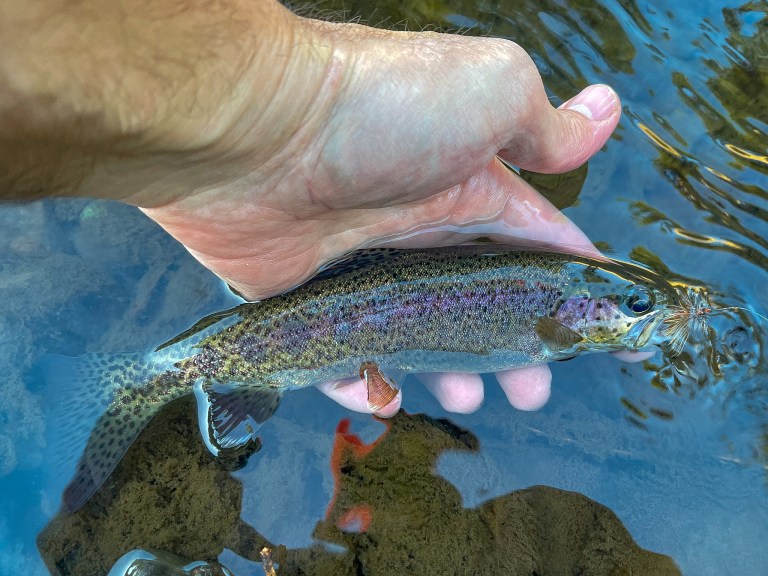
The feisty rainbow came to hand, and like every other from this river, the deep purple of the lateral line and olive-shaped parr marks beneath a dusting of black speckles presented a masterful work of art. I studied the fish briefly, admiring its features and glistening silver, gold, and olive scales, each individually defined. Then, freeing the fish from the fluffy fly, it darted back into the shadow of the log.

Trout are a marvel of nature regardless of the time of year, but mountain stream trout glow with a particular radiance in fall, as if reflecting the seasonal color change of the riparian flora. They are muscular from a spring of high water and spawning, and a summer of eating hoppers, caddis, and stoneflies. Their rise is deliberate, calculated, and executed with precision and efficiency to avoid expending energy unnecessarily.

Rainbows have risen to a fly in this pool for years, but the pool wasn’t always present. Before stream restoration efforts, this reach was characterized by shallow riffles and slightly deeper runs with little wood or boulder cover and no pools. Juvenile Chinook salmon and tiny rainbows rose to any small fly along the flow seams, but bigger fish were few and far between. Fortunately, constructed log jams and the 2020 flood cooperated to provide more quality habitat throughout the mainstem.

Having fished mountain trout streams across nearly a dozen states and 3,000 miles in several directions, I can offer that good water is good water, regardless of where you fish. Sometimes, that’s easy to describe. Other times, the popular cliché “when you know, you know,” is all there is to be said. Fly placement is somewhat universal, born of experience reading water and, occasionally, dumb luck. Deciding which to thank for a trout rise is hard, but experience pays on home waters. 

“I bet that fish spooked the entire pool,” I thought, confident that no other fish would bite after blowing up the thirty-six-square-foot pocket of skinny flow. “Well, what the hell. I’m here,” I thought, flopping the now waterlogged fly into a tucked-away spot slightly closer to the shore where I stood.

Using the rod’s length to keep the line high and the fly afloat, I bounced the fly atop the water like an October caddis laying its eggs. To my surprise, another similar-sized rainbow rose for the fly. It’s possible that another seasoned angler could find equivalent success on a new waterbody in a scenario like that. Still, I take comfort in telling myself that an unlikely second fish rose because I know how to fish “my stream.” 

 The following pools fished the same, and I even discovered a new side channel pocket that has scoured over the past several years to form a beautiful bend pool. I had seen that side channel before but ignored it for bigger water. The pocket is exceptionally tight, with no casting room. I merely dangled the fly from a high stick posture about ten feet away, tempting a rainbow to emerge from nearly underfoot to inhale the fly. 

“This will never work. It’s too close,” I thought as I laid the fly on the water’s surface. Being wrong isn’t always bad.

My visit was brief. Just long enough to land a half-dozen gorgeous rainbows. Glenn Campbell’s “Gentle on My Mind” aptly played in my subconscious in time with the tumbling water. 

In his most recent and final book, “Dumb Luck and the Kindness of Strangers,” renowned fly-fishing author John Gierach explicates on his home waters, as in many of his twenty-one previous volumes.

“On rare days, it’s something as vague as a quality of light or certain stillness in the air that seems to make the water vibrate with possibility, but I think that’s less mystical than it sounds. It’s just that some of the things you know about your home water operate beneath the level of full consciousness and only reveal themselves disguised as intuition.”

Gierach’s experience came from intimately knowing his home waters, and his gift for sharing that intimacy through a conversational read inspired generations of fly anglers, myself included. There’s something to be said about the feeling one gets when standing streamside, influenced by the sun, temperature, breeze, cloud cover, and the carefree notion of having already succeeded in the endeavor without yet wetting a fly.

Catching fish in the home waters is not the point but is generally accepted as a scientific law. “If” is not a question, nor is the fish the reward. Wild turkey hens shepherd their chicks through the upland riparian edges among violet lupine in spring, and birdsong envelopes the stream. Ruffed grouse drum, valley quail call from the blackberry tangles, and black bears gorge on the sweet, dark berries. Salmon flies and October caddis predict the seasons, and a number sixteen Adams is always welcomed. Somewhere between the roar of the rushing waters and a pointed focus on landing the fly in “the spot on the spot,” one’s true self appears, completely at ease, in a world secluded from reality—a state of being achieved only on the home waters. 

While I don’t spend nearly the time on my stream compared to a decade ago, our relationship is steadfast. I’ve learned her language. She patiently awaits, her waters forever flowing gentle on my mind.

Footnote – John Gierach died on October 3rd, 2024, at age 77. An average man with an appreciation for the average angling experience and hot coffee, he possessed an extraordinary ability with words and inspiration. This story presents a style slightly different than Trumbo’s norm. A tip of the hat to Gierach for developing friendships with his readers by writing as if he were engaged in conversation.

Gift Guide for the Discernible Outdoor Enthusiast

Originally Published in Walla Walla Lifestyles Magazine, November 2024.

Crisp air, pumpkin ale, fresh-squeezed apple cider, and hunting seasons have finally returned, and you know what that means. Yes, we are living our best months of the year, but this time train we all ride is screaming toward Christmas and holiday shopping. If you have an outdoors enthusiast in your life who is “hard to shop for,” i.e. buys whatever gear they need when they need it and has a particular taste, here are a few ideas that might be right up their alley.

Vintage Shotguns

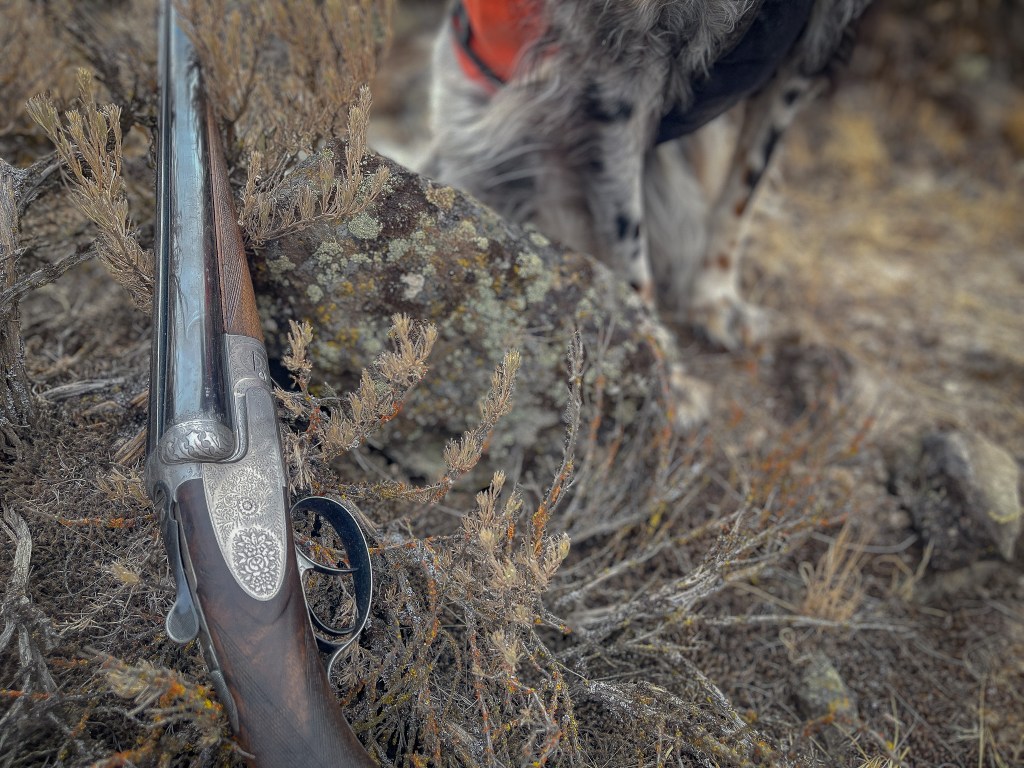
This beautiful 1951 Belgium-made CF Dumoulin 16-gauge is a fine and affordable vintage double for the traditional upland bird hunter.

Nearly every upland bird hunter dreams of carrying a vintage double-barrel shotgun. Whether their fascination originated at a young age with a family heirloom or the quality craftsmanship of vintage guns connects them to a long-standing tradition, bird hunting with a piece of American sporting heritage enhances the experience. Maybe your bird hunter has a particular brand in mind, like an A.H. Fox, L.C. Smith, Lefever, or Ithaca. Each of these can be found online and at gun shops with regularity. The Spokane area has several gun shops with a good selection of used shotguns. They even turn up in Cabela’s “Gun Library” from time to time.

I was browsing the Eugene, Oregon, Cabela’s once for no particularly good reason when a long, pewter-colored side-by-side caught my eye. It was a beautiful L.C. Smith Field Grade 00 made in 1911. I asked to see the gun out of curiosity, assuming the price tag was above my pay grade. Conversely, the gun was affordable due to a small dent in the left barrel and a refinished stock. Playing it cool, I haggled a little (yes, that’s acceptable), noting the dent and stock work, then strolled out with the superb specimen sporting an action smoother and tighter than any newer gun that I own. Whenever I swing the “Elsie” on a passing quail, I feel giddy, like it’s stolen property. The bird hunter in your life would likely feel the same.

A great source of information and where to find “hot buys” for vintage double guns is at dogsanddoubles.com.

Custom Knives

This pair of small, packable, attractive knives from the Upland Knife Company are a fine addition to any hunter’s gear collection.

Speaking of craftsmanship, all outdoorsy folks need a quality knife or two—maybe three. Knives are a dime a dozen from any typical outdoor retailer, but the blades are often made of lesser-quality steel and fail to hold an edge or take one when sharpened. Fortunately, there are knife makers nearby with a fine reputation.

Three custom knives from the same maker in Hamilton, Montana, are floating around in my upland hunting gear. Two are lightweight and slim for easy packing in a hunting vest. The third is a little larger, boasting a custom wood handle, precisely designed, cut, and pieced together with painstaking detail. The blades are of the highest quality, hammered out, and sharpened onsite—one hundred percent heirloom-worthy.

Who is the knifemaker? Michael Thomspon, owner of the Upland Knife Company (www.uplandknives.com). He accepts custom order requests, and if you’re lucky, you can find a knife or two of his design ready for purchase on the website. Follow him on Instagram @upland_knife_co for sneak peeks and product drops.

Outdoor Journals

More than a simple journal, “The Rambler” by Freeman and Sons Supply comes with an Opinel #8 knife and offers many pockets for a variety of needs.

Considering gifting the average human with a journal may not seem like a slam dunk, but I assure you, the outdoorsy folks in your life will like this recommendation. It’s a rare hunter or angler these days that doesn’t at least keep technical notes on their outings. More often, they tell a bit of the story when fish and game come to hand. If Instagram provides any reliable evidence, nearly everyone posting a pic with a fish, buck, bull elk, or brace of birds with their dogs will offer a few lines about how it all came together. That’s why “The Rambler” field journal from Freeman and Sons Supply (https://www.etsy.com/shop/Freemanandsonssupply) makes a fine gift.

The Rambler is a handsome, high-quality, handcrafted leather tool that comes with a Field Notes brand journal and iconic Opinel No. 8 pocket knife, made in the French Alps since 1890. The front pockets are designed for a pen and pocket knife. The rear pockets hold business cards, cash, or whatever else you decide to tuck into them. The Rambler goes where I go to capture the details of every outing. Sometimes, I take it to meetings where business cards and other notetaking needs are handy. Slip one into your special someone’s stocking this year. They’ll be glad you did.

Custom Fly Rods

Custom fishing rods like these Batson Enterprise Rainshadow fly rods provide a one-of-a-kind fishing experience and a beautiful, quality tool for the fisherman or woman in your life.

Okay, let’s agree that fishing rod-making technology has flooded the market with high-quality products at most price points, from the Echo starter package to the Orvis Helios. It’s truly hard to go wrong. However, a handcrafted fly rod, made to spec or off-the-shelf, takes excellence to a new level. Where to find one? The “Red Shed Fly Shop” in Peck, Idaho (www.redshedflyshop.com).

Why is it called the Red Shed? Take an afternoon drive up the scenic Clearwater River and see why you shouldn’t judge a book by its cover. The weathered little shed has a few fly-fishing gear banners on the front but looks more like a backwoods beer-drinking cabin from the outside. Open the door, however, and stare in awe at the wealth of gear and knowledge that packs the little shed to the gills.

Owners Mike and Linda Cummins offer everything from waders, flies, and nets to custom Burkheimer rods that line the ceiling. Handle one of the Burkheimers, inspect the detail in the guide wraps and grip, and note the rod’s balance, as it feels weightless in your hand. Whether sending dry flies or streamers or throwing “the meat” for steelhead on a two-handed rod, it will fish like a weapon if it came from the Red Shed.

Commissioned Artwork

Capture that magic moment with artwork, like this painting by Alan Rasmussen of a wild rooster that young Llewellin setter Zeta pinned on of our favorite and difficult public coverts.

Like fishing rod-making, technology has put the power of photography at our fingertips with every smartphone, and people are documenting everything. But one thing that cannot be replaced with technology is an artist’s touch. Commissioning a painting for that magic moment in the wilderness, a big buttery brown trout, Snake River steelhead, or a bird with your best pointing dog can cement the memory with elegance.

One such moment happened last fall when my youngest setter, Zeta, pinned a wild rooster pheasant in one of the toughest covers I have hunted because the birds have such an advantage. I had not taken a bird in seven years of hunting those bunchgrass hills, but Zeta held the bird while I waded through 200 yards of Great Basin wildrye for the flush. I sent a photo of Zeta and her rooster standing above the property to Alan Rasmussen (www.alanrasmussenartwork.com), a phenomenal wildlife artist in Utah. My one request was to make the fall colors pop on the deciduous trees behind Zeta. Alan returned to me a picturesque interpretation of the scene and a perfect portrayal of Zeta, right down to the freckles on her muzzle. See his work online or on Instagram @alan.d.rasmussen.

If your special someone has a favorite style of artwork, there’s an artist willing to deliver it for you at an affordable rate. You can find them on Instagram, for example, by searching terms like “commissioned art,” “upland art,” and “oil painting.” Many of these artists also offer affordable prints of their original pieces as an alternative.

These few gift ideas encompass built-to-last craftsmanship, stunning good looks, and superior skill and utility that every hunter, angler, hiker, biker, climber, etc., will appreciate, so check them out. If nothing else, they will help get your creative juices flowing. Remember, commissioned items take time to complete, so contact those vendors early if you wish to have them for the holidays. Happy shopping!

Steppe Outside – An Old Boat Presents New Opportunities

Originally published in the Walla Walla Union Bulletin, August 10th, 2024.

It felt odd sipping whiskey in a dimly lit bar with the sun riding high at two in the afternoon. Not so strange for a Saturday in my college years, but somewhat out of character for a middle-aged man, without context. The occasion was celebratory. Local author Dennis Dauble and I made small talk and discussed his fine day of book sales following a signing for his new release, “A Rustic Cabin,” a book sharing the follies and fortune of owning a log cabin and a small slice of heaven on a remote forest stream.

Dennis is best known for his fishing literature. Hence, it was only natural that our conversation evolved from his cabin book to fly-fishing and the Columbia River sockeye salmon run that was just turning on.

“They’re here. Looks like 4,000 over McNary yesterday and increasing daily,” Dennis noted.

“Any predictions on the run this year?”

“At least average, maybe a bit above. You should come out with me this week. I’ve got to get on the water, but my daughter just returned the boat I gave her, and I need to find a place to store it ASAP. The homeowner’s association won’t allow it to sit at my place, and the boat storage has quadrupled in price over the past two years.”

A friend subtly offering that kind of information amidst a routine fishing conversation highlights their mastery of piquing one’s interest. Before divulging any details of the vessel, Dennis mentioned his need to move it without offering a sale, which led me to believe the boat was both valuable and of interest to me.

“Oh? Tell me about this boat,” I replied, forgetting the sockeye fishing offer entirely.

“It’s just a little 12-foot Starcraft with an 8-horsepower outboard that I used to buzz around in while steelhead fishing. It’s a good boat for a calm day on the river.”

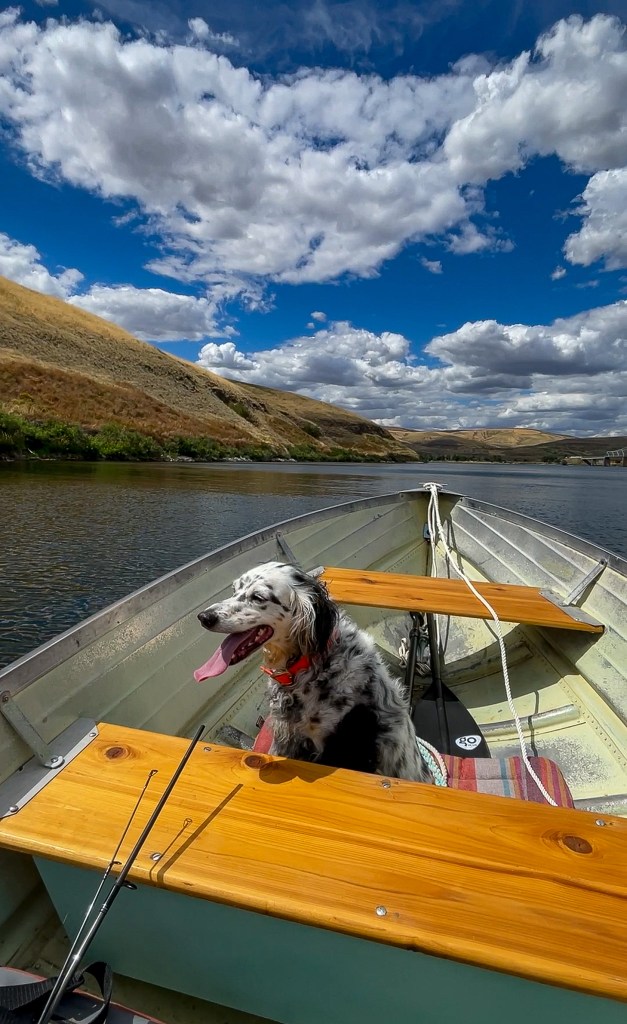
Whiskey on an empty stomach was a poor precursor to this conversation. Anyone who has ever owned a boat knows there is no justifiable “need” for one, save for Dennis and another friend, Chas, who both get their time and money’s worth out of their fishing vessels. On the other hand, I knew perfectly well the limited use I would get from a small boat. Still, the hamster jumped on the wheel and spun my mind into thoughts of hard-to-reach bird hunting spots, should the boat be capable of navigating the Snake River. Visions of a black-and-white setter on the bow with her ears flapping in the breeze and a classic double-gun resting on the front seat as we motored toward remote pheasant habitat was all the convincing I needed.

Dennis must have seen that I was on the line, but being a conscientious man, he allowed me some slack and changed the subject. “I’ll send you a couple of photos tonight.”

That evening, a text message revealed a photo of the boat under a navy-blue canvas cover, parked snugly beneath the pines along Dennis’ driveway. Additional images arrived via email identifying a well-loved Starcraft with freshly restored wooden bench seats, the bottoms painted with the original (or nearly matching) turquoise interior scheme. My gravitation to nostalgia and restoration projects and the quality work Dennis had done on the bench seats sealed the deal.

“I think I need to look at that boat. I’m off work this coming Wednesday. I can drop in if you need to move it sooner than later,” I replied.

“Wednesday will work. Be here at 9:30 a.m.”

Upon arriving at Dennis’ home, the little boat’s homemade trailer was the most eye-catching piece of the package. Rusty red tube steel was crafted into a perfect boat-shaped frame with dry-rotted rubber rollers and cushions. The axle was crafted from an old vehicle I-beam front end, possibly from a junkyard street rod, and welded together in the center with four slabs of flat three-eights-inch steel. Two long-traveling leaf springs supported the trailer frame, and the entire rig rode upon tires large enough to fit my pickup. The axle was overkill for a 120-pound riveted aluminum dinghy, but a stout trailer axle is far better than a weak one, and this one would be easy to repair when needed.

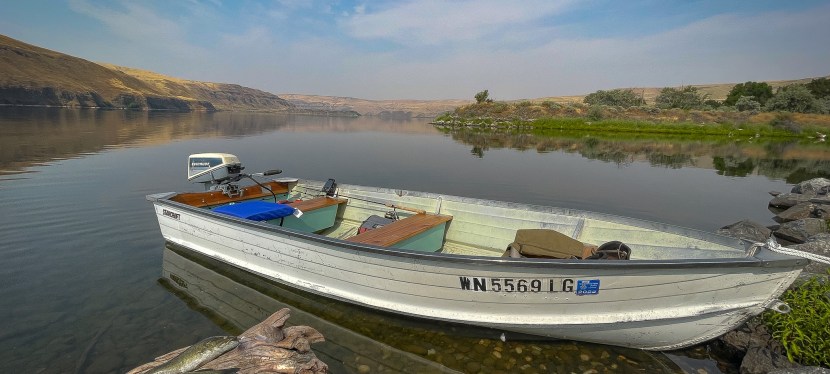
Throwing off the blue canvas cover revealed a 12-foot Starcraft “Super Star” that was in far better condition than I had expected. Starcraft made the Super Star model between 1968 and 1972. This one is titled for its inaugural year.  Most old metal boats have dinted floors and support ribs, among other maladies they incur from reckless handling, mainly due to being lightweight. The outside white paint was scraped and chipped, and the Starcraft emblem was missing from the starboard side, but that was it. She was perfectly clean otherwise, and Dennis’ phenomenal craftsmanship on the bench seats and transom made it look that much better.

Starcraft marketed the Super Star on its durability, stability, versatility, ease of handling, and affordability. Its price tag was $255 in 1968, which translates to around $2,300 today. Surprisingly, this is comparable to the sale price of similar aluminum boats, which seems like a deal, considering a nice standup paddleboard will cost you a grand these days.

Dennis revealed the 1985 Evinrude 8-horsepower outboard with two three-gallon fuel tanks hidden in the outdoor storage beside the house. The vintage two-cycle was compact and lightweight at only 56 pounds (according to Evinrude specifications). Still, as Dennis and I dropped it onto the transom, the trailer tongue quickly rose skyward. Alternatively, hitching the trailer to my truck allowed us to attach the motor and give it a once-over. It had not run in a couple of years, and the cowling appeared worn from nearly 40 years of sun exposure. Beneath the cowling, however, was a cleaner little two-cylinder engine than I had seen in many years of operating and maintaining a fleet of working boats as a fish biologist. Suffice it to say, I had seen enough.

“You can think on it for a while,” Dennis allowed, not wanting to be too pushy.

“I’ll take her!” I exclaimed. Truthfully, I find classic toys irresistible. They feed my personality type, which is fascinated with history and tradition, and passionate about restoring quality-made, old-fashioned sporting equipment.

With a quickly-scribbled check and some signatures on the bills of sale, I was out the door with my new antique toy.

The hour and fifteen-minute drive allowed ample time to proceed through the gamut of emotions from excitement to guilt. Depositing that cash into home maintenance or other necessary expenses throughout the year would have been the responsible thing to do. However, Ali and I shared a frank conversation the day prior about our unrelenting prioritization of responsibilities over living life and suffering the consequences of such choices. We chose the homestead life, and each have a side gig or two tacked onto day jobs, but there is more to life and time to live it if we just stop for a moment. That conversation resonated as I inspected the boat in Dennis’ driveway.

I spent the following two weeks tinkering before testing her seaworthiness, which was a welcomed distraction from the mundane summer chores. Boats and trailers are an upkeep and customizable bottomless pit. And, like a classic muscle car junkie, I identified updates that meant little to the boat or trailer’s performance but enjoyed the fiddling. Rubber pads, chains, winch, lighting, cleaning fuel tanks, and finally starting the engine all felt like worthwhile improvements for safe and reliable use.

“I’ll bet I have to take the motor to a marina for repair,” I told Ali the morning I set out to fire it up. Outboards that sit around often refuse to start for countless reasons. Nevertheless, I hooked up a fresh tank of fuel, primed the line, and pulled the cord.

The good news was that the compression felt great. The bad news was that 10 minutes later, the engine had not even pretended to fire. I had no idea what the idle adjustment meant or how often or long to choke the carburetor. I was learning on the fly. I was sure that old fuel likely needed to be pushed through the carburetor, so I made a series of adjustments while squeezing and holding pressure on the siphon bulb and struggling to pull the cord with weary arms.

Finally, she bucked like a stubborn foal sending a warning kick as you try walking behind it. Also, like breaking a horse, the motor continued to kick and stall, as if refusing the saddle, but understanding the purpose of my efforts. After half an hour, the little engine came to life and ran as smoothly as new. It even shifted smoothly, without grinding or lurching. Last was to ensure the water pump worked, so I ran it at various speeds in a water trough for another half an hour to ensure that it “peed” the entire time.

The final test was ensuring engine functionality, which I had accomplished much earlier in the day than anticipated. So, I tossed my black-and-white setter, Yuba, and some fishing gear in the truck and headed for the Port of Garfield boat launch for the maiden voyage.

Starcraft specifications suggest a 500-pound weight capacity. The fuel, motor, and I comprise over two-thirds of that, and she struggled to get “on plane” with two-thirds of the payload stacked in the back of the boat. However, with a little weight shift toward the middle, the bow came down, and the boat moved faster than I could paddle a kayak, which was a win in my book.

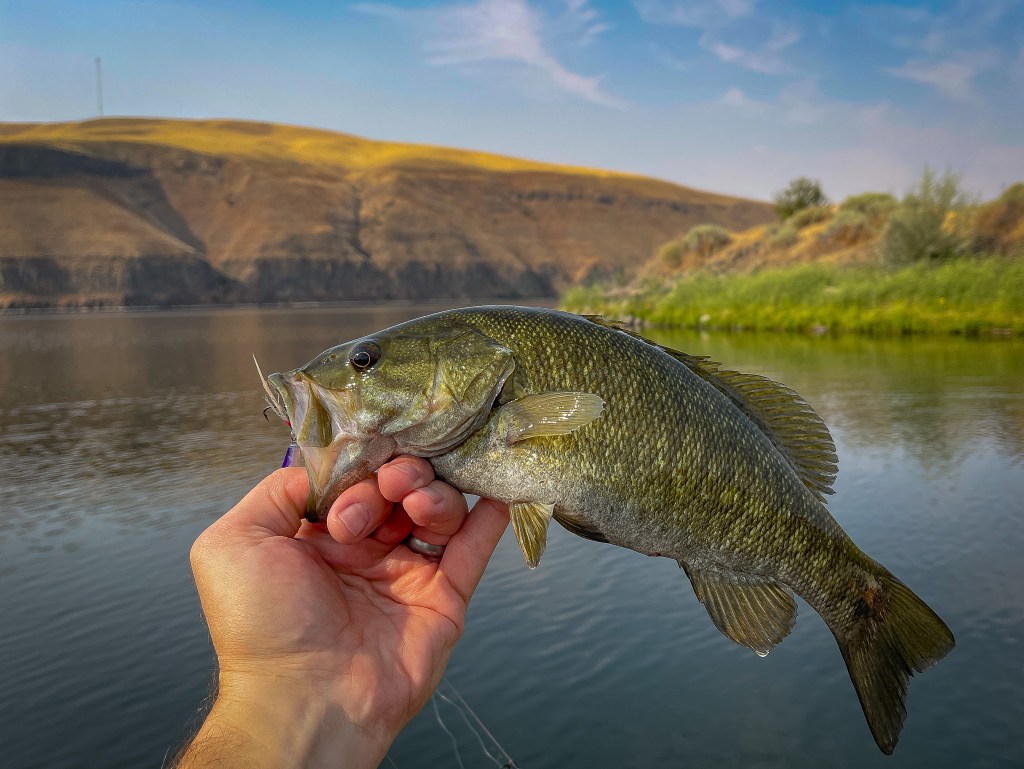
Yuba and I puttered around on the backwater at Deadman and Meadow Creeks, catching a few smallmouth bass and feeling out the motor operations. I focused on the boat’s handling while Yuba built confidence that the boat was not simply a vehicle of certain death. While not the most powerful on the water or a threat to breaking any speed records, she was worthy of being a “whatever” vessel, meaning if I could conjure it, she could handle it sans alacrity. And, as Dennis mentioned, tackling the open river was best left to calm days.

With a successful float test behind us, Yuba and I drove home with the windows down and the radio cranked. The moment sent me back to the “good ole days” driving home on a muggy summer evening, wet, muddy, and tired from catching too many bass on the Shenandoah River. That drive typically included grabbing a 12-pack and burger meat for an impromptu barbecue with my buddies, which sounded mighty fine.

Yuba stood on the truck door with her head and shoulders out the window, her jowls and ears competing for the most dramatic flap in the 90-degree heat. The fishing days with my old Sears and Roebuck 10-foot boat, which was like a Starcraft without flare and class, came to mind. It was suddenly clear that the Super Star had floated me back to when life was truly carefree. This sought-after feeling is something that many of us seek in vintage items, be it a shotgun, bamboo fly rod, muscle car, etc. I never expected it to come from the little Super Star, nor did I expect to enjoy owning it so much more at that moment. The guilt of using funds “better spent elsewhere” instantly sank into the waters of “no regrets.”

Palouse Outdoors – Stay Safe Outdoors with a Satellite Communication System

Published April 4th, 2024, in The Waitsburg Times

Hunting, fishing, and hiking always seemed vanilla to me when it comes to the potential for injury and death. That could be one reason that a passion for the outdoors hit me when I was a child. My brothers chided me for being a “sissy,” and the best escape from the ridicule was avoidance somewhere beneath the trees on the neighboring woodlots.

I began tree-stand hunting for white-tailed deer in my late teens and quickly realized the dangers of the activity. I took the proper precautions with ropes and harnesses and always let someone know when and where I was headed and returning. Aside from that, trail running and mountain biking alone in the Appalachians never appeared dangerous, partially because testing the limits of gravity or intelligence for a thrill never appealed to me. When I moved west and began wilderness hiking and hunting routinely, I realized the dangers in the backcountry, even for the careful and prepared outdoors enthusiast. Middle age likely played a role as well.

Elk and mule deer country is steep, rugged, slippery, and riddled with deadfalls. Add 60-plus pounds of quarters and backstraps to your pack and start back to camp exhausted and sometimes in the dark, and you have a recipe for trips and falls that can lead to impalement on pine branch stubs, torn ligaments and cartilage in knees and shoulders, broken limbs and ribs, and possible tumbles over cliff faces. Navigating all this alone is absurd, yet we’ve all done it and will do it again. All to secure food, experience the beauty and solace of the wilderness, and bestow honor upon the wild life we took to feed our families and memory bank by pursuing them on their terms.

Fortunately, today’s technology offers life safety for average and extreme outdoor enthusiasts via affordable, reliable, and easy-to-use satellite communications devices.

Above are screenshots of the Garmin inReach Messenger device status panel (left), an example of the text message interface (middle), and a weather forecast for a given location (right). This device is user-friendly and works through your smartphone via Bluetooth without a data connection.

Since 2011, Garmin Corporation, among others, has been producing satellite communicators that can summon emergency medical and rescue services through the touch of the “SOS” button using your global position system location coordinates. Should you experience a fall, get lost, or have Mother Nature throw a curveball, location information is transferred through a satellite network to “Garmin Response” in Montgomery, Texas. According to Garmin, “all SOS monitoring, communication, and emergency response coordination are handled at this location.”

A global emergency response system capable of reaching remote locations and saving lives. Sounds great, right? But how does it work?

“Garmin Response maintains a global database of local first responders and emergency services. As soon as an SOS activation is received, the Garmin Response team pulls up the precise location of the SOS alert, a corresponding list of emergency response organizations for that area, and a map overlay of agency jurisdictions. The Garmin Response team contacts the local organization and works with them to dispatch resources to the incident site as necessary[1].”

 In 2023, Garmin coordinated emergency responses for over 10,000 SOS calls made from Garmin devices around the globe. While the number of Garmin subscribers is unknown, a breakdown of activities for which an SOS was transmitted suggests that hiking/backpacking makes up approximately 40 percent. Nearly 20 percent of transmissions are from automobile, motorcycle, and boating accidents. Hunting makes up only about five percent of SOS transmissions.

Overall, more than 70 percent of SOS transmissions could have been made from remote wilderness area situations. Physical injuries caused most SOS transmittals, while medical emergencies, being stranded or stuck (data include offroad vehicle activities), and being physically lost were the other most common emergencies.

“Responses…from New Zealand to Norway to Argentina to Canada were coordinated for plane crashes, grizzly bear encounters, sinking sailboats, skiers in avalanches, stranded divers, injured climbers, and many more1.” 

Over the past few years, getting older, fatter, achier, and spending most of my time outdoors alone were nagging at the back of my mind to get a satellite communicator. I finally pulled the trigger when a remote work trip came up shortly after my wife had major surgery. I settled on the Garmin inReach Messenger because it allows text messaging with friends and family via the Iridium satellite network. During my time in the Idaho mountains, I checked my wife’s health status routinely and could receive immediate notice from her in an emergency.

Whether you’re into extreme mountain sports or leisurely hikes, carrying a satellite communicator makes good sense. With the door to summer recreation opening quickly, now is the time to prepare for your safety while escaping civilization, particularly when going solo. Hopefully, you’ll never need to summon a wilderness rescue, but come wildfire, grizzly attack, or loss of common sense due to hypothermia or elk hunting exertion-induced delirium, carrying a satellite communicator provides a lifeline when faced with the unexpected.

Packing my Garmin inReach Messenger is no different than grabbing my hunting and fishing license – it goes everywhere outdoors with me.


[1] 2023 Garmin inReach® SOS Year in Review

New Legislation Aims to Boost Walk-in Private Lands Access

Originally published at Harvesting Nature, July 7th, 2023.

Among the top “barriers to entry” for hunters is the basic need for a place to go. In the western US, large tracts of public land managed by the Bureau of Land Management, US Forest Service, and states and tribes are available to the public, but this is not the case everywhere. For example, Illinois is one of the top five most populous states but is comprised of 96 percent private lands[1]. Therefore, public access to private lands plays a critical role in hunter opportunities nationwide.

Outdoor recreation is big business, contributing $778 billion to the US economy every year1, and firearms and ammunition sales have contributed over $16 billion in conservation funds through the Pittman-Robertson Act[2]. Ensuring the American public is afforded hunting opportunities supports a cornerstone of the North American Model of Wildlife Conservation, which is why incentivizing public access to private lands was introduced into the Farm Bill as “Open Fields” back in 2008.

In 2018, the Farm Bill authorized what is now called the Voluntary Public Access and Habitat Incentive Program (VPA-HIP), which provides grants to states and tribes to implement walk-in access programs. Congress stepped up its investment in VPA-HIP, providing $50 million via the 2018 Farm Bill1.

In September 2019, the Natural Resource Conservation Service (NRCS) announced VPA-HIP funding opportunities to state and tribal governments. States and tribes were eligible to receive up to $3 million in federal dollars to be leveraged with partner funds for the expansion of recreational access on private lands. In March 2020, the NRCS announced nearly $49 million in VPA-HIP awards1.

What makes VPA-HIP incentives more attractive is that they can be realized in addition to other Farm Bill programs like wetlands enrolled in the Agricultural Conservation Easement Program and the Conservation Reserve Program. Furthermore, the VPA-HIP program allows the states to assume legal liability for the public accessing enrolled lands. But the VPA-HIP program benefits may soon increase dramatically.

In April, new legislation called the Voluntary Public Access Improvement Act of 2023 was introduced by Senators Steve Daines, Michael Bennet, and Roger Marshall to strengthen VPA-HIP by tripling its funding from $50 million to $150 million over the next five years[3]. This increased investment was among the recommendations made by the Theodore Roosevelt Conservation Partnership’s Agriculture and Wildlife Working Group i10 its “Hunter and Angler Priorities for the 2023 Farm Bill” report that was released earlier this year3,[4].

To date, the VPA-HIP program has opened nearly one million private acres to public hunting, fishing, and outdoor recreation. View the Theodore Roosevelt Conservation Partnership’s “Accessible Private Lands3” report for details, and imagine what tripling the program’s funding could do for hunter and angler opportunity.


[1] REI-VPA-HIP-Report_FINAL-11-3-2020.pdf (trcp.org)

[2] Firearm Industry Surpasses $16 Billion in Pittman-Robertson Excise Tax Contributions for Conservation • NSSF

[3] https://www.trcp.org/2023/04/03/new-legislation-help-increase-walk-access-program-acres/

[4] AWWG-2023-FB-Platform_2-15-23.pdf (trcp.org)

Arizona’s Apache Trout could be the First Gamefish De-listed from the Endangered Species Act

On August 10th, 2023, the US Fish and Wildlife Service (USFWS) issued a press release announcing the proposed de-listing of Arizona’s state fish, the Apache trout[1]. The Apache trout and Gila trout are the only two trout species native to the state.

According to the USFWS[2], the Apache trout is native exclusively to the streams in and around the White Mountains in the eastern part of the state. Historically, they were found only in the headwaters of the White, Black, and Little Colorado Rivers above 5,900 feet elevation in east-central Arizona[3].

The Apache trout was originally considered the same species as the Gila trout, which was listed under the Endangered Species Preservation Act in 1967. The Apache trout was first described as a unique species in 1972, and one year later, it gained protection under the Endangered Species Act of 19731.

Competition from non-native brook and brown trout and hybridization with non-native rainbow and cutthroat trout threaten Apache trout populations.

The 2009 Apache Trout Recovery Plan identified a goal of 30 pure (non-hybridized) Apache trout populations being necessary for species recovery. The plan also noted 27 populations existing within their historical range in Arizona’s Gila, Apache, and Greenlee counties, and the Fort Apache Indian Reservation and Apache-Sitgreaves National Forest[4].

The USFWS 2021 Apache trout species status assessment[5] identified the recovery goal of 30 pure populations had been met, which prompted the USFWS Endangered Species Act de-listing proposal.

Apache trout recovery is owed to 50 years of collaborative conservation work among state, federal, and nonprofit partners removing introduced trout species and preventing their reestablishment in Apache trout habitats. If de-listed, the Apache trout would add to the list of 91 species that have recovered under the protections of the Endangered Species Act.

Active management would continue to prevent future reintroductions of non-native trout species and hybridization. Additionally, the Endangered Species Act requires the USFWS to implement a post-delisting monitoring plan for a minimum of five years to ensure the species remains stable.

The USFWS de-listing proposal1 is open for public comment through October 9th. Information on how to submit comments is available at www.regulations.gov  by searching docket number FWS-R2-ES-2022-0115.


[1] Apache Trout De-listing Proposal – Federal Register – Regulations.gov

[2] Proposed Delisting of Apache Trout | U.S. Fish & Wildlife Service (fws.gov)

[3] Apache Trout Recovery – Arizona Game & Fish Department (azgfd.com)

[4] Apache Trout (Oncorhynchus apache) – Species Profile (usgs.gov)

[5] USFWS 2021 Apache Trout Species Status Assessment (fws.gov)

Feature Photo Credit: US Fish and Wildlife Service

Rewinding the Kissimmee River

Published May 19th, 2023 at Harvesting Nature.

When country music artist, John Anderson, released his hit song Seminole Wind in 1992, his fans fell in love with it. Music is about storytelling, and Seminole Wind speaks of the Everglades’ history and ecological and cultural collapse.

“They made their plans and they drained the land. Now the glades are going dry.”

Anyone who has heard the song remembers these powerful lyrics. However, the true context was lost on folks that were unaware of the ecological damage that had been done “…in the name of flood control.” The Kissimmee River provides a cut-and-dried case study.

The Kissimmee River once snaked 103 miles south from its Lake Kissimmee headwaters to Lake Okeechobee. The river’s floodplain was a two-mile-wide wetland inundated by seasonal rainfall. This wetland corridor provided prime habitat for at least 38 species of waterbirds and 39 fishes. The life history of these species depended upon the wetlands1.

The “flood pulse concept” is an ecological process involving seasonal flooding and inundation of the lands surrounding a waterbody. Flooding delivers sediment and nutrients to the land, opens spawning habitat for fishes, and creates breeding and feeding opportunities for wildlife. Seasonal flooding also replenishes the water table and shallow aquifers.

As development spread through Central Florida in the mid-1900s, the Kissimmee River’s seasonal flooding became problematic for Florida’s economic growth. The state approached the US Army Corps of Engineers (USACE) with a request for assistance in draining the land for development2

Between 1962 and 1971, USACE channeled the Kissimmee River, creating a 30-foot deep, 300-foot wide, 56-mile-long drainage canal. This project drained approximately 50,000 acres of the Kissimmee’s floodplain wetlands3 and effectively ended the seasonal flood pulse. Within a few years, waterfowl populations dropped by 90 percent, bald eagle numbers by 70 percent, and some fish, bird, and mammal species vanished entirely2. Ironically, the canal system drained too well.

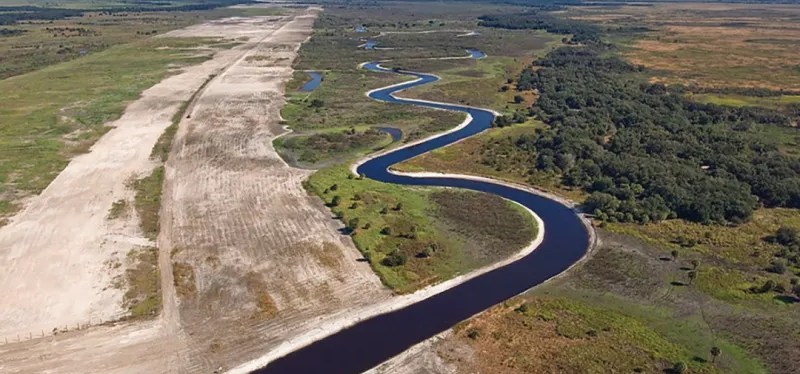
The formerly channelized Kissimmee River – photo by the South Florida Water Management District

“It messed up our water management infrastructure. Now, we drain so much water that when it’s dry, we don’t have enough water for our human needs. We over-drained, and so now we’re trying to rebuild the system where we’re going to catch water instead of wasting it when it’s wet”, said Paul Gray, Everglades Science Center Coordinator of Audubon Florida.

Beginning in the 1990s, USACE and its partners began cooperating to restore the Kissimmee River ecosystem. Coincidentally, Congress authorized the restoration in 1992 as Seminole Wind played through millions of FM radios and televisions.

More than 20 years and over $1 billion later, the restoration of approximately 44 miles of the Kissimmee River and 25,000 acres and 40 square miles of wetlands have been re-established and rehydrated1,2. The restored floodplain and wetlands now support at least 159 bird species3.

Re-winding a river is something rare and nearly impossible to accomplish, particularly at the scale of the Kissimmee River. Fortunately, in our modern world of “engineering with nature” and “nature-based solutions” to infrastructure problems, science and technology can cooperate with the environment to balance needs and functionality. The Kissimmee River restoration is the largest functioning restoration of its kind worldwide – something the USACE and Floridians can be proud of.

[1] Kissimmee River Project – Largest Restoration Initiative of its Kind – Complete After Nearly 30 Years | Audubon Florida

[2] The Kissimmee River has been brought back to life—and wildlife is thriving (nationalgeographic.com)

[3] Kissimmee River Project restores about 40% of river’s twists | South Central Florida Life

Feature Image Credit: US Army Corps of engineers, Jacksonville District

WDFW takes Important Step in Post-fire Habitat Recovery

Wildfires that tortured the Pacific Northwest in September did a number on the Washington Department of Fish and Wildlife’s (WDFW) Swanson Lakes Wildlife Area (Swanson Lakes), located about 10 miles south of the town of Creston.

Swanson Lakes is a 21,000-acre tract of native grasslands nestled among the channeled scablands of the Columbia Plateau. Shrub-steppe and riparian/wetlands comprise the dominant habitats and much of the area is rangeland, with some old Conservation Reserve Program fields. The undulating landscape is characterized by numerous pothole and rim rock lakes and one intermittent stream.

Z Lake in the Swanson Lakes Wildlife Area is one example of the unique channeled scablands and shrubby habitat. Photo courtesy of WDFW.

In western habitats, wildfire threatens native vegetation in two ways. First, given our rangeland’s generally unnatural fire cycles from fire management and encroaching invasive species, wildfires often burn much hotter than they would in pristine habitats. Fires that are too hot scorch the seed bank and possibly the underground root structure of native shrubs like sagebrush, damaging the plant’s potential to regenerate. Second, invasive weeds are incredibly prolific and competitive. In the case of the earth being blackened down to bare soil, weeds can quickly flourish, outcompeting native plants, often by simply covering the area, effectively shading out the native species.

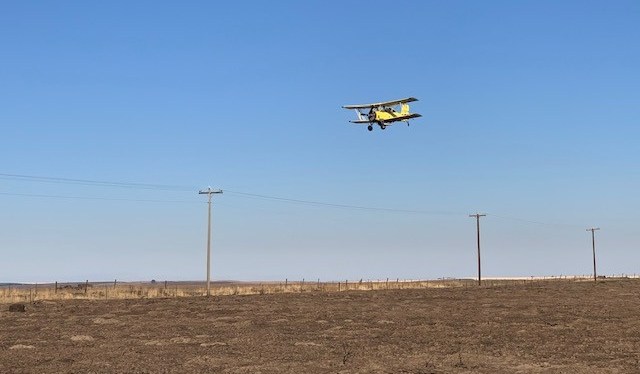
Fortunately, WDFW was poised to respond, leveraging funds in cooperation with the Bureau of Land Management (BLM) to quickly apply native grass seed mix to the charred Swanson Lakes landscape. Aerial seed drops covered about 930 acres on October 22nd, scattering two varieties of bluebunch wheatgrass, Idaho fescue, Sandberg bluegrass, and prairie dune grass across Swanson Lakes and a portion of adjacent BLM lands, said Mike Finch, WDFW Swanson Lakes Wildlife Area Assistant Manager.

Fall is not the ideal season to sow grasses, but the timing could not have been better. The WDFW and BLM made the seed drops in October to ensure native seeds were available to germinate on the exposed soil ahead of any invasive species seeds. Additionally, wet snow that fell October 23rd and 24th worked well to soak the seed into the soil surface, increasing the likelihood of establishment through good seed-to-soil contact. The WDFW plans to return with machinery in drier conditions to scratch the seeds slightly deeper into the soil surface.

Finch mentioned that Swanson Lakes was one of three areas receiving fall seed drops. The areas were prioritized for immediate reseeding due to their deeper soils, being more likely to establish and sustain healthy native grasses by allowing roots to grow down into moist soils for good summer survival. Understanding site conditions and prioritizing restoration efforts is important for project success and the best use of resources, particularly with the cost of native grass seed as high as $200 per acre, plus application time.

Native grass seed being dropped in Swanson Lakes Wildlife Area, October 22nd. Photo courtesy of Mike Finch, WDFW.

Native shrub-steppe communities are a critical part of the ecosystem in the arid west, providing food and shelter for a wide variety of wildlife. The sharp-tailed grouse, for example, is an iconic western prairie grouse species that thrives in shrub-steppe habitat. Precisely why maintaining quality native habitat in Swanson Lakes is of critical importance. The area was acquired by the Bonneville Power Administration, primarily as a wildlife mitigation project for Columbian sharp-tailed grouse, a state “threatened” species.

By leveraging funding and relationships with the BLM, and making smart decisions on the use of available resources, WDFW can sustain unique and important shrub-steppe habitat areas like Swanson Lakes to benefit wildlife and the public user well into the future.

A Plug for Big-River Walleye

In the frothy toss of the dam tailrace, the little Smoker bobbed and dodged like a duck floating down a river rapid. Luckily, the dam was spilling only a minor volume, so conditions were still safe. The game plan was to drop a couple plugs behind the boat and troll across of the unique terrain that lay below the surface of the conflicting currents.

What to Look For

On the big river, walleye are generally structure-oriented in the sense that boulders, rock piles, troughs, and other terrain variations provide velocity breaks and concealment that fish can use to their advantage as forage passes by with the flow. Our target habitat was shelves and drop-offs in a depth range of 18-25 feet.

A plug for big river walleye (6)-1

Read the full post here, at Angler Pros.