


Published July 7th 2023 at Harvesting Nature
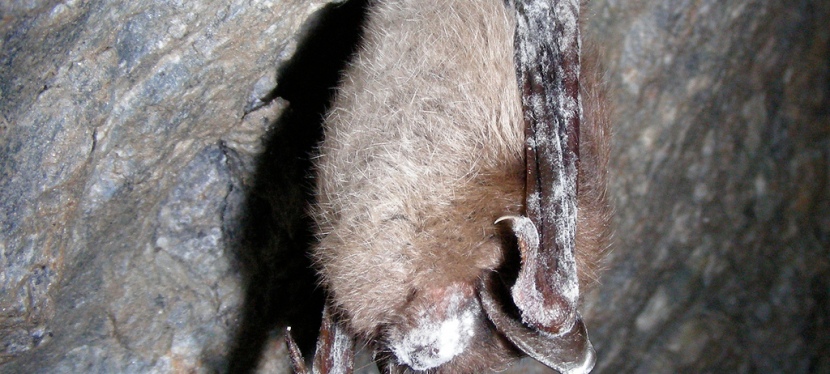
Wind energy production facilities have been condemned for impacts to bird and bat species, but recent research suggests that minimizing impacts while maintaining power production efficiency may be feasible.
Wind energy production facilities are increasingly common worldwide, resulting from efforts to shift to renewable energy sources – a trend that will likely continue in the US. In 2022, President Biden invoked the Defense Production Act to allow the U.S. to “take ownership of its clean energy independence[1].”
The purpose for calling upon this decades-old act is to provide the US Department of Energy the authority to “help strengthen domestic solar, heat pump, and grid manufacturing industries while fortifying America’s economic security and creating good-paying jobs, and lowering utility costs along the way.” Invocation of the Defense Production Act is anticipated to “boost American production of the critical technologies necessary to lower energy costs, support the clean energy economy, and strengthen national security.”
In 2021, Princeton University estimated that the US would need to develop 19-96 gigawatts of wind energy production each year to reach “net-zero” greenhouse gas emissions by 2050[2]. And, like most energy production sources, wind turbines are known to impact wildlife, namely a proportion of birds and bats that encounter them. Therefore, the May/June 2023 issue of The Wildlife Professional provides a timely summary of potential measures to reduce bird and bat mortality at wind turbines2.
Organizations like the US Fish and Wildlife Service have developed guidelines for wind turbine operations to minimize impacts on birds and bats through a process called “curtailment.” For example, bats are more active around wind turbines operating at slower speeds, so a curtailment measure would be to set a higher windspeed threshold (i.e. “cut-in speed”) for which the wind turbine would begin to operate. Research has shown that cut-in windspeeds between 11-15 miles per hour reduce bat fatalities by up to 63 percent[3], and curtailment to over 16 miles per hour reduces fatalities by over 80 percent for some species[4]. Curtailment has also been found to reduce eagle fatalities on par with bats.
A 60 to 80 percent reduction in bat and eagle mortality seems to support implementing curtailment measures, but curtailment reduces power production efficiency for facilities that some would argue are inefficient even without operating restrictions. For this reason, additional actions are being evaluated.
A global positioning system (GPS)-triggered “geo-fence” is being implemented with California condors. When a tagged condor enters the defined perimeter of a wind facility, the tag detection triggers immediate curtailment measures and avoids wind turbines operating under curtailment when no birds are present. This is an effective method of reducing condor fatalities, but tagging individuals is not a feasible solution for songbirds and bats. Deterrent strategies may be more effective.
Deterrents that have been studied reduce bird and bat mortality without impacting power production and include sound, high-contrast lighting, and painted turbine blades to avoid the appearance of blurring together at high speed. Only auditory deterrents are effective for bats, and each species’ use of echolocation differs, making one-size-fits-all deterrents less effective.
No single fatality reduction measure has proven effective for all species; however, a combination of deterrents and curtailment may be tailored to facilities, and research is ongoing to identify additional measures to reduce bird and bat fatalities while allowing efficient wind energy production.
[1] President Biden Invokes Defense Production Act | Department of Energy
[2] Felton, S. 2023. Change in the Air: Technological Solutions can Reduce Bird and Bat Collisions at Wind Facilities. The Wildlife Professional 17(3):38-40.
[3] A review of the effectiveness of operational curtailment for reducing bat fatalities at terrestrial wind farms in North America | PLOS ONE
[4] A smart curtailment approach for reducing bat fatalities and curtailment time at wind energy facilities – PubMed (nih.gov)
 Palouse Upland Media