New Legislation Aims to Boost Walk-in Private Lands Access

Originally published at Harvesting Nature, July 7th, 2023.

Among the top “barriers to entry” for hunters is the basic need for a place to go. In the western US, large tracts of public land managed by the Bureau of Land Management, US Forest Service, and states and tribes are available to the public, but this is not the case everywhere. For example, Illinois is one of the top five most populous states but is comprised of 96 percent private lands[1]. Therefore, public access to private lands plays a critical role in hunter opportunities nationwide.

Outdoor recreation is big business, contributing $778 billion to the US economy every year1, and firearms and ammunition sales have contributed over $16 billion in conservation funds through the Pittman-Robertson Act[2]. Ensuring the American public is afforded hunting opportunities supports a cornerstone of the North American Model of Wildlife Conservation, which is why incentivizing public access to private lands was introduced into the Farm Bill as “Open Fields” back in 2008.

In 2018, the Farm Bill authorized what is now called the Voluntary Public Access and Habitat Incentive Program (VPA-HIP), which provides grants to states and tribes to implement walk-in access programs. Congress stepped up its investment in VPA-HIP, providing $50 million via the 2018 Farm Bill1.

In September 2019, the Natural Resource Conservation Service (NRCS) announced VPA-HIP funding opportunities to state and tribal governments. States and tribes were eligible to receive up to $3 million in federal dollars to be leveraged with partner funds for the expansion of recreational access on private lands. In March 2020, the NRCS announced nearly $49 million in VPA-HIP awards1.

What makes VPA-HIP incentives more attractive is that they can be realized in addition to other Farm Bill programs like wetlands enrolled in the Agricultural Conservation Easement Program and the Conservation Reserve Program. Furthermore, the VPA-HIP program allows the states to assume legal liability for the public accessing enrolled lands. But the VPA-HIP program benefits may soon increase dramatically.

In April, new legislation called the Voluntary Public Access Improvement Act of 2023 was introduced by Senators Steve Daines, Michael Bennet, and Roger Marshall to strengthen VPA-HIP by tripling its funding from $50 million to $150 million over the next five years[3]. This increased investment was among the recommendations made by the Theodore Roosevelt Conservation Partnership’s Agriculture and Wildlife Working Group i10 its “Hunter and Angler Priorities for the 2023 Farm Bill” report that was released earlier this year3,[4].

To date, the VPA-HIP program has opened nearly one million private acres to public hunting, fishing, and outdoor recreation. View the Theodore Roosevelt Conservation Partnership’s “Accessible Private Lands3” report for details, and imagine what tripling the program’s funding could do for hunter and angler opportunity.


[1] REI-VPA-HIP-Report_FINAL-11-3-2020.pdf (trcp.org)

[2] Firearm Industry Surpasses $16 Billion in Pittman-Robertson Excise Tax Contributions for Conservation • NSSF

[3] https://www.trcp.org/2023/04/03/new-legislation-help-increase-walk-access-program-acres/

[4] AWWG-2023-FB-Platform_2-15-23.pdf (trcp.org)

Can Hunting Keep us Human?

Paula Young Lee poses the question in the High Country News. If this strikes you as a philosophical diatribe, you may be correct. But in an era where hunting is increasingly despised (read: misunderstood), the deeper meaning behind such ecosystem interaction at the human level of cognizance is indeed ponderous.

Hunting’s broader importance to human existence reconnects the severance between human life-history and the complex society we have developed. Humans operate under the disillusion that humans are superior to the natural ecosystem, having no association with the natural world or ecosystem function. But the hunter views things differently.

DSC_1124

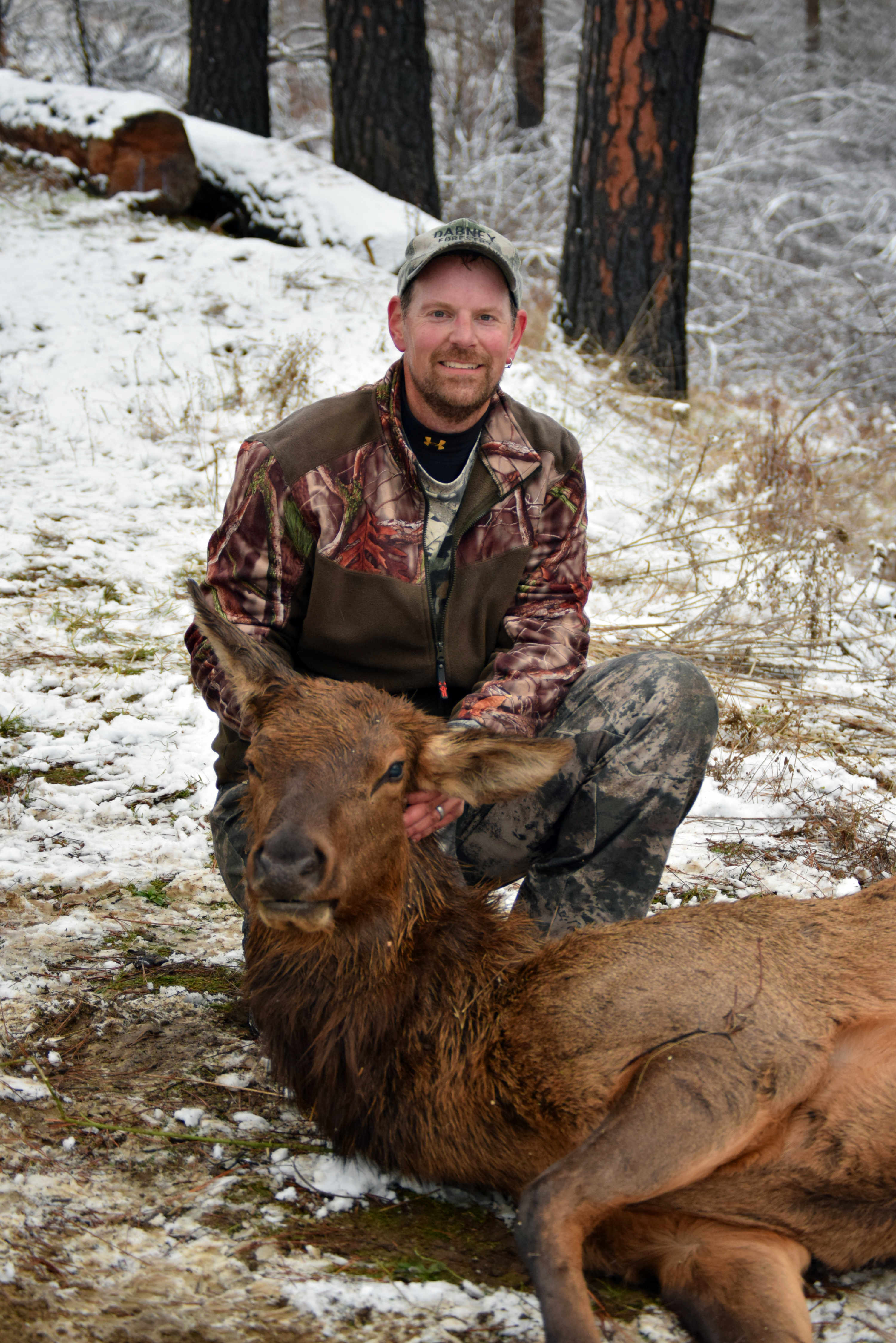
⇑⇑ Above: the author with a cow elk, his first, taken on the Idaho winter range, December 2018. Hard earned and well respected. The tags for this special draw hunt have since been stripped from the public and given to private landowners as depredation tags. ⇑⇑

“It may seem like sophistry to argue that hunting protects wildlife, but the act of hunting encompasses far more than shooting a wild animal, and it neither starts nor ends with a death. The hunt itself is part of a much larger continuum.”

Diving deeper into the meaning of the hunt, Lee discusses the spiritual connection between hunter and prey, and that the hunter views wild game as a blessed gift. Lee reinforces her point of the larger continuum through an economics analogy related to the gift of wild game.

DSC_0018a

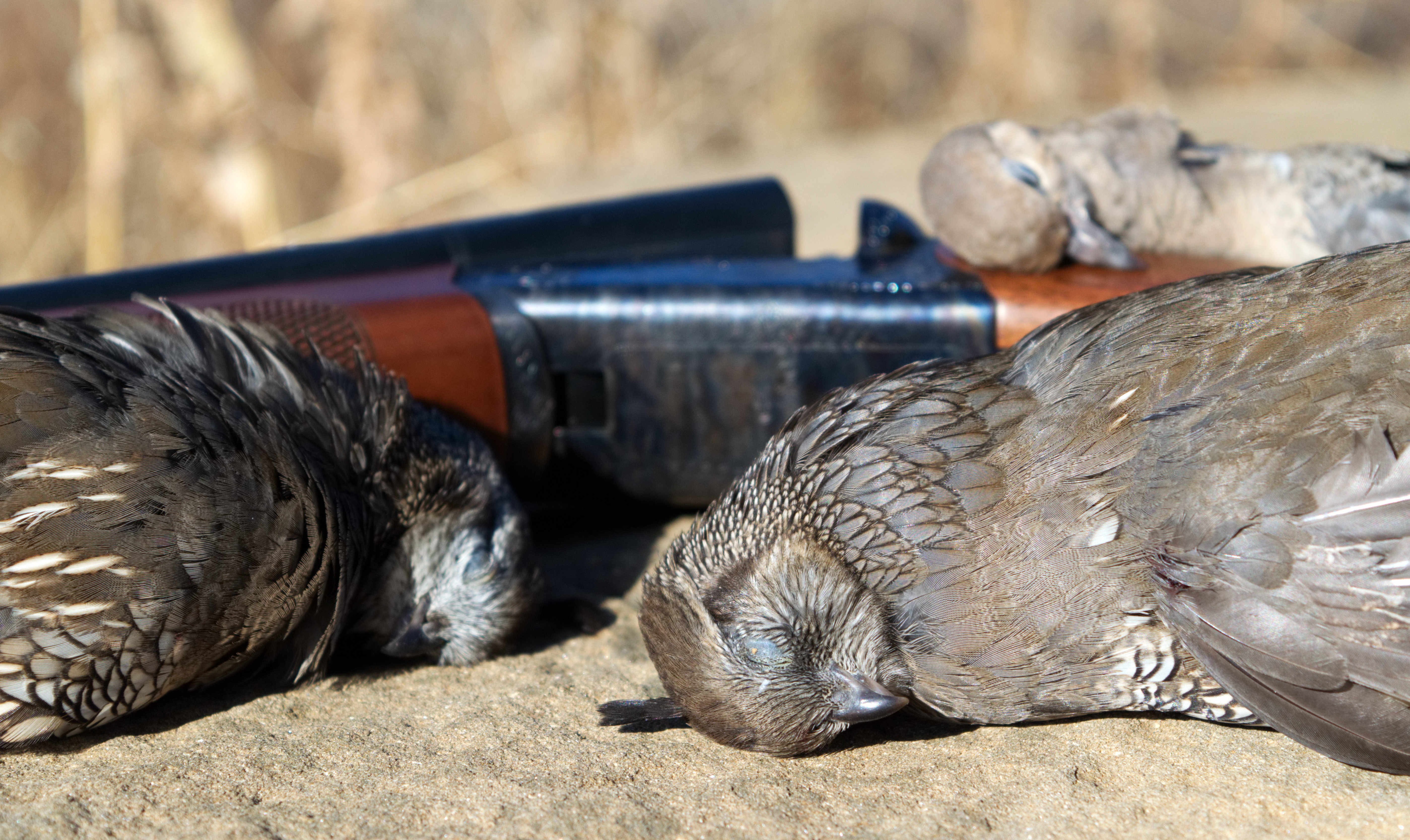
⇑⇑ Above: A successful valley quail hunt with two hens falling to a pointing dog and swift gun work. This interaction with the canine and upland bird plays a crucial role in spiritual rejuvenation for the hunter, who, in turn, gives back to conservation. ⇑⇑

“In a gift economy, the act of giving compels the person who receives the gift to reciprocate. A gift can be refused, but that refusal has consequences. Hence, ethical hunters reciprocate by protecting the wilderness, giving of themselves to ensure that the forest stays the forest….”

Hunting maintains our connection with and works to conserve our place in the ecosystem, and the ecosystem itself. The preservation of human nature.

Upland Stewardship Begins at Home

What’s the #1 threat to habitat on undeveloped public lands? If you guessed invasive plant species, you get a gold star for the day. Overall, habitat lost to civil development is a critical threat to fish and wildlife, putting tremendous importance on conservation and management of those precious public acres still intact.

Managing public land is important to provide habitat suitable for wildlife species and is accomplished through taxpayer and sportsman’s funds. For federal lands, this means congressional appropriations must be approved for specific geographic areas and funding limits.

While public lands, both state and federal, are at much lower risk of civil development, the economics of habitat management is a major driver in our ability to maintaining high quality habitat, and here is why.

Invasive species are incredibly competitive and successful at overtaking desired native species. With no natural predator controls (i.e. herbivory and parasitism) and an adaptive edge to the climates in which they occur, many species can create monocultures in short order. What’s more is that the increasing cost of invasive species control detracts from government ability to fund general habitat management and enhancement.

Picture2

Once established, eradicating an invasive plant is incredibly difficult and extremely costly, in the billions of dollars nationwide, annually. Our ability to control invasive species on public lands can change dramatically with political leadership. And when natural resources budgets are cut, our ability to effectively maintain habitat is hamstrung.

Early Detection and Rapid Response is the normal mode of operation for habitat managers, but budget cuts cause vulnerability in on-the-ground effectiveness. Labor cuts can reduce the number of employees and hours spent afield performing Early Detection monitoring. Supply cuts can reduce the available tools to implement Rapid Response once invasive species are detected, as well as reduce the overall time or acreage that biologists can treat.

High-quality habitat is not just nice to have for an easy, clean hunt. It’s a must for sustainable upland bird species and hunter opportunity. Its easy to assume that habitat management and controlling invasive species lies in the hands of qualified biologists, but make no mistake, quality habitat starts at home with you, the general public.

20191020_122336

⇑⇑ The seat cover in my Tundra harbors a number of invasive species ⇑⇑

As our talented canines careen across the grasslands searching for sharptails or cut through brush following a running grouse trail, their fur picks up invasive weed seeds that can be easily spread to otherwise weed free areas. Tailgate checks and post-hunt spa treatments (for those of us who own long-haired pups like setters and Munsterlanders)  are necessary to remove to potentially harmful grass awns and bur-like seeds.

Most importantly, uplanders that embark on rooster road trips would be remiss if they failed to clean the nooks and crannies of their bird hunting chariot prior to driving half way across the nation. A single germinated seed from a nasty invader like cheat grass (Bromus tectorum) can quickly threaten native species and impact habitat suitability.

Be sure to clean out the truck bed, pet crates and blankets, truck seats and seat covers, spray down floor mats and vacuum the crevasses that can harbor seeds.

20191020_121840

⇑⇑ Cleaning vests, kennels, truck beds, and interiors is critical ⇑⇑

If your truck cap has a carpet liner, inspect it with scrutiny. Your dog will shake in the truck bed, flinging weed seeds onto the ceiling and anywhere else they may attach, simply waiting to be offloaded in an otherwise clean area 1,000 miles from where they were picked up.

And the cleaning spree should not end with the truck and kennels. Our vests and clothing can trap a terrifying number of seeds. When was the last time you check your hunting vest pockets for seeds? Hundreds of grass seeds can gather in vest pockets as we traverse the prairies. Dog vests can capture a number of species as well, like bur chervil (Anthriscus caucalis), which wreaks havoc on native grasses and even competes with yellow starthistle (Centaurea solstitialis) in the arid west.

20191020_121913a

⇑⇑ A water bottle pocket of my hunting vest captures many seeds and plant debris ⇑⇑

Conservation and habitat management are influenced by each and every one of us. Its your duty as an uplander to exercise your stewardship abilities and battle the spread of invasive species. The future of our public natural resources and habitat depend on it.