On August 10th, 2023, the US Fish and Wildlife Service (USFWS) issued a press release announcing the proposed de-listing of Arizona’s state fish, the Apache trout[1]. The Apache trout and Gila trout are the only two trout species native to the state.
According to the USFWS[2], the Apache trout is native exclusively to the streams in and around the White Mountains in the eastern part of the state. Historically, they were found only in the headwaters of the White, Black, and Little Colorado Rivers above 5,900 feet elevation in east-central Arizona[3].
The Apache trout was originally considered the same species as the Gila trout, which was listed under the Endangered Species Preservation Act in 1967. The Apache trout was first described as a unique species in 1972, and one year later, it gained protection under the Endangered Species Act of 19731.
Competition from non-native brook and brown trout and hybridization with non-native rainbow and cutthroat trout threaten Apache trout populations.
The 2009 Apache Trout Recovery Plan identified a goal of 30 pure (non-hybridized) Apache trout populations being necessary for species recovery. The plan also noted 27 populations existing within their historical range in Arizona’s Gila, Apache, and Greenlee counties, and the Fort Apache Indian Reservation and Apache-Sitgreaves National Forest[4].
The USFWS 2021 Apache trout species status assessment[5] identified the recovery goal of 30 pure populations had been met, which prompted the USFWS Endangered Species Act de-listing proposal.
Apache trout recovery is owed to 50 years of collaborative conservation work among state, federal, and nonprofit partners removing introduced trout species and preventing their reestablishment in Apache trout habitats. If de-listed, the Apache trout would add to the list of 91 species that have recovered under the protections of the Endangered Species Act.
Active management would continue to prevent future reintroductions of non-native trout species and hybridization. Additionally, the Endangered Species Act requires the USFWS to implement a post-delisting monitoring plan for a minimum of five years to ensure the species remains stable.
The USFWS de-listing proposal1 is open for public comment through October 9th. Information on how to submit comments is available at www.regulations.gov by searching docket number FWS-R2-ES-2022-0115.
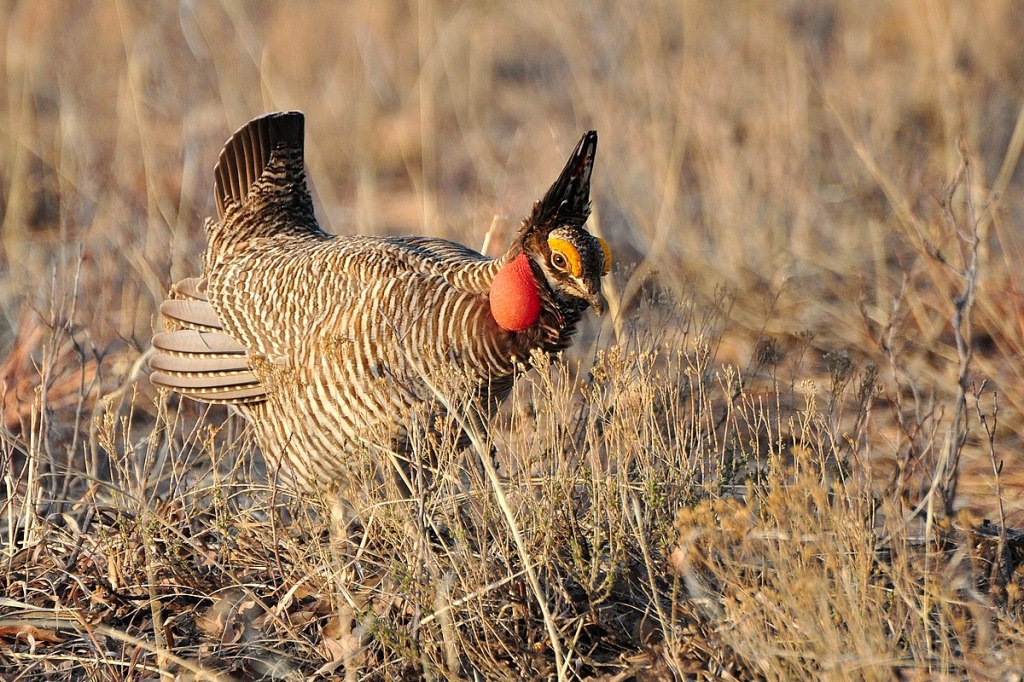
On November 17th, 2022, the US Fish and Wildlife Service (USFWS) announced the listing of two distinct population segments (DPS) of lesser prairie chicken – a northern DPS and southern DPS. Over approximately the past 40 years, this iconic bird of the North American Great Plains has lost 90 percent of its habitat to land use practices. Once enumerating in the millions, there are scarcely 30,000 individuals remaining across the states of Colorado, Kansas, New Mexico, Oklahoma and Texas[1].
This recent ESA listing has been a long time coming, dating back to 1998 when the USFWS identified the lesser prairie chicken as a candidate for ESA listing and protections, and a 2014 ESA listing as “threatened” that was “vacated” following a lawsuit. But ESA listing may not be the best approach for protecting the species and their habitats.
Ninety-five percent of the land across the lesser prairie chicken range is privately owned, and significant conservation efforts have been made for the species over the past two decades. The Natural Resources Conservation Service (NRCS), through the Lesser Prairie-Chicken Initiative[2], has worked with nearly 900 landowners to implement conservation actions on approximately 1.6 million acres. Landowners currently have enrolled more than 1.8 million acres in the Conservation Reserve Program across the lesser prairie chicken range. Pheasants Forever and Quail Forever are working in concert with these conservation programs.
Conversely, the ESA protects listed species and designated “critical habitat” from “take”, which is defined as “harass, harm, pursue, hunt, shoot, wound, kill, trap, capture or collect, or attempt to engage in any such conduct”. Rather than working to make improvements for the species, the ESA works to avoid impacts to the species, including those that are short-term and temporary as a result of an action that will benefit the species in the long run (i.e. habitat restoration).
Section 9 of the ESA presents “prohibited acts” that constitute take, for which there is no exception for species listed as “endangered”. This means that every action within the endangered lesser prairie chicken southern DPS range, from a landowner grazing cattle to a habitat restoration project, will require some form of “incidental take coverage” from the USFWS.
“For more than two decades, the [USFWS] and its partners have been working together to conserve this iconic species and its habitat. Together we have developed a suite of conservation tools and plans, including Candidate Conservation Agreements with Assurances (CCAA) and Habitat Conservation Plans (HCP), across the lesser-prairie-chicken’s five-state range to protect the species and provide certainty for industry and landowners”, reported Aislinn Maestas with USFWS Public Affairs.
The “assurances” written into CCAAs and HCPs are basically conservation measures imposed by the USFWS to “minimize and avoid” incidental take, which may or may be relevant to a given action. Depending upon what assurances are written into USFWS regulation, the assurances may require an inappropriate proportional cost for little benefit to the species, when those funds could be better used for proposed restoration efforts.
Additionally, the USFWS Ecological Services Branch is regularly understaffed and overworked, making ESA consultations inefficient to the point of stalling project proponents from taking action. This is a common scenario with federal land management efforts in other parts of the nation, where impact avoidance to an ESA-listed species or critical habitat has stalled important invasive species control efforts, resulting in further degraded habitat for the species in which the proposed management actions are intended to support.
Actions may be taken in the range of the threatened northern DPS under ESA Section 4(d). “The 4(d) rule applies all of the ESA section 9 prohibitions to the Northern DPS, but provides that farmers can continue their routine agriculture activities on existing cultivated lands. In addition, it recognizes the importance of proper grazing management, and includes an exception for those producers who are following a site-specific prescribed grazing plan developed by a qualified party that has been approved by the USFWS. Lastly, the 4(d) rule also provides an exception for implementation of prescribed burning for grassland management[3].”
Because of the pitfalls of bureaucratic process and the vast majority of private lands where lesser prairie chickens reside, grant funding and non-profit habitat improvement projects likely provide the best opportunity for these imperiled birds.
“These new [ESA listing] classifications will impact landowners who, in the end, are going to be key to saving a species from, yes, extinction”, says Ron Leathers, Quail Forever and Pheasants Forever Chief Conservation Officer. “We believe voluntary, incentive-based conservation programs — the kind of programs we help implement on the landscape — are the greatest opportunity to positively impact lesser prairie chickens and save them.”
Voluntary landowner/non-profit and NRCS partnerships ensure that actions can be planned and implemented, cooperation and buy-in can be gained from neighboring landowners, and improvements can adapt to change on the ground. This has been proven through programs like the Lesser Prairie-Chicken Initiative and the Sage Grouse Initiative. The ESA regulatory and impact avoidance processes work counter to this productivity.
At the end of the day, protection for the lesser prairie chicken and their habitat is a win, but will ESA protection do more harm than good by imposing potentially unnecessary process on progressive habitat restoration and beneficial land management practices? Only time will tell.
The final rule to list the two Distinct Population Segments of the lesser prairie-chicken and the final 4(d) rule published in the Federal Register[4] on November 25th and will become effective 60 days after publication.



 Palouse Upland Media