Steppe Outside – Home Waters Flow Gentle on My Mind 

Published in the Walla Walla Union Bulletin November 9th, 2024

A mountain trout stream gently winds through the back of my mind. Its headwaters begin near the Oregon border and drop precipitously north. Picking up tributaries as it rolls, the creek reaches third-order status, where it begins building year-round trout habitat. Its twists and turns, log jams, and pools are all familiar. 

My parents would tell you that I was a fishing addict as a kid, which I cannot argue, but the fact that a trout creek flows into my stream of consciousness at the height of the upland bird season is telling. I’ve suffered as a “jack of all trades” my entire life, meaning I find fulfillment in nearly anything fish, wildlife, and outdoors related, especially now with a love for photography. As an adult, however, the closest thing I’ve experienced to addiction is upland bird hunting. 

This trout stream is near home and was my muse before my first setter pup arrived. We saw each other weekly, regardless of whether the fishing season was open. It’s close enough to be worth the trip but far enough to require commitment. Too far for killing a half-hour, but a morning, afternoon, even a whole day can be amply invested.

I cut my trout teeth on the blue lines descending from the George Washington National Forest and Shenandoah National Park. Eventually, one stream took priority – my home stream. The stream that I could see from my parents’ front room vista. It wasn’t the best or easiest fishing around, but it was close and offered a mile of worthy wild trout water. To say that I knew that water well would be an understatement. It was hard to leave it when I moved west, and even harder in 2020 when I caught my last Appalachian brook trout in those stair-step plunge pools. My beloved valley home overlooking the drainage sold a month later. 

The beauty of home waters is the intimacy one can establish with them. It is not entirely different from the intimacy between lovers, although the relationship appears one-sided on the surface. The angler walks the banks, noting the curves, the sweet spots and transition zones, the seasonal moods, where to tread lightly, and where to take charge. Meanwhile, the stream flows with the lifeblood that the mountain feeds it. It rearranges the furniture here and there and thrusts a hip this way or that following the spring freshet, but the angler who pays due diligence is rewarded with more than wild trout.

There’s an old saying that “an elephant never forgets.” I’ve found the same true for bird dogs and trout bums. Bird dogs catalog every bird they’ve ever found and will visit those spots whenever they hunt the same property. Identically, trout fishermen recall every rise and catalog the log jam, flow seam, backwater, or grasses overhanging the run where the hookup occurred. This plays into the intimacy a trout angler develops with their home waters. These are the sweet spots that are revisited time and again. After a few years of fishing their home waters, a trout bum can identify the pools and runs by the sound of the water pouring over rocks and wood.

October is arguably one of the best months for mountain stream fishing—the heat of summer breaks, giving way to seasonal change. The riparian corridor is decorated in autumn gold. Cooler water invigorates the speckled gems fining in the tail-outs and prompts giant October caddis to flutter clumsily over the creek, offering a royal meal as they dip in to lay eggs. I rarely missed an October weekend on the stream in what feels like an alternate life. Now, the opposite is true. 

It had been two Octobers since my last autumn visit. With unusual heat putting the brakes on upland bird hunting plans, my mind scrolled through the many productive uses of time. The notion of fishing the home waters trickled in and caught fire like pouring gasoline on a flame. The only decision was where to start, but the decision was already made. A preferred reach continually lingers upon one’s subconscious, awaiting the opportunity to surface.

My waders swished, and sweat soaked the brim of a blaze orange ball cap as I approached a lesser-fished stretch of water that’s difficult to navigate and has relatively little fishy habitat compared to other reaches. Three specific pools in this reach speak to my flavor of fly presentation when the water is low, and this autumn has been unusually dry. Casts would be short, and line control would be critical.

A thirteen-foot tenkara rod with an equal length of fly line represents an effective, simplistic, centuries-old Japanese fly-fishing method developed for mountain streams. Using the grasses, trees, and woody debris to creep within ten feet of a beautiful log jam pool, I gently flopped an absurdly-sized “stimulator” fly into the still waters beside the flow plunging over the logs. Within seconds, a ten-inch rainbow pounced on the moth-sized fly.

The feisty rainbow came to hand, and like every other from this river, the deep purple of the lateral line and olive-shaped parr marks beneath a dusting of black speckles presented a masterful work of art. I studied the fish briefly, admiring its features and glistening silver, gold, and olive scales, each individually defined. Then, freeing the fish from the fluffy fly, it darted back into the shadow of the log.

Trout are a marvel of nature regardless of the time of year, but mountain stream trout glow with a particular radiance in fall, as if reflecting the seasonal color change of the riparian flora. They are muscular from a spring of high water and spawning, and a summer of eating hoppers, caddis, and stoneflies. Their rise is deliberate, calculated, and executed with precision and efficiency to avoid expending energy unnecessarily.
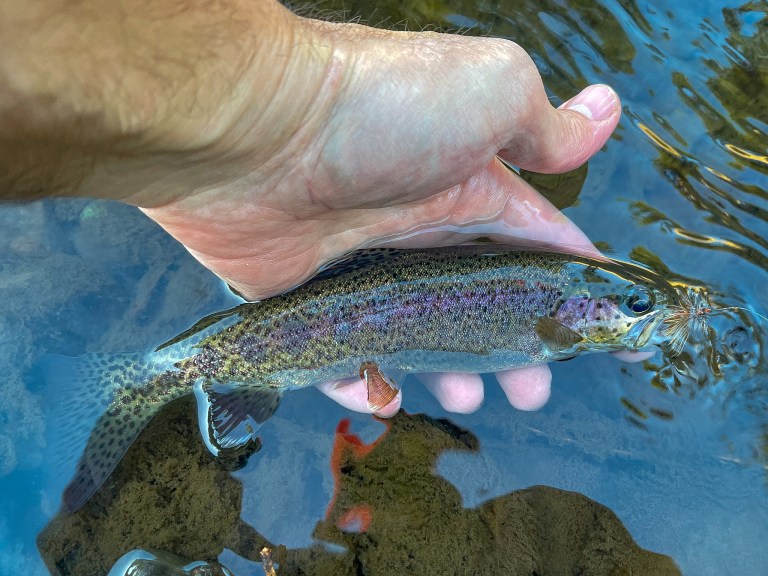
Rainbows have risen to a fly in this pool for years, but the pool wasn’t always present. Before stream restoration efforts, this reach was characterized by shallow riffles and slightly deeper runs with little wood or boulder cover and no pools. Juvenile Chinook salmon and tiny rainbows rose to any small fly along the flow seams, but bigger fish were few and far between. Fortunately, constructed log jams and the 2020 flood cooperated to provide more quality habitat throughout the mainstem.

Having fished mountain trout streams across nearly a dozen states and 3,000 miles in several directions, I can offer that good water is good water, regardless of where you fish. Sometimes, that’s easy to describe. Other times, the popular cliché “when you know, you know,” is all there is to be said. Fly placement is somewhat universal, born of experience reading water and, occasionally, dumb luck. Deciding which to thank for a trout rise is hard, but experience pays on home waters. 

“I bet that fish spooked the entire pool,” I thought, confident that no other fish would bite after blowing up the thirty-six-square-foot pocket of skinny flow. “Well, what the hell. I’m here,” I thought, flopping the now waterlogged fly into a tucked-away spot slightly closer to the shore where I stood.

Using the rod’s length to keep the line high and the fly afloat, I bounced the fly atop the water like an October caddis laying its eggs. To my surprise, another similar-sized rainbow rose for the fly. It’s possible that another seasoned angler could find equivalent success on a new waterbody in a scenario like that. Still, I take comfort in telling myself that an unlikely second fish rose because I know how to fish “my stream.” 

 The following pools fished the same, and I even discovered a new side channel pocket that has scoured over the past several years to form a beautiful bend pool. I had seen that side channel before but ignored it for bigger water. The pocket is exceptionally tight, with no casting room. I merely dangled the fly from a high stick posture about ten feet away, tempting a rainbow to emerge from nearly underfoot to inhale the fly. 

“This will never work. It’s too close,” I thought as I laid the fly on the water’s surface. Being wrong isn’t always bad.

My visit was brief. Just long enough to land a half-dozen gorgeous rainbows. Glenn Campbell’s “Gentle on My Mind” aptly played in my subconscious in time with the tumbling water. 

In his most recent and final book, “Dumb Luck and the Kindness of Strangers,” renowned fly-fishing author John Gierach explicates on his home waters, as in many of his twenty-one previous volumes.

“On rare days, it’s something as vague as a quality of light or certain stillness in the air that seems to make the water vibrate with possibility, but I think that’s less mystical than it sounds. It’s just that some of the things you know about your home water operate beneath the level of full consciousness and only reveal themselves disguised as intuition.”

Gierach’s experience came from intimately knowing his home waters, and his gift for sharing that intimacy through a conversational read inspired generations of fly anglers, myself included. There’s something to be said about the feeling one gets when standing streamside, influenced by the sun, temperature, breeze, cloud cover, and the carefree notion of having already succeeded in the endeavor without yet wetting a fly.

Catching fish in the home waters is not the point but is generally accepted as a scientific law. “If” is not a question, nor is the fish the reward. Wild turkey hens shepherd their chicks through the upland riparian edges among violet lupine in spring, and birdsong envelopes the stream. Ruffed grouse drum, valley quail call from the blackberry tangles, and black bears gorge on the sweet, dark berries. Salmon flies and October caddis predict the seasons, and a number sixteen Adams is always welcomed. Somewhere between the roar of the rushing waters and a pointed focus on landing the fly in “the spot on the spot,” one’s true self appears, completely at ease, in a world secluded from reality—a state of being achieved only on the home waters. 

While I don’t spend nearly the time on my stream compared to a decade ago, our relationship is steadfast. I’ve learned her language. She patiently awaits, her waters forever flowing gentle on my mind.

Footnote – John Gierach died on October 3rd, 2024, at age 77. An average man with an appreciation for the average angling experience and hot coffee, he possessed an extraordinary ability with words and inspiration. This story presents a style slightly different than Trumbo’s norm. A tip of the hat to Gierach for developing friendships with his readers by writing as if he were engaged in conversation.
Steppe Outside – An Old Boat Presents New Opportunities

Originally published in the Walla Walla Union Bulletin, August 10th, 2024.

It felt odd sipping whiskey in a dimly lit bar with the sun riding high at two in the afternoon. Not so strange for a Saturday in my college years, but somewhat out of character for a middle-aged man, without context. The occasion was celebratory. Local author Dennis Dauble and I made small talk and discussed his fine day of book sales following a signing for his new release, “A Rustic Cabin,” a book sharing the follies and fortune of owning a log cabin and a small slice of heaven on a remote forest stream.

Dennis is best known for his fishing literature. Hence, it was only natural that our conversation evolved from his cabin book to fly-fishing and the Columbia River sockeye salmon run that was just turning on.

“They’re here. Looks like 4,000 over McNary yesterday and increasing daily,” Dennis noted.

“Any predictions on the run this year?”

“At least average, maybe a bit above. You should come out with me this week. I’ve got to get on the water, but my daughter just returned the boat I gave her, and I need to find a place to store it ASAP. The homeowner’s association won’t allow it to sit at my place, and the boat storage has quadrupled in price over the past two years.”

A friend subtly offering that kind of information amidst a routine fishing conversation highlights their mastery of piquing one’s interest. Before divulging any details of the vessel, Dennis mentioned his need to move it without offering a sale, which led me to believe the boat was both valuable and of interest to me.

“Oh? Tell me about this boat,” I replied, forgetting the sockeye fishing offer entirely.

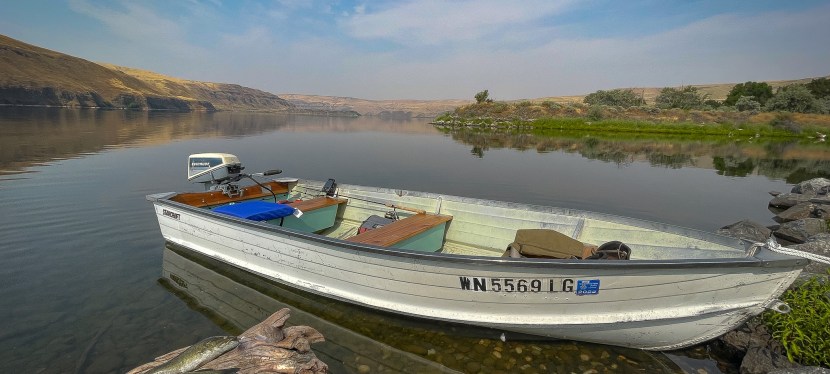
“It’s just a little 12-foot Starcraft with an 8-horsepower outboard that I used to buzz around in while steelhead fishing. It’s a good boat for a calm day on the river.”

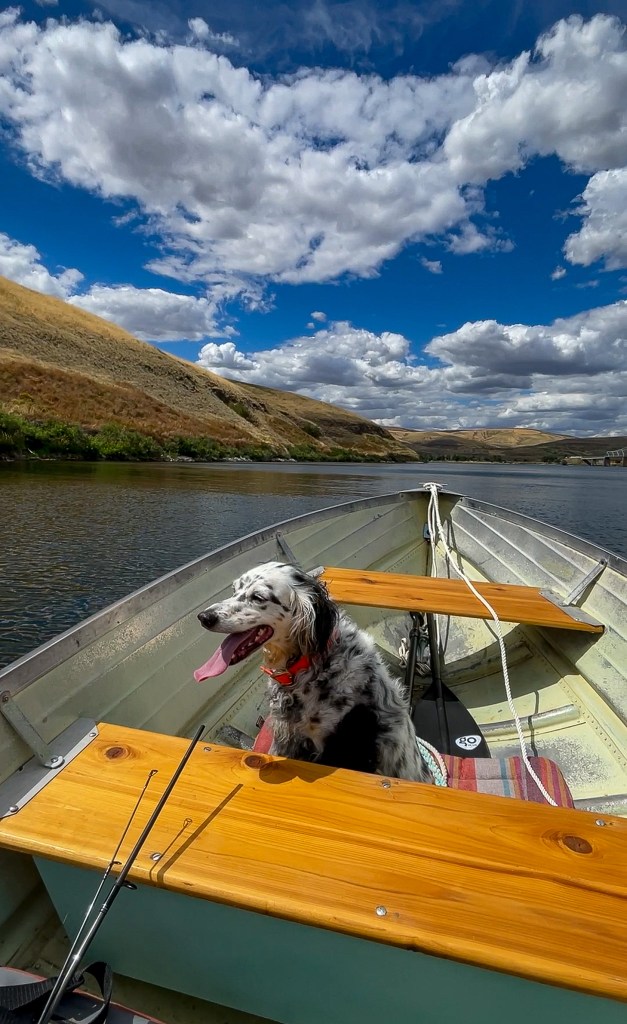
Whiskey on an empty stomach was a poor precursor to this conversation. Anyone who has ever owned a boat knows there is no justifiable “need” for one, save for Dennis and another friend, Chas, who both get their time and money’s worth out of their fishing vessels. On the other hand, I knew perfectly well the limited use I would get from a small boat. Still, the hamster jumped on the wheel and spun my mind into thoughts of hard-to-reach bird hunting spots, should the boat be capable of navigating the Snake River. Visions of a black-and-white setter on the bow with her ears flapping in the breeze and a classic double-gun resting on the front seat as we motored toward remote pheasant habitat was all the convincing I needed.

Dennis must have seen that I was on the line, but being a conscientious man, he allowed me some slack and changed the subject. “I’ll send you a couple of photos tonight.”

That evening, a text message revealed a photo of the boat under a navy-blue canvas cover, parked snugly beneath the pines along Dennis’ driveway. Additional images arrived via email identifying a well-loved Starcraft with freshly restored wooden bench seats, the bottoms painted with the original (or nearly matching) turquoise interior scheme. My gravitation to nostalgia and restoration projects and the quality work Dennis had done on the bench seats sealed the deal.

“I think I need to look at that boat. I’m off work this coming Wednesday. I can drop in if you need to move it sooner than later,” I replied.

“Wednesday will work. Be here at 9:30 a.m.”

Upon arriving at Dennis’ home, the little boat’s homemade trailer was the most eye-catching piece of the package. Rusty red tube steel was crafted into a perfect boat-shaped frame with dry-rotted rubber rollers and cushions. The axle was crafted from an old vehicle I-beam front end, possibly from a junkyard street rod, and welded together in the center with four slabs of flat three-eights-inch steel. Two long-traveling leaf springs supported the trailer frame, and the entire rig rode upon tires large enough to fit my pickup. The axle was overkill for a 120-pound riveted aluminum dinghy, but a stout trailer axle is far better than a weak one, and this one would be easy to repair when needed.

Throwing off the blue canvas cover revealed a 12-foot Starcraft “Super Star” that was in far better condition than I had expected. Starcraft made the Super Star model between 1968 and 1972. This one is titled for its inaugural year.  Most old metal boats have dinted floors and support ribs, among other maladies they incur from reckless handling, mainly due to being lightweight. The outside white paint was scraped and chipped, and the Starcraft emblem was missing from the starboard side, but that was it. She was perfectly clean otherwise, and Dennis’ phenomenal craftsmanship on the bench seats and transom made it look that much better.

Starcraft marketed the Super Star on its durability, stability, versatility, ease of handling, and affordability. Its price tag was $255 in 1968, which translates to around $2,300 today. Surprisingly, this is comparable to the sale price of similar aluminum boats, which seems like a deal, considering a nice standup paddleboard will cost you a grand these days.

Dennis revealed the 1985 Evinrude 8-horsepower outboard with two three-gallon fuel tanks hidden in the outdoor storage beside the house. The vintage two-cycle was compact and lightweight at only 56 pounds (according to Evinrude specifications). Still, as Dennis and I dropped it onto the transom, the trailer tongue quickly rose skyward. Alternatively, hitching the trailer to my truck allowed us to attach the motor and give it a once-over. It had not run in a couple of years, and the cowling appeared worn from nearly 40 years of sun exposure. Beneath the cowling, however, was a cleaner little two-cylinder engine than I had seen in many years of operating and maintaining a fleet of working boats as a fish biologist. Suffice it to say, I had seen enough.

“You can think on it for a while,” Dennis allowed, not wanting to be too pushy.

“I’ll take her!” I exclaimed. Truthfully, I find classic toys irresistible. They feed my personality type, which is fascinated with history and tradition, and passionate about restoring quality-made, old-fashioned sporting equipment.

With a quickly-scribbled check and some signatures on the bills of sale, I was out the door with my new antique toy.

The hour and fifteen-minute drive allowed ample time to proceed through the gamut of emotions from excitement to guilt. Depositing that cash into home maintenance or other necessary expenses throughout the year would have been the responsible thing to do. However, Ali and I shared a frank conversation the day prior about our unrelenting prioritization of responsibilities over living life and suffering the consequences of such choices. We chose the homestead life, and each have a side gig or two tacked onto day jobs, but there is more to life and time to live it if we just stop for a moment. That conversation resonated as I inspected the boat in Dennis’ driveway.

I spent the following two weeks tinkering before testing her seaworthiness, which was a welcomed distraction from the mundane summer chores. Boats and trailers are an upkeep and customizable bottomless pit. And, like a classic muscle car junkie, I identified updates that meant little to the boat or trailer’s performance but enjoyed the fiddling. Rubber pads, chains, winch, lighting, cleaning fuel tanks, and finally starting the engine all felt like worthwhile improvements for safe and reliable use.

“I’ll bet I have to take the motor to a marina for repair,” I told Ali the morning I set out to fire it up. Outboards that sit around often refuse to start for countless reasons. Nevertheless, I hooked up a fresh tank of fuel, primed the line, and pulled the cord.

The good news was that the compression felt great. The bad news was that 10 minutes later, the engine had not even pretended to fire. I had no idea what the idle adjustment meant or how often or long to choke the carburetor. I was learning on the fly. I was sure that old fuel likely needed to be pushed through the carburetor, so I made a series of adjustments while squeezing and holding pressure on the siphon bulb and struggling to pull the cord with weary arms.

Finally, she bucked like a stubborn foal sending a warning kick as you try walking behind it. Also, like breaking a horse, the motor continued to kick and stall, as if refusing the saddle, but understanding the purpose of my efforts. After half an hour, the little engine came to life and ran as smoothly as new. It even shifted smoothly, without grinding or lurching. Last was to ensure the water pump worked, so I ran it at various speeds in a water trough for another half an hour to ensure that it “peed” the entire time.

The final test was ensuring engine functionality, which I had accomplished much earlier in the day than anticipated. So, I tossed my black-and-white setter, Yuba, and some fishing gear in the truck and headed for the Port of Garfield boat launch for the maiden voyage.

Starcraft specifications suggest a 500-pound weight capacity. The fuel, motor, and I comprise over two-thirds of that, and she struggled to get “on plane” with two-thirds of the payload stacked in the back of the boat. However, with a little weight shift toward the middle, the bow came down, and the boat moved faster than I could paddle a kayak, which was a win in my book.

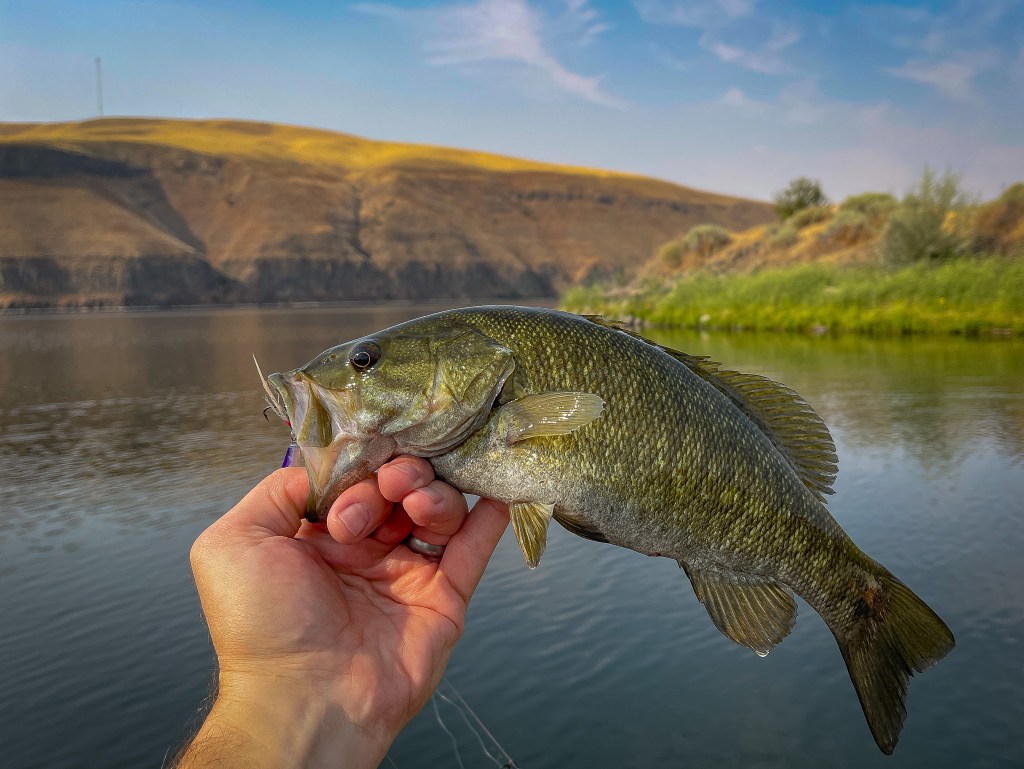
Yuba and I puttered around on the backwater at Deadman and Meadow Creeks, catching a few smallmouth bass and feeling out the motor operations. I focused on the boat’s handling while Yuba built confidence that the boat was not simply a vehicle of certain death. While not the most powerful on the water or a threat to breaking any speed records, she was worthy of being a “whatever” vessel, meaning if I could conjure it, she could handle it sans alacrity. And, as Dennis mentioned, tackling the open river was best left to calm days.

With a successful float test behind us, Yuba and I drove home with the windows down and the radio cranked. The moment sent me back to the “good ole days” driving home on a muggy summer evening, wet, muddy, and tired from catching too many bass on the Shenandoah River. That drive typically included grabbing a 12-pack and burger meat for an impromptu barbecue with my buddies, which sounded mighty fine.

Yuba stood on the truck door with her head and shoulders out the window, her jowls and ears competing for the most dramatic flap in the 90-degree heat. The fishing days with my old Sears and Roebuck 10-foot boat, which was like a Starcraft without flare and class, came to mind. It was suddenly clear that the Super Star had floated me back to when life was truly carefree. This sought-after feeling is something that many of us seek in vintage items, be it a shotgun, bamboo fly rod, muscle car, etc. I never expected it to come from the little Super Star, nor did I expect to enjoy owning it so much more at that moment. The guilt of using funds “better spent elsewhere” instantly sank into the waters of “no regrets.”

Palouse Outdoors – Stay Safe Outdoors with a Satellite Communication System

Published April 4th, 2024, in The Waitsburg Times

Hunting, fishing, and hiking always seemed vanilla to me when it comes to the potential for injury and death. That could be one reason that a passion for the outdoors hit me when I was a child. My brothers chided me for being a “sissy,” and the best escape from the ridicule was avoidance somewhere beneath the trees on the neighboring woodlots.

I began tree-stand hunting for white-tailed deer in my late teens and quickly realized the dangers of the activity. I took the proper precautions with ropes and harnesses and always let someone know when and where I was headed and returning. Aside from that, trail running and mountain biking alone in the Appalachians never appeared dangerous, partially because testing the limits of gravity or intelligence for a thrill never appealed to me. When I moved west and began wilderness hiking and hunting routinely, I realized the dangers in the backcountry, even for the careful and prepared outdoors enthusiast. Middle age likely played a role as well.

Elk and mule deer country is steep, rugged, slippery, and riddled with deadfalls. Add 60-plus pounds of quarters and backstraps to your pack and start back to camp exhausted and sometimes in the dark, and you have a recipe for trips and falls that can lead to impalement on pine branch stubs, torn ligaments and cartilage in knees and shoulders, broken limbs and ribs, and possible tumbles over cliff faces. Navigating all this alone is absurd, yet we’ve all done it and will do it again. All to secure food, experience the beauty and solace of the wilderness, and bestow honor upon the wild life we took to feed our families and memory bank by pursuing them on their terms.

Fortunately, today’s technology offers life safety for average and extreme outdoor enthusiasts via affordable, reliable, and easy-to-use satellite communications devices.

Above are screenshots of the Garmin inReach Messenger device status panel (left), an example of the text message interface (middle), and a weather forecast for a given location (right). This device is user-friendly and works through your smartphone via Bluetooth without a data connection.

Since 2011, Garmin Corporation, among others, has been producing satellite communicators that can summon emergency medical and rescue services through the touch of the “SOS” button using your global position system location coordinates. Should you experience a fall, get lost, or have Mother Nature throw a curveball, location information is transferred through a satellite network to “Garmin Response” in Montgomery, Texas. According to Garmin, “all SOS monitoring, communication, and emergency response coordination are handled at this location.”

A global emergency response system capable of reaching remote locations and saving lives. Sounds great, right? But how does it work?

“Garmin Response maintains a global database of local first responders and emergency services. As soon as an SOS activation is received, the Garmin Response team pulls up the precise location of the SOS alert, a corresponding list of emergency response organizations for that area, and a map overlay of agency jurisdictions. The Garmin Response team contacts the local organization and works with them to dispatch resources to the incident site as necessary[1].”

 In 2023, Garmin coordinated emergency responses for over 10,000 SOS calls made from Garmin devices around the globe. While the number of Garmin subscribers is unknown, a breakdown of activities for which an SOS was transmitted suggests that hiking/backpacking makes up approximately 40 percent. Nearly 20 percent of transmissions are from automobile, motorcycle, and boating accidents. Hunting makes up only about five percent of SOS transmissions.

Overall, more than 70 percent of SOS transmissions could have been made from remote wilderness area situations. Physical injuries caused most SOS transmittals, while medical emergencies, being stranded or stuck (data include offroad vehicle activities), and being physically lost were the other most common emergencies.

“Responses…from New Zealand to Norway to Argentina to Canada were coordinated for plane crashes, grizzly bear encounters, sinking sailboats, skiers in avalanches, stranded divers, injured climbers, and many more1.” 

Over the past few years, getting older, fatter, achier, and spending most of my time outdoors alone were nagging at the back of my mind to get a satellite communicator. I finally pulled the trigger when a remote work trip came up shortly after my wife had major surgery. I settled on the Garmin inReach Messenger because it allows text messaging with friends and family via the Iridium satellite network. During my time in the Idaho mountains, I checked my wife’s health status routinely and could receive immediate notice from her in an emergency.

Whether you’re into extreme mountain sports or leisurely hikes, carrying a satellite communicator makes good sense. With the door to summer recreation opening quickly, now is the time to prepare for your safety while escaping civilization, particularly when going solo. Hopefully, you’ll never need to summon a wilderness rescue, but come wildfire, grizzly attack, or loss of common sense due to hypothermia or elk hunting exertion-induced delirium, carrying a satellite communicator provides a lifeline when faced with the unexpected.

Packing my Garmin inReach Messenger is no different than grabbing my hunting and fishing license – it goes everywhere outdoors with me.


[1] 2023 Garmin inReach® SOS Year in Review

A Plug for Big-River Walleye

In the frothy toss of the dam tailrace, the little Smoker bobbed and dodged like a duck floating down a river rapid. Luckily, the dam was spilling only a minor volume, so conditions were still safe. The game plan was to drop a couple plugs behind the boat and troll across of the unique terrain that lay below the surface of the conflicting currents.

What to Look For

On the big river, walleye are generally structure-oriented in the sense that boulders, rock piles, troughs, and other terrain variations provide velocity breaks and concealment that fish can use to their advantage as forage passes by with the flow. Our target habitat was shelves and drop-offs in a depth range of 18-25 feet.

A plug for big river walleye (6)-1

Read the full post here, at Angler Pros.

Fly Fishing Essentials for Deep Summer Salmonids

Lake fishing for trout species can be dynamite almost any time of the year, but water temperature and heat can dictate when and how to fish for trout more than other species. When dry fly, or even nymph action slows during the dog days of summer, one fail-safe method is deep water streamer fishing. In my prior post, Flying Deep for Desert Cutthroat, I discuss deep water streamer tactics specifically for Lahontan cutthroat, but there are essential gear items every fly fisherman needs to beat the odds of a mid-summer salmonid shutdown.

Flying Deep for Desert Cutthroat

I went for my fly buried deep in the underside of his snout, then realized it was not mine. My streamer, lodged in its tongue. The barbless hook easily popped free. The former, losing fisherman apparently succumbed to the death rolls as a length of tippet and a small, olive, beaded streamer were wrapped tightly around its snout. I unwound the line, freed the fly, and quickly released the behemoth to dash the hopes of yet another angler who will no doubt break him off out of excitement or being too aggressive.

Lahontan Cutthroat are an Entirely Different Animal

DSC_0931

Read the full post here, at Angler Pros.