Northwest Outdoor Writers Association Gathered in The Dalles, Oregon

The Northwest Outdoor Writers Association (NOWA) held its annual conference Friday, May 2nd through Sunday, May 4th, at the Columbia River Hotel in The Dalles, Oregon. For three days, some of the Northwest’s top outdoor writers, authors, photographers, videographers, and radio and podcast personalities gathered to discuss the future of their industry and craft.

The conference opened with a fine meal at the Portage Grill, followed by a keynote speech by author, poet, and publisher, Rick Steber, who exemplified excellence in storytelling. Rick is not only gifted in his ability to research people and history and share those stories in engaging detail, but the delivery of his many favorite interviews of historical figures (including voice impersonations) was both comical and fascinating.

Image of the twisting historic Oregon Route 30 taken from Rowen Crest with the Columbia River and the rugged Columbia Gorge in the background.

Trumbo captured this image while hiking at dawn on Rowen Crest just south of The Dalles, Oregon.

Over the following days, NOWA members sprinkled across the Columbia River Gorge to experience all The Dalles has to offer, such as the National Neon Sign Museum, hiking among the wildflowers and scrub oaks of the rugged river corridor, visiting ancient petroglyphs at Horsethief Lake, and fishing the spring Chinook salmon rodeo at Washington’s Drano Lake.

When not collecting memories, photographs, and fodder for future publications and videos, the outdoor media professionals gathered to share tips and tricks on improving one’s engagement and reach – facets of “Excellence in Craft”- and share business model ideas and successes. Excellence in Craft presentations included George Krumm, editor of Fish Alaska and Hunt Alaska magazines, who discussed how to land pitches and build relationships with editors. Brad Trumbo shared his rise in the outdoor writing and photography realm and engagement with his readers, thanks to his Llewellin setter bird dogs.

NOWA held its annual Excellence in Craft awards banquet Saturday, May 3rd, where 61 achievements were recognized, ranging from “Column of the Year” to the best outdoor photos, videos and humor pieces. The awards banquet offers an opportunity to see where talented outdoor content creators stand among their peers, provides “street cred” for marketing, and offers a fine payout for those who rank high in many categories. It’s a coveted experience for this highly talented group to share camaraderie with friendly competition.

This year’s Excellence in Craft award winners can be found here: https://nowaoutdoors.com/eic-winners-by-category/.

Black-chinned hummingbird hovering over a burgundy Columbine flower.

Trumbo’s image of a black-chinned hummingbird hovering over Columbine flowers took 1st place in NOWA’s Excellence in Craft “Fauna” photo category.

The weekend closed with NOWA President Troy Rodakowski presiding over Sunday morning’s membership and business meeting. During this meeting, Rodakowski assumed the position of NOWA’s Chairman of the Board of Directors as he passed the gavel to NOWA’s incoming President, Brad Trumbo. 

With the annual conference behind them, NOWA’s new year begins with anticipation of next year’s conference, which is already being planned. Additionally, Trumbo brings new ideas to NOWA’s structure and attempts to engage younger generations as the organization adapts to the evolution of outdoor media.

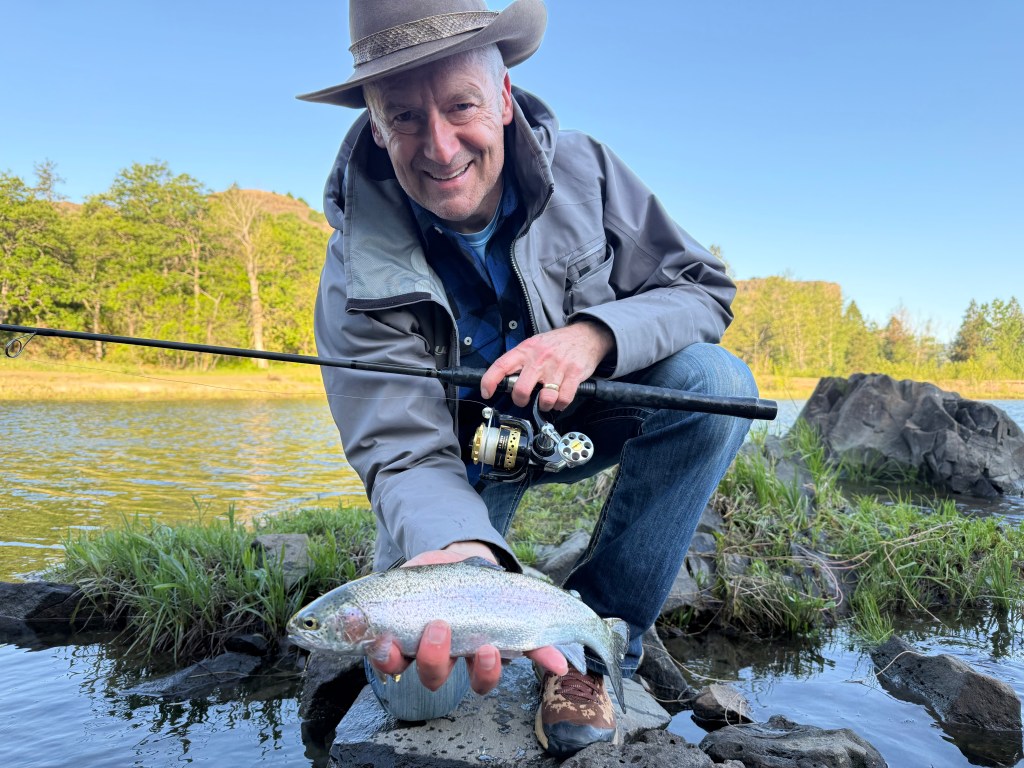
Gary Lewis, award winning author, freelance writer, podcaster, and host of the Frontier Unlimited TV show, found time for trout fishing before the Sunday morning meeting.

If you’re an outdoor content creator living in Oregon, Washington, Idaho, Montana, or BC Canada and want to learn from and contribute to this charismatic and savvy collection of media professionals, email NOWA’s Executive Director, Keith Szafranski, at photogsz@msn.com. Your creativity and energy will be welcomed by this prestigious cadre.

###

            The Northwest Outdoor Writers Association is a society of professional outdoor communicators dedicated to the pursuit of excellence in outdoor media. NOWA strives to further the improvement of professional communications skills and encourage their ethical employment. NOWA also provides a network of professional assistance and support, keeps members informed of news and information pertinent to outdoor activities and industries, and supports the conservation of natural and recreational resources. Visit https://nowaoutdoors.com/ and find us on Instagram @NOWAOutdoors.

Is Avian Influenza Infecting Mammals Cause for Concern?

On February 9th, Colorado Parks and Wildlife (CPW) released information about various wildlife species testing positive for avian influenza. Among the critters found carrying the virus were a skunk, mountain lion, and black bear. All had died from the virus.

“All three of the confirmed cases showed signs of [avian influenza] before or after death including neurologic symptoms such as seizures or circling, general signs of illness such as weakness or lack of responsiveness to human presence, and organ damage including encephalitis, hepatitis, and pneumonia”, reported Travis Duncan with CPW.

The current strain of avian influenza is highly transmissible and was first detected in North America in wild geese in March 2022. In the past year, the virus has readily jumped from avian to mammalian species, which sounds alarming, but this phenomenon is not news.

Zoonotic diseases – diseases transmissible between humans and other animal species – are due to infectious agents that more than one species is susceptible to. Nearly every big game hunter is aware of disease transmission between livestock and elk – brucellosis and elk hoof disease are common examples. Transmissible spongiform encephalopathies cause diseases like scrapie in sheep, chronic wasting disease in deer and elk, mad cow disease, and Creutzfeldt-Jakob in humans. While these diseases are all different, the pathogenic vectors among species are typical and often include contact with bodily fluids or respiratory droplets.

The 2009 “swine flu” outbreak in the US was caused by the H1N1 influenza virus – the same virus that caused the “Spanish flu” in 1819. The swine flu virus appeared to be a new strain of H1N1 that resulted from a previous triple reassortment of bird, swine, and human flu viruses, which further combined with a Eurasian pig flu virus[1]. Miller et al. (2017)[2] identified 87 percent of swine pathogens listed by the World Organization for Animal Health cause clinical disease in livestock, poultry, wildlife, and humans.

Humans have contributed to zoonotic diseases through industrialization and the expansion of communities to accommodate the global population explosion[3]. Landscape development encroaches on wildlife and exposes species to pathogens through close contact with humans and livestock, etc.

Caserta et al. (2022)[4] tested white-tailed deer harvested by hunters for SARS-CoV-2 (COVID-19) during the 2020 and 2021 hunting seasons in New York State. Test results found only 0.6 percent virus occurrence in 2020, but 21.1 percent occurrence in 2021, including all three variants (Alpha, Gamma, and Delta). The variants were present in deer long after they had subsided in the local human population. This presents an example of wildlife acting as a “reservoir” for a virus that can infect other species. Still, it seems odd that a specific disease or pathogen can infect mammals, including humans, as well as birds.

Aquatic birds of the world are the reservoirs for all influenza A viruses, and the virus is spread by fecal-oral transmission in untreated water[5]. Transmission involves mutational or recombinational events and can occur through fecal contamination of unprocessed avian protein, e.g. animals preying upon infected birds or drinking contaminated water. The transmission of avian influenza viruses or virus genes to humans is postulated to occur through pigs that act as the intermediate host[5]. Once avian influenza viruses are established in mammals, they are transmitted from animal to animal by the respiratory airborne route.

While disease outbreaks and spread may be somewhat manageable among livestock and poultry populations, controlling disease spread in wildlife is complicated due to the free movement of wild animals. Brucellosis presents a textbook case study.

Cattle introduced brucellosis to the Yellowstone area in the early 1900s and transmitted it to local wildlife populations[6]. The disease has supposedly been eliminated from domestic livestock in the US, yet it remains in the bison and elk populations of the Greater Yellowstone Area[6]. Like many zoonotic diseases, brucellosis has not significantly threatened wildlife populations.

Understanding animal travel and contact networks is imperative to understanding a disease’s potential movement and risk – information that is not readily available for wild animals, particularly when facing a novel disease.

Researchers have studied ecological niche modeling as a means of predicting disease spread within and among wildlife populations, but data on levels of infection in wildlife are often scarce, open to bias, and insufficient for the assessment of cross-species transmission[7]. Complexities in wildlife populations including host movement, variation in host population size, density, and contact rates, unpredictable variation in climate, and species differences in the host–pathogen relationship lead to low model predictability.

Johnson et al. (2019)[8] found that adapting the traditional biotic, abiotic, and movement framework of ecological niche models by summarizing the interaction of three factors – dynamically linked biotic interactors, unlinked abiotic stressors, and dispersal capacity – improves model prediction capability. A practical application for common wildlife species seems unlikely; however, modeling disease spread with high predictability may allow wildlife managers to avoid significant population-level effects from novel and highly virulent pathogens for known distributions of threatened and endangered species.

The complexities involving host-pathogen interactions are utterly fascinating, but the discussion may be academic in the grand scheme of life and potential impacts on species at the population level. Animals and pathogens evolve continually together, each modifying their defense or attack strategy in a game of win, lose, or draw – the draw being the common outcome when an animal endures symptoms from the pathogen, recovers, and builds immunity.

Although unnerving, the cross-species spread of pathogens rarely leads to significant population-level effects. These interactions represent the pathology continuum that ebbs and flows through time. Take caution when handling game that appears to be sick and cook it thoroughly if it must be consumed.

You can read more about the effects of avian influenza on wild birds at Harvesting Nature.

Avian influenza – Unprecedented Spread Among Wild Birds – Harvesting Nature


[1] Trifonov V, H Khiabanian, and R Rabadan. 2009. Geographic dependence, surveillance, and origins of the 2009 influenza A (H1N1) virus. The New England Journal of Medicine 361 (2): 115–19.

[2] Miller, RS, SJ Sweeny, C Slootmaker, DA Grear, PA Di Salvo, D Kiser, and SA Shwiff. 2017. Cross-species transmission between wild pigs, livestock, poultry, wildlife, and humans: implications for disease risk management in North America. Scientific Reports 7:7821 | DOI:10.1038/s41598-017-07336-z.

[3] Fong, IW. 2017. Animals and mechanisms if disease transmission. In Emerging Zoonoses: Emerging Infectious Diseases of the 21st Century. Springer International Publishing DOI 10.1007/978-3-319-50890-0_2.

[4] Caserta, LC, M Martins, SL Butt, NA Hollingshead, LM Covaleda, S Ahmed, MRR Everts, KL Schuler, and DG Diel. 2022. White-tailed deer (Odocoileus virginianus) may serve as a wildlife reservoir for nearly extinct SARS-CoV-2 variants of concern. Proceedings of the National Academy of Science 120(6), https://doi.org/10.1073/pnas.2215067120.

[5] Webster, RG. 1997. Influenza virus: transmission between species and relevance to emergence of the next human pandemic In O Kaaden, C Czerny, and W Eichhorn, eds., Viral zoonoses and food of animal origin. Springer Vienna. https://doi.org/10.1007/978-3-7091-6534-8.

[6] Brucellosis – Yellowstone National Park (U.S. National Park Service) (nps.gov)

[7] Morgan, ER, M Lundervold, GF Medley, BS Shaikenov, PR Torgerson, EJ Milner-Gulland. 2006. Biological Conservation 131:244-254.

[8] Johnson, EE, LE Escobar, and C Zamrana-Torrelio. 2019. An ecological framework for modeling the geography of disease transmission. Trends in Ecology and Evolution 34(7):655-668. https://doi.org/10.1016/j.tree.2019.03.004.

*Feature Image Credit – USDA APHIS

An Ounce of Prevention

The Backstory

Yuba sat trembling atop my lap, peering out the back of the cabin as the 225 horsepower Yamaha outboard thrust the North River Seahawk onto plane. The night brought freezing rain and wet snow, but the morning was dawning beautifully; the Snake River meandering its way between fog banks under a pink cotton candy sunrise. On board we had Dave, Brett, Rhett, two old, rotund Brittanys, and Yuba and I.

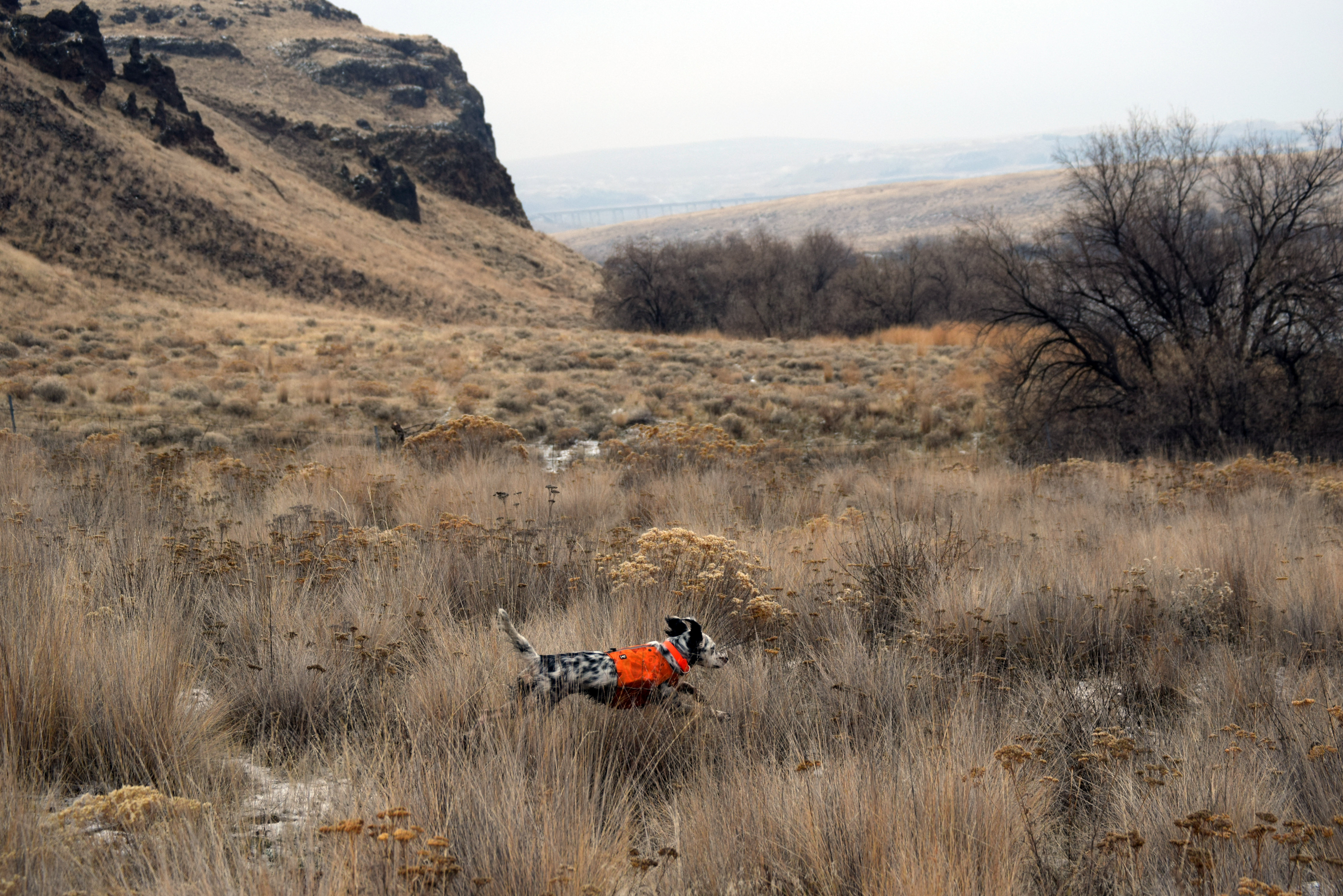
Our plan was to swing into a remote US Army Corps of Engineers habitat unit and split up. Cautioning the guys about Yuba’s big-running tendency, Dave, the only dog-less crew member, volunteered to hang with Yuba and I, while Rhett and Brett took the Brittanys to the other end of the property. Yuba is certainly the baby of the family, terrified of water, and is unsure of strange dogs, but she hit the ground running as the boat slid in under the Russian olives at the foot of a looming basalt bluff.

Dave and I barely made it around the toe of the bluff when we strolled right into a flock Rio Grande wild turkey. Yuba had seen a single or two, but the flock of 30 birds erupting from under the Russian olives sent her into a new dimension of crazy. Carrying a valid turkey tag, I wasted no time releasing a round of 4-shot steel from my old Ithaca model 37 pump, resulting in a notched tag and heavy vest.

DSC_0238

From Yuba’s perspective, the Rio hen was simply a giant prairie grouse with strong scent. And clearly, they were fair game as ole dad bagged one instantly. Therefore, in classic pointing dog fashion, she bounded off to peg the next bird. The turkeys amusingly dispersed like a flock of quail among the grassland. Yuba pointed and we flushed about a dozen singles throughout the hunt. But the real show began when we got into the pheasant.

As if Yuba weren’t crazy enough, there were dozens of pheasant along the riverbank, hiding in the false indigo and flushing wild. As we pinched in toward Brett and Rhett, the pheasant started busting in all directions, bird dogs were pointing, scurrying, and looking for birds to retrieve from a volley of shots.

I noticed I was on the whistle a lot more than normal as Yuba careened in, around, and through every bit of cover she could find. But even in the chaos and sensory overload, I was impressed with her finding and pointing prowess, telegraphing with precision where a bird was, should be, or was headed. The entire show was simply unprecedented.

I never touched a rooster all morning, but was amped and proud as we made our way back to our pick-up point. Yuba was beat, of that I was sure, but I had little worry as she was actively and intelligently hunting the entire morning. Still, I kept a keen eye on her as I am accustomed to her hips getting stiff and sore as a result of dysplasia. So, it was no news when she suddenly started to show some signs of hip pain, or so I assumed, from a seemingly stiff gait.
DSC_0214

Almost to the boat, I noticed Yuba’s hind legs quiver a bit, so I scooped her up and carried her the rest of the way. Her reward for an incredible hunt would be to warm up, grab a snack, and retire from the afternoon hunt. Handing her up to Brett, I swung myself aboard, regained my feet, and reached out to take my tired little setter. But confusion was replaced with dread as I noticed her eyes clenched in pain, followed by the unmistakable convulsions of a seizure.

“Holy shit, she’s seizing!” I yelled to Brett, who swiftly laid her out on the large, cushioned bench seat in the boat’s cabin.

I wrapped her in my insulated overalls while Brett cradled Yuba’s head. Seizures can present with a variety bodily functions, pains, and other involuntary motions and sounds. An eternal minute passed as every muscle in her tiny body went board-stiff, but the worst of it was her uncontrollable screaming.

With muscles finally relaxing and cognizance regaining, the pain must have been unbearable; the cause I am left to assume was perceived as some unknown predator. Large, dilated pupils searched to unveil the culprit as she pled for mercy. Terror, confusion, and panic were evident as Brett and I spoke softly, stroking her ears in an attempt to sooth her fear, if nothing else.

At the two-minute mark, she began to quiet. The convulsions had completely ceased and sore muscles relaxed. I scooped her up, still wrapped in my now defiled overalls, and sat with her curled on my lap like a newborn pup. Brett solemnly motored toward the marina.

She had come out of it. That was the first blessing, but I had no way of really checking her neurological signs as of yet. Suspicious that the cause was either an electrolyte or glucose deficiency, I went for a honey packet, which I had readily on hand for this very situation. She lapped at it eagerly.

Back at the truck, I tucked Yuba in softly among a fleece blanket and the overalls, and offered some water, which she happily drank. She was showing no sign of impaired motor skills, but was still clearly wiped from the exertion of the hunt and seizure. Dropping the Tundra into drive, I dialed the local vet, announcing I would see her in 45 minutes, if not sooner.

Keeping tabs on the groggy pup, I randomly whistled or called her name. She always responded. Carrying her across the threshold at the vet’s office, she wagged at the receptionist, and sat upright on my lap in the waiting room. The visit was short and sweet, and Yuba’s behavior improved immensely in that insignificant amount of time.

The diagnosis was as I suspected afield. Hypoglycemia. More appropriately, Hunting Dog Hypoglycemia (HDH).
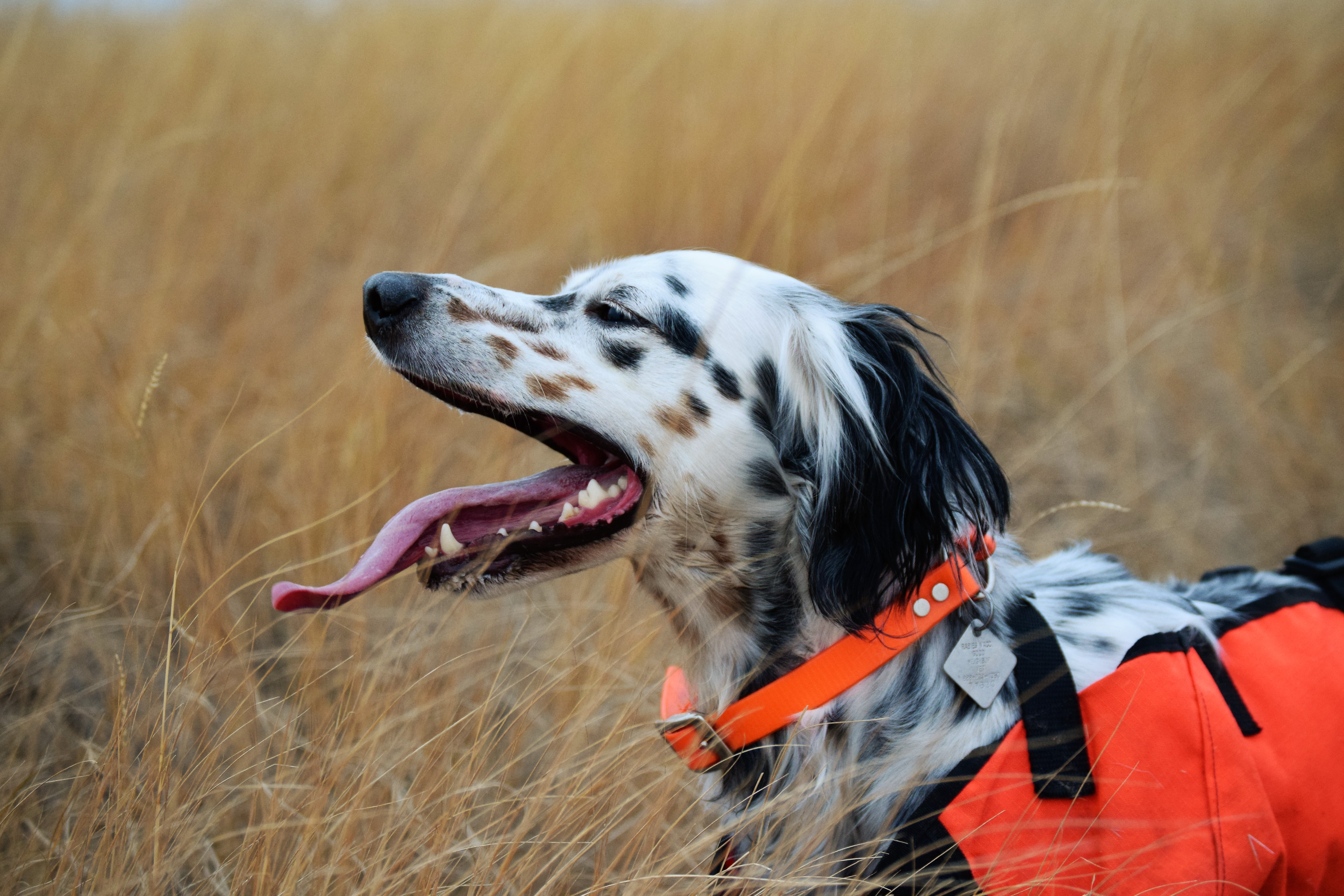
DSC_0088

What is HDH?

I believe most folks know what hypoglycemia is, but in case you don’t, its low blood sugar. A pup’s normal blood sugar should range somewhere between about 70-150 ml/dl. A dog experiencing HDH will have a value likely below 50 ml/dl. Dr. Shawn Wayment (DVM, @birddogdoc on Instagram) explains that HDH occurs when a canine athlete exerts itself in strenuous exercise thereby rapidly depleting their blood sugar (glucose) before their reserves can be remobilized or released from glycogen storages from the muscle and liver.

Symptoms

There are a number of reliable resources on HDH that share common symptoms that may include the following.

  • General fatigue
  • Staggering
  • Trembling
  • Shaking
  • Nervousness
  • Anxiety
  • Weakness
  • Ataxia (loss of control of bodily movements)

As with any medical condition, no two cases will necessarily present alike. Athletes fatigue when they work hard, whether two- or four-legged. Yuba was showing fatigue as she has on every hunt for the past four seasons, but no other symptoms until about five minutes prior to her seizure. At that time, her demeanor appeared similar to her pre-FHO days when her hips began to hurt and stiffen.

Causes

Dr. Wayment refers to current literature on HDH pointing to a lack of condition as a common cause; however, he believes that this is simply not the whole truth and has “…seen it happen in very well-conditioned canine athletes.” That now makes two of us as Yuba is at the height of her physical ability for the season.

So, what really caused Yuba’s bout of HDH? My hypothesis is the perfect storm of conditions creating utter chaos, sensory overload, and compensation for environmental conditions. The novelty of the hunt in general is my overarching suspicion, the specific points exacerbating Yuba’s metabolic rate being the following.

  1. General adrenaline and anxiety for an hour before the hunt: Yuba knew we were headed out hunting and was trembling with anticipation the entire truck ride and wait for our comrades.
  2. First time boat ride: Yuba doesn’t like water more than about a foot deep. She was nervous just walking down the dock to the boat, much less roaring down the river on water she knew was deeper than she is tall.
  3. Strange dogs: Yuba loves people, but the two strange, yet sweet and well-meaning Brittanys, further prodded her nerves and desire to curl up in my lap for security.
  4. Turkeys: Yuba had seen a turkey or two before, but the dozens of turkeys that flushed into the grasslands like a flock of quail inundated the area with bird scent. She was working and pointing turkeys left and right the entire hunt. Upon her first find, it was difficult pulling her off of the scent at all. This was uncharted territory for her.
  5. Pheasant: There were also dozens of pheasant. Everywhere. Between the turkeys and pheasant, she didn’t know which way to go or which scent to key in on and was totally jazzed about it.
  6. Shooting: The two groups of hunters began at opposite ends and worked toward each other with a barrage of shots throughout the hunt. When the gun fires, Yuba kicks into high gear looking for the dead bird, then tears off in search of the next live bird. Focus was a bit problematic as she wasn’t sure what she should do at times.
  7. Frigid Conditions: We had been hunting since September, but this was the first actually cold day afield. And it wasn’t just cold, but wet from icy precipitation. She was soaked and chilly causing additional caloric burn to maintain body temperature.
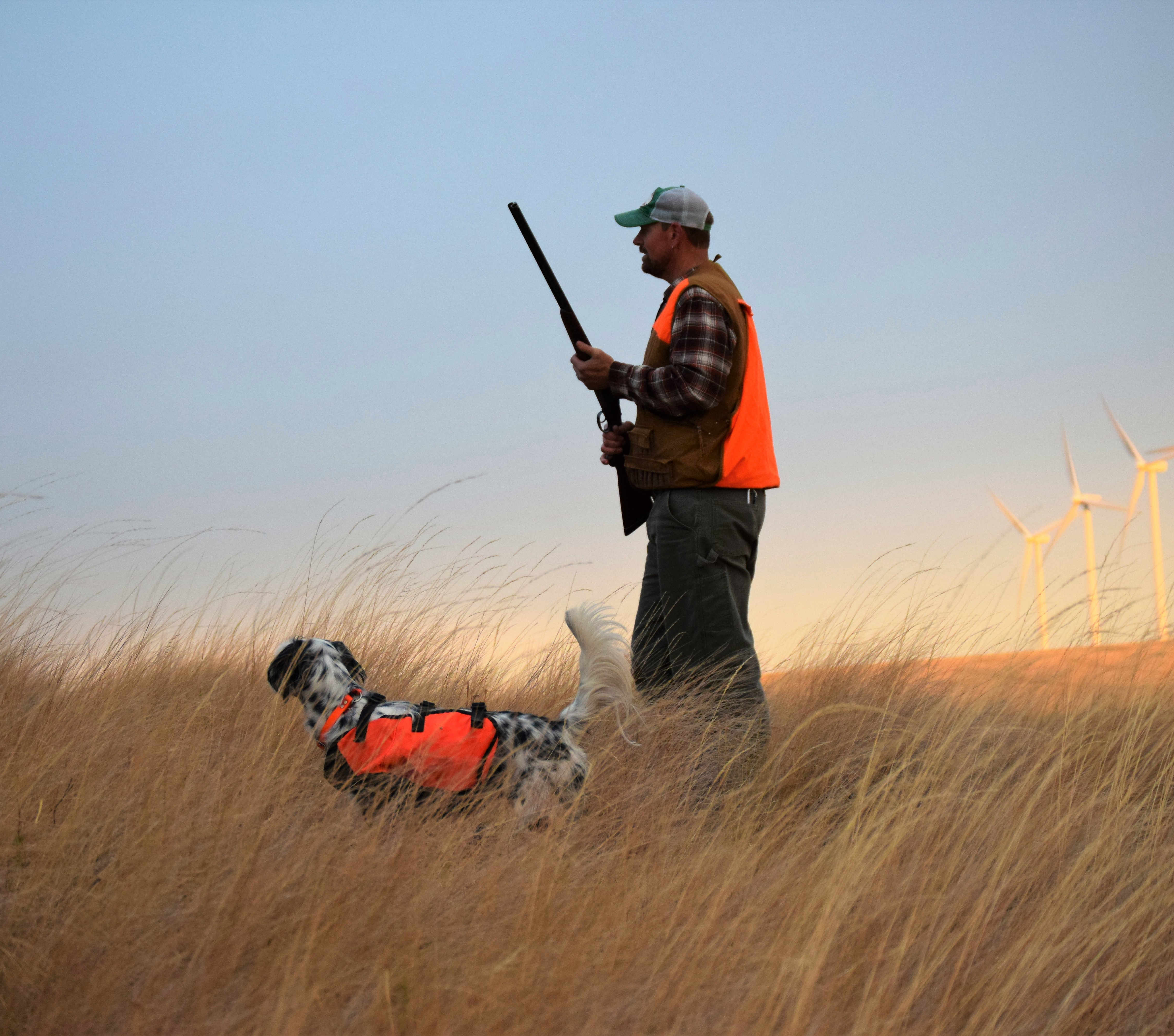
 

DSC_0003-1

Prevention

The old saying that “an ounce of prevention is worth a pound of cure” could not be more true as you cradle your ailing pup in the field with little to nothing you can do to remedy the situation. I was prepared with the necessary items to keep her energy up, but I neglected to enforce break time to care for her. When Yuba is on fire and thoroughly enjoying the hunt, I have to leash her to make her stay put for breaks. I failed to do this on this particular hunt and will not make that mistake again.

Furthermore, a warmer vest that could keep a lean, 28-pound setter drier may have been enough to keep her energy burn rate to a more normal level.

Proper diet, rations, and conditioning are a must for our four-legged upland athletes. How often to feed your dog is another question that I refrain from debating, but some veterinarians suggests that feeding the appropriate daily ration once per day would condition a dog’s body to store a larger liver glycogen reserve to draw from during strenuous activity.

Dr. Wayment also suggests that feeding a dog 10% of its calculated daily ration every two hours during strenuous activity has shown success in preventing HDH symptoms.

Emergency Treatment

What did I do right during this whole debacle? I provided warmth immediately, and water, honey, and rest once the seizing stopped. Yuba came out of it well, was responsive, excited about the honey, and didn’t show any obvious, alarming symptoms of neurological deficiencies. Nevertheless, I rushed Yuba to the vet for an exam, which was one hour to the minute from the onset of her seizure.

The same resources providing information on HDH symptoms also provide a variety of treatment options listed below. Whichever product you choose, at least 50% glucose is key. A couple ounces should suffice if needed in a pinch, but be prepared to feed your dog in short order and rest them the remainder of the day.

  • 50% Dextrose solution (50% glucose)
  • Karo syrup/corn syrup (100% glucose)
  • High fructose corn syrup (50% glucose)
  • Honey (50% glucose/50% fructose)
  • Maple syrup
  • Jelly/jam
  • Pure fruit juice
  • Nutri-Cal supplement

Dr. Wayment suggests applying to the oral mucous membranes for rapid enzyme break down; however, you should exercise caution. It may be best to wait for the seizing to end before trying to orally administer any of the above. Seizing animals obviously have no voluntary control over their body, including the mouth. Fingers near the teeth could end badly and at no fault or intention of your pup.

DSC_0911a

Looking Ahead

I learned the hard way to recognize conditions that may be hazardous to my pup’s health, aside from the obvious. Be cognizant of how novel experiences may impose additional stress on your pup.

Do not dismiss symptoms. This is Yuba’s first season hunting post-FHO surgery on her right hip. She is a new dog with relentless enthusiasm and desire, but the former three seasons of monitoring her pain level through her body language left me to assume that any symptoms she expressed were caused by her other, still arthritic hip. This was clearly not so. I don’t recommend looking for the metaphorical zebra at all times, but I do suggest being suspicious enough of the horse to consider a zebra in disguise.

Preparation does not equal prevention without proper action. Keep an eye on your pup and the clock. This can be a tall order amidst insane action, particularly when you rely on your pup to show you when he or she needs a break. But in Yuba’s case, and possibly the case with other pups in peak condition, no obvious symptoms of extreme exertion or energy expense may be noticeable. Had I forced a break and a snack just once, it likely would have prevented the seizure.

While Yuba’s story has a happy ending, a proportion of these cases end fatally. Keep your pup’s energy up, and by all means, if you recognize any of the above symptoms of HDH, allow your pup to rest the remainder of the day. When caught early, pups can bounce back rather quickly. But finding a few additional birds is not worth the risk, lest you be the next to publish the unfortunate story of your pup’s demise in the Pointing Dog Journal subscriber forum.

Haying Best Management Practices for Wildlife

Farming and habitat practices to maintain healthy CRP and alfalfa stands provides significant nesting and brood rearing benefits to upland game birds, fawning areas for deer, and nesting and roosting habitat for wild turkey in the early spring and summer. Long, overhanging grasses provide nesting cover while broad-leaf plants like alfalfa and other native forbs provide insect forage for fledgling broods and hens. These stands draw and hold birds but have been called “ecological traps” in areas where haying regularly occurs.

The term ecological trap refers to a beneficial condition that attracts wildlife, but results in additive mortality, affecting the population overall. Quality CRP and alfalfa stands fit the scenario well where haying normally occurs during nesting season.

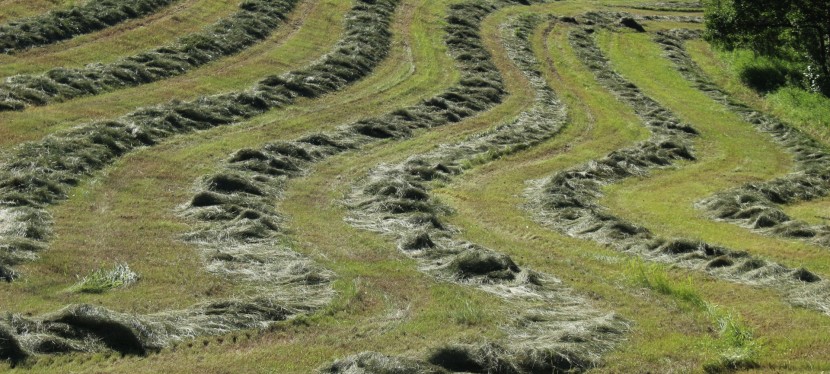
As haying equipment approaches, a hen pheasant may not vacate eggs or chicks, rather hunker down and use her camouflage for protection as a tractor passes by. This leaves birds vulnerable to the following mower which may be offset from the tractor. Likewise, small mammals and deer fawns use similar camouflage techniques and experience similar vulnerabilities to upland birds.

Best Management Practices

To minimize the potential hazardous effects of haying on wildlife, the Natural Resource Conservation Service has developed a few simple best management practices.

1) Defer haying. Apply and maintain at least two of the following management actions specifically for improving or protecting grassland functions for target wildlife species.

  • Do not cut hay on at least 1/3 of the hay acres each year. Idle strips or blocks must be at least 30 feet wide.
  • For at least 1/3 of the hay acreage, hay cutting must be either before and/or after the primary nesting or fawning seasons based on state established dates for the targeted species.
  • Increase forage heights after mowing to state specified minimum heights for the targeted species on all hayed acres.

2) For all haying during the nesting/fawning season implement at least two of the following to flush wildlife from hay fields during the mowing operation:

  • A flush bar attachment will be required on the mower (see figure below).
  • All mowing will be done during daylight hours.
  • Haying pattern:
    • Begin on one end of the field and work back and forth across the field, OR;
    • Begin in the center of the field and work outward.

Following these simple practices can greatly reduce unintentional wildlife mortality, further increasing the benefits of environmentally friendly farming.

flushing bar

Image from the Natural Resource Conservation Service.