Gift Guide for the Discernible Outdoor Enthusiast

Originally Published in Walla Walla Lifestyles Magazine, November 2024.

Crisp air, pumpkin ale, fresh-squeezed apple cider, and hunting seasons have finally returned, and you know what that means. Yes, we are living our best months of the year, but this time train we all ride is screaming toward Christmas and holiday shopping. If you have an outdoors enthusiast in your life who is “hard to shop for,” i.e. buys whatever gear they need when they need it and has a particular taste, here are a few ideas that might be right up their alley.

Vintage Shotguns
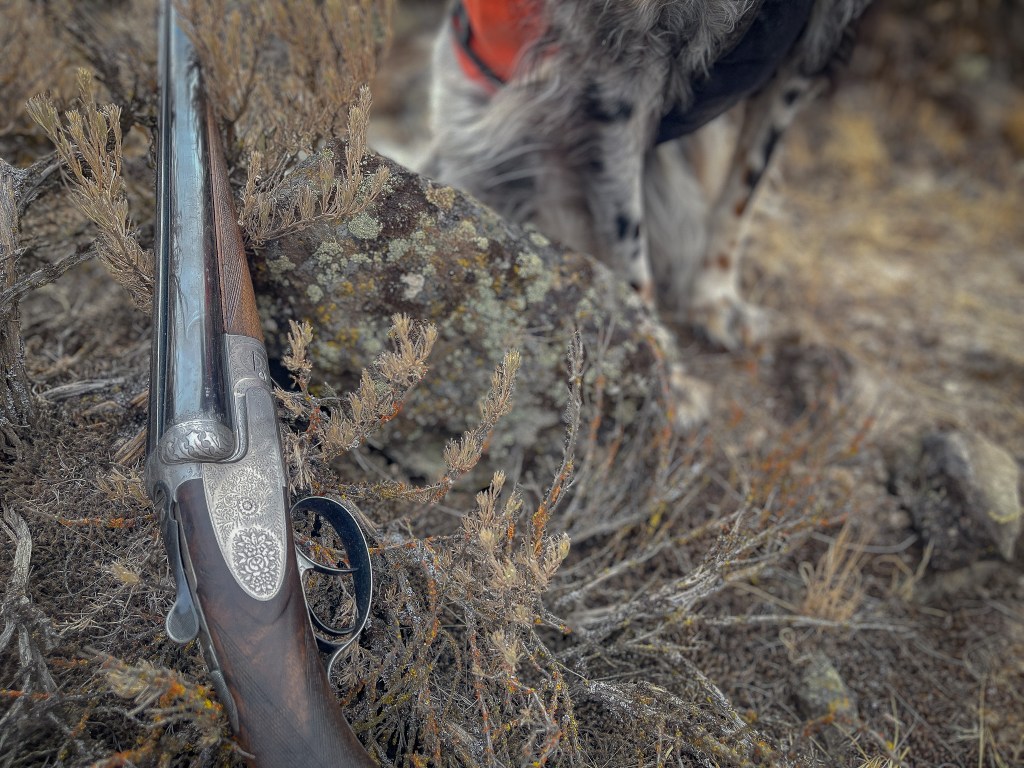
This beautiful 1951 Belgium-made CF Dumoulin 16-gauge is a fine and affordable vintage double for the traditional upland bird hunter.

Nearly every upland bird hunter dreams of carrying a vintage double-barrel shotgun. Whether their fascination originated at a young age with a family heirloom or the quality craftsmanship of vintage guns connects them to a long-standing tradition, bird hunting with a piece of American sporting heritage enhances the experience. Maybe your bird hunter has a particular brand in mind, like an A.H. Fox, L.C. Smith, Lefever, or Ithaca. Each of these can be found online and at gun shops with regularity. The Spokane area has several gun shops with a good selection of used shotguns. They even turn up in Cabela’s “Gun Library” from time to time.

I was browsing the Eugene, Oregon, Cabela’s once for no particularly good reason when a long, pewter-colored side-by-side caught my eye. It was a beautiful L.C. Smith Field Grade 00 made in 1911. I asked to see the gun out of curiosity, assuming the price tag was above my pay grade. Conversely, the gun was affordable due to a small dent in the left barrel and a refinished stock. Playing it cool, I haggled a little (yes, that’s acceptable), noting the dent and stock work, then strolled out with the superb specimen sporting an action smoother and tighter than any newer gun that I own. Whenever I swing the “Elsie” on a passing quail, I feel giddy, like it’s stolen property. The bird hunter in your life would likely feel the same.

A great source of information and where to find “hot buys” for vintage double guns is at dogsanddoubles.com.

Custom Knives

This pair of small, packable, attractive knives from the Upland Knife Company are a fine addition to any hunter’s gear collection.

Speaking of craftsmanship, all outdoorsy folks need a quality knife or two—maybe three. Knives are a dime a dozen from any typical outdoor retailer, but the blades are often made of lesser-quality steel and fail to hold an edge or take one when sharpened. Fortunately, there are knife makers nearby with a fine reputation.

Three custom knives from the same maker in Hamilton, Montana, are floating around in my upland hunting gear. Two are lightweight and slim for easy packing in a hunting vest. The third is a little larger, boasting a custom wood handle, precisely designed, cut, and pieced together with painstaking detail. The blades are of the highest quality, hammered out, and sharpened onsite—one hundred percent heirloom-worthy.

Who is the knifemaker? Michael Thomspon, owner of the Upland Knife Company (www.uplandknives.com). He accepts custom order requests, and if you’re lucky, you can find a knife or two of his design ready for purchase on the website. Follow him on Instagram @upland_knife_co for sneak peeks and product drops.

Outdoor Journals

More than a simple journal, “The Rambler” by Freeman and Sons Supply comes with an Opinel #8 knife and offers many pockets for a variety of needs.

Considering gifting the average human with a journal may not seem like a slam dunk, but I assure you, the outdoorsy folks in your life will like this recommendation. It’s a rare hunter or angler these days that doesn’t at least keep technical notes on their outings. More often, they tell a bit of the story when fish and game come to hand. If Instagram provides any reliable evidence, nearly everyone posting a pic with a fish, buck, bull elk, or brace of birds with their dogs will offer a few lines about how it all came together. That’s why “The Rambler” field journal from Freeman and Sons Supply (https://www.etsy.com/shop/Freemanandsonssupply) makes a fine gift.

The Rambler is a handsome, high-quality, handcrafted leather tool that comes with a Field Notes brand journal and iconic Opinel No. 8 pocket knife, made in the French Alps since 1890. The front pockets are designed for a pen and pocket knife. The rear pockets hold business cards, cash, or whatever else you decide to tuck into them. The Rambler goes where I go to capture the details of every outing. Sometimes, I take it to meetings where business cards and other notetaking needs are handy. Slip one into your special someone’s stocking this year. They’ll be glad you did.

Custom Fly Rods

Custom fishing rods like these Batson Enterprise Rainshadow fly rods provide a one-of-a-kind fishing experience and a beautiful, quality tool for the fisherman or woman in your life.

Okay, let’s agree that fishing rod-making technology has flooded the market with high-quality products at most price points, from the Echo starter package to the Orvis Helios. It’s truly hard to go wrong. However, a handcrafted fly rod, made to spec or off-the-shelf, takes excellence to a new level. Where to find one? The “Red Shed Fly Shop” in Peck, Idaho (www.redshedflyshop.com).

Why is it called the Red Shed? Take an afternoon drive up the scenic Clearwater River and see why you shouldn’t judge a book by its cover. The weathered little shed has a few fly-fishing gear banners on the front but looks more like a backwoods beer-drinking cabin from the outside. Open the door, however, and stare in awe at the wealth of gear and knowledge that packs the little shed to the gills.

Owners Mike and Linda Cummins offer everything from waders, flies, and nets to custom Burkheimer rods that line the ceiling. Handle one of the Burkheimers, inspect the detail in the guide wraps and grip, and note the rod’s balance, as it feels weightless in your hand. Whether sending dry flies or streamers or throwing “the meat” for steelhead on a two-handed rod, it will fish like a weapon if it came from the Red Shed.

Commissioned Artwork

Capture that magic moment with artwork, like this painting by Alan Rasmussen of a wild rooster that young Llewellin setter Zeta pinned on of our favorite and difficult public coverts.

Like fishing rod-making, technology has put the power of photography at our fingertips with every smartphone, and people are documenting everything. But one thing that cannot be replaced with technology is an artist’s touch. Commissioning a painting for that magic moment in the wilderness, a big buttery brown trout, Snake River steelhead, or a bird with your best pointing dog can cement the memory with elegance.

One such moment happened last fall when my youngest setter, Zeta, pinned a wild rooster pheasant in one of the toughest covers I have hunted because the birds have such an advantage. I had not taken a bird in seven years of hunting those bunchgrass hills, but Zeta held the bird while I waded through 200 yards of Great Basin wildrye for the flush. I sent a photo of Zeta and her rooster standing above the property to Alan Rasmussen (www.alanrasmussenartwork.com), a phenomenal wildlife artist in Utah. My one request was to make the fall colors pop on the deciduous trees behind Zeta. Alan returned to me a picturesque interpretation of the scene and a perfect portrayal of Zeta, right down to the freckles on her muzzle. See his work online or on Instagram @alan.d.rasmussen.

If your special someone has a favorite style of artwork, there’s an artist willing to deliver it for you at an affordable rate. You can find them on Instagram, for example, by searching terms like “commissioned art,” “upland art,” and “oil painting.” Many of these artists also offer affordable prints of their original pieces as an alternative.

These few gift ideas encompass built-to-last craftsmanship, stunning good looks, and superior skill and utility that every hunter, angler, hiker, biker, climber, etc., will appreciate, so check them out. If nothing else, they will help get your creative juices flowing. Remember, commissioned items take time to complete, so contact those vendors early if you wish to have them for the holidays. Happy shopping!
Steppe Outside – An Old Boat Presents New Opportunities

Originally published in the Walla Walla Union Bulletin, August 10th, 2024.

It felt odd sipping whiskey in a dimly lit bar with the sun riding high at two in the afternoon. Not so strange for a Saturday in my college years, but somewhat out of character for a middle-aged man, without context. The occasion was celebratory. Local author Dennis Dauble and I made small talk and discussed his fine day of book sales following a signing for his new release, “A Rustic Cabin,” a book sharing the follies and fortune of owning a log cabin and a small slice of heaven on a remote forest stream.

Dennis is best known for his fishing literature. Hence, it was only natural that our conversation evolved from his cabin book to fly-fishing and the Columbia River sockeye salmon run that was just turning on.

“They’re here. Looks like 4,000 over McNary yesterday and increasing daily,” Dennis noted.

“Any predictions on the run this year?”

“At least average, maybe a bit above. You should come out with me this week. I’ve got to get on the water, but my daughter just returned the boat I gave her, and I need to find a place to store it ASAP. The homeowner’s association won’t allow it to sit at my place, and the boat storage has quadrupled in price over the past two years.”

A friend subtly offering that kind of information amidst a routine fishing conversation highlights their mastery of piquing one’s interest. Before divulging any details of the vessel, Dennis mentioned his need to move it without offering a sale, which led me to believe the boat was both valuable and of interest to me.

“Oh? Tell me about this boat,” I replied, forgetting the sockeye fishing offer entirely.

“It’s just a little 12-foot Starcraft with an 8-horsepower outboard that I used to buzz around in while steelhead fishing. It’s a good boat for a calm day on the river.”

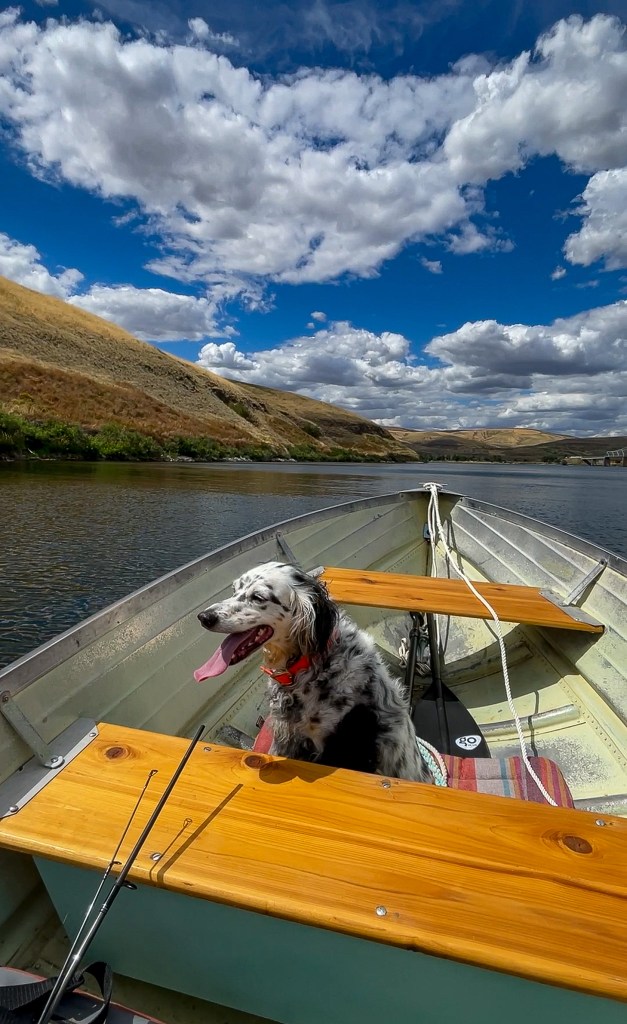
Whiskey on an empty stomach was a poor precursor to this conversation. Anyone who has ever owned a boat knows there is no justifiable “need” for one, save for Dennis and another friend, Chas, who both get their time and money’s worth out of their fishing vessels. On the other hand, I knew perfectly well the limited use I would get from a small boat. Still, the hamster jumped on the wheel and spun my mind into thoughts of hard-to-reach bird hunting spots, should the boat be capable of navigating the Snake River. Visions of a black-and-white setter on the bow with her ears flapping in the breeze and a classic double-gun resting on the front seat as we motored toward remote pheasant habitat was all the convincing I needed.

Dennis must have seen that I was on the line, but being a conscientious man, he allowed me some slack and changed the subject. “I’ll send you a couple of photos tonight.”

That evening, a text message revealed a photo of the boat under a navy-blue canvas cover, parked snugly beneath the pines along Dennis’ driveway. Additional images arrived via email identifying a well-loved Starcraft with freshly restored wooden bench seats, the bottoms painted with the original (or nearly matching) turquoise interior scheme. My gravitation to nostalgia and restoration projects and the quality work Dennis had done on the bench seats sealed the deal.

“I think I need to look at that boat. I’m off work this coming Wednesday. I can drop in if you need to move it sooner than later,” I replied.

“Wednesday will work. Be here at 9:30 a.m.”

Upon arriving at Dennis’ home, the little boat’s homemade trailer was the most eye-catching piece of the package. Rusty red tube steel was crafted into a perfect boat-shaped frame with dry-rotted rubber rollers and cushions. The axle was crafted from an old vehicle I-beam front end, possibly from a junkyard street rod, and welded together in the center with four slabs of flat three-eights-inch steel. Two long-traveling leaf springs supported the trailer frame, and the entire rig rode upon tires large enough to fit my pickup. The axle was overkill for a 120-pound riveted aluminum dinghy, but a stout trailer axle is far better than a weak one, and this one would be easy to repair when needed.

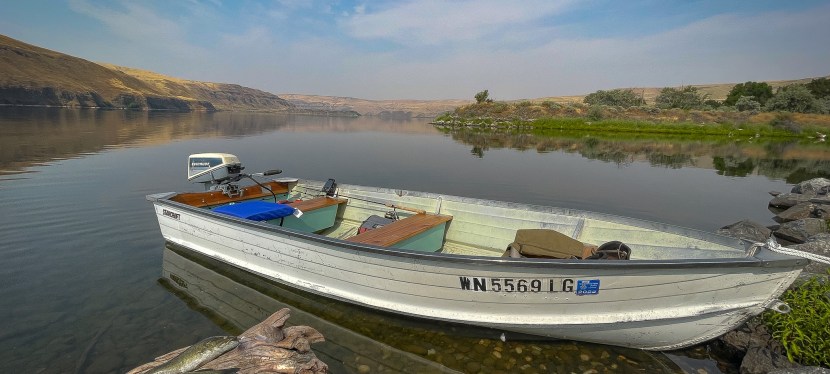
Throwing off the blue canvas cover revealed a 12-foot Starcraft “Super Star” that was in far better condition than I had expected. Starcraft made the Super Star model between 1968 and 1972. This one is titled for its inaugural year.  Most old metal boats have dinted floors and support ribs, among other maladies they incur from reckless handling, mainly due to being lightweight. The outside white paint was scraped and chipped, and the Starcraft emblem was missing from the starboard side, but that was it. She was perfectly clean otherwise, and Dennis’ phenomenal craftsmanship on the bench seats and transom made it look that much better.

Starcraft marketed the Super Star on its durability, stability, versatility, ease of handling, and affordability. Its price tag was $255 in 1968, which translates to around $2,300 today. Surprisingly, this is comparable to the sale price of similar aluminum boats, which seems like a deal, considering a nice standup paddleboard will cost you a grand these days.

Dennis revealed the 1985 Evinrude 8-horsepower outboard with two three-gallon fuel tanks hidden in the outdoor storage beside the house. The vintage two-cycle was compact and lightweight at only 56 pounds (according to Evinrude specifications). Still, as Dennis and I dropped it onto the transom, the trailer tongue quickly rose skyward. Alternatively, hitching the trailer to my truck allowed us to attach the motor and give it a once-over. It had not run in a couple of years, and the cowling appeared worn from nearly 40 years of sun exposure. Beneath the cowling, however, was a cleaner little two-cylinder engine than I had seen in many years of operating and maintaining a fleet of working boats as a fish biologist. Suffice it to say, I had seen enough.

“You can think on it for a while,” Dennis allowed, not wanting to be too pushy.

“I’ll take her!” I exclaimed. Truthfully, I find classic toys irresistible. They feed my personality type, which is fascinated with history and tradition, and passionate about restoring quality-made, old-fashioned sporting equipment.

With a quickly-scribbled check and some signatures on the bills of sale, I was out the door with my new antique toy.

The hour and fifteen-minute drive allowed ample time to proceed through the gamut of emotions from excitement to guilt. Depositing that cash into home maintenance or other necessary expenses throughout the year would have been the responsible thing to do. However, Ali and I shared a frank conversation the day prior about our unrelenting prioritization of responsibilities over living life and suffering the consequences of such choices. We chose the homestead life, and each have a side gig or two tacked onto day jobs, but there is more to life and time to live it if we just stop for a moment. That conversation resonated as I inspected the boat in Dennis’ driveway.

I spent the following two weeks tinkering before testing her seaworthiness, which was a welcomed distraction from the mundane summer chores. Boats and trailers are an upkeep and customizable bottomless pit. And, like a classic muscle car junkie, I identified updates that meant little to the boat or trailer’s performance but enjoyed the fiddling. Rubber pads, chains, winch, lighting, cleaning fuel tanks, and finally starting the engine all felt like worthwhile improvements for safe and reliable use.

“I’ll bet I have to take the motor to a marina for repair,” I told Ali the morning I set out to fire it up. Outboards that sit around often refuse to start for countless reasons. Nevertheless, I hooked up a fresh tank of fuel, primed the line, and pulled the cord.

The good news was that the compression felt great. The bad news was that 10 minutes later, the engine had not even pretended to fire. I had no idea what the idle adjustment meant or how often or long to choke the carburetor. I was learning on the fly. I was sure that old fuel likely needed to be pushed through the carburetor, so I made a series of adjustments while squeezing and holding pressure on the siphon bulb and struggling to pull the cord with weary arms.

Finally, she bucked like a stubborn foal sending a warning kick as you try walking behind it. Also, like breaking a horse, the motor continued to kick and stall, as if refusing the saddle, but understanding the purpose of my efforts. After half an hour, the little engine came to life and ran as smoothly as new. It even shifted smoothly, without grinding or lurching. Last was to ensure the water pump worked, so I ran it at various speeds in a water trough for another half an hour to ensure that it “peed” the entire time.

The final test was ensuring engine functionality, which I had accomplished much earlier in the day than anticipated. So, I tossed my black-and-white setter, Yuba, and some fishing gear in the truck and headed for the Port of Garfield boat launch for the maiden voyage.

Starcraft specifications suggest a 500-pound weight capacity. The fuel, motor, and I comprise over two-thirds of that, and she struggled to get “on plane” with two-thirds of the payload stacked in the back of the boat. However, with a little weight shift toward the middle, the bow came down, and the boat moved faster than I could paddle a kayak, which was a win in my book.

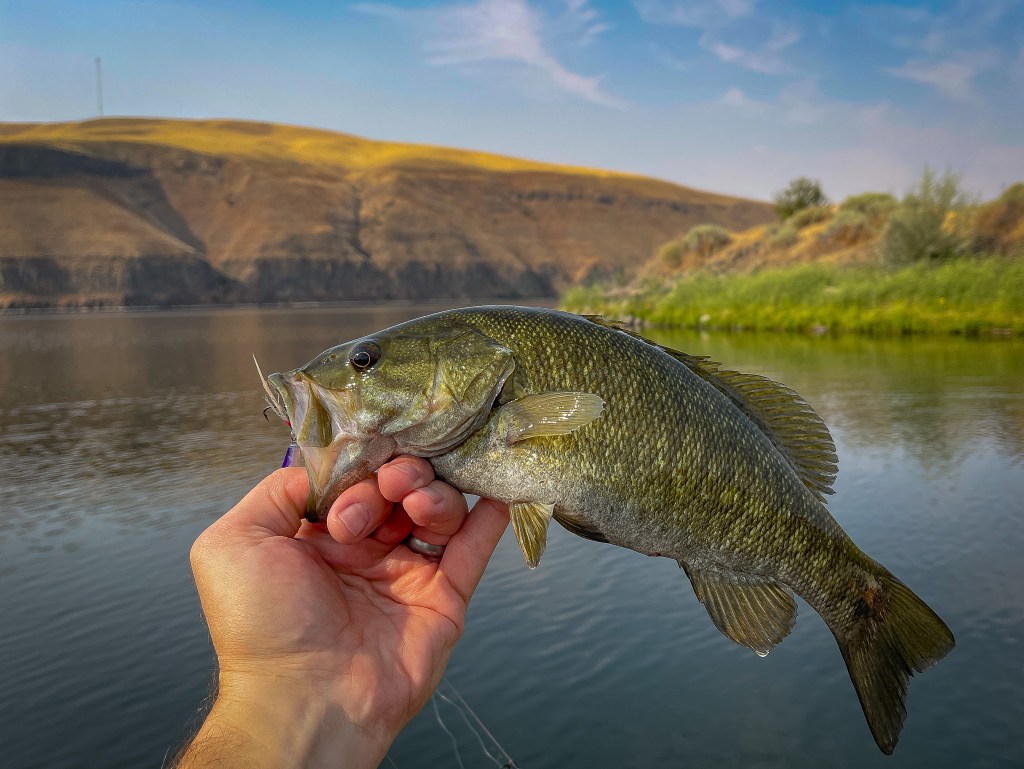
Yuba and I puttered around on the backwater at Deadman and Meadow Creeks, catching a few smallmouth bass and feeling out the motor operations. I focused on the boat’s handling while Yuba built confidence that the boat was not simply a vehicle of certain death. While not the most powerful on the water or a threat to breaking any speed records, she was worthy of being a “whatever” vessel, meaning if I could conjure it, she could handle it sans alacrity. And, as Dennis mentioned, tackling the open river was best left to calm days.

With a successful float test behind us, Yuba and I drove home with the windows down and the radio cranked. The moment sent me back to the “good ole days” driving home on a muggy summer evening, wet, muddy, and tired from catching too many bass on the Shenandoah River. That drive typically included grabbing a 12-pack and burger meat for an impromptu barbecue with my buddies, which sounded mighty fine.

Yuba stood on the truck door with her head and shoulders out the window, her jowls and ears competing for the most dramatic flap in the 90-degree heat. The fishing days with my old Sears and Roebuck 10-foot boat, which was like a Starcraft without flare and class, came to mind. It was suddenly clear that the Super Star had floated me back to when life was truly carefree. This sought-after feeling is something that many of us seek in vintage items, be it a shotgun, bamboo fly rod, muscle car, etc. I never expected it to come from the little Super Star, nor did I expect to enjoy owning it so much more at that moment. The guilt of using funds “better spent elsewhere” instantly sank into the waters of “no regrets.”