Palouse Outdoors – Hunting Late-Season Snowshoe Hares

Originally Published in The Waitsburg Times, February 1st, 2024.

The end of the upland bird and waterfowl seasons in the early part of the calendar year comes with bittersweet closure, but as time ticks further beyond that last hunt, the urge to venture afield pulls harder, like an increasing magnetic force. Fortunately, small game seasons often run into March, bridging that early spring gap before the wild turkey opener. Early March can be a fine time to venture afield with bluebird days forecasting imminent spring weather, which is precisely why I seek the mixed timber stands when the March sun breaks through the Washington freezing fog.

Snowshoe hares are among the most abundant and widely distributed mammals in North America and are among the small game that can be hunted after other seasons close. They inhabit coniferous and boreal forests throughout the Pacific Northwest, New England, Alaska, Minnesota, Michigan, and Montana. However, hunting snowshoe hares comes with its challenges, like accessing high-elevation habitat. 
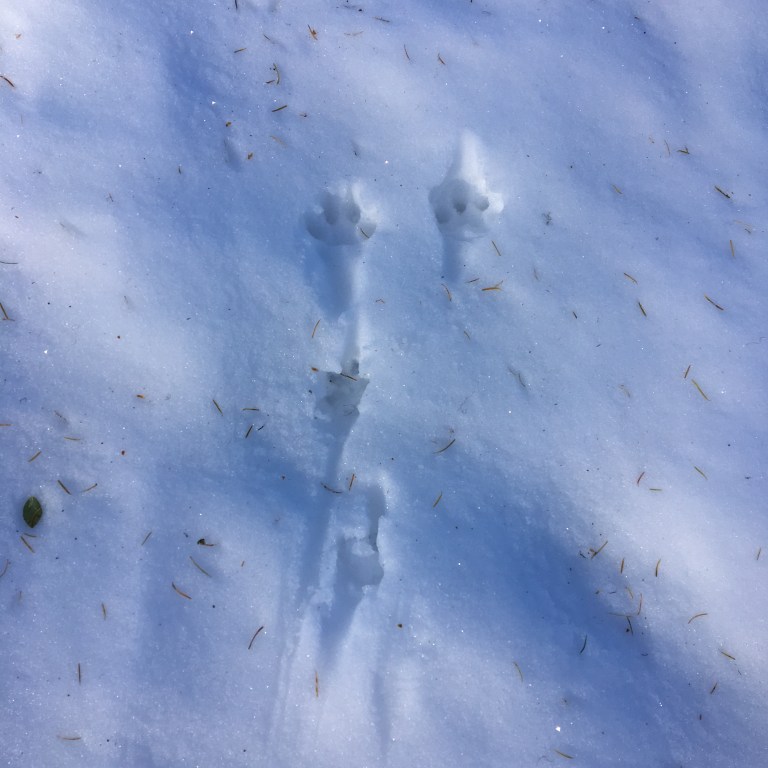
Six feet of snow piled atop the Forest Service gate that separated me and my friends Doug and Rob from our mountaintop destination. With snowshoes, it would have taken the rest of the day to make the hike, which is typically another thirty minutes by vehicle on a summer day. Walking to the rig behind me, I smirked through the window.

            “What do ya think? Chain up and give it hell?” I asked wryly. 

            “You first!” Doug replied with a nervous chuckle.

The wall of snow required the quick formulation of “Plan B,” which necessitated creativity. Also, Rob didn’t have snowshoes, so we would have to stay at a low elevation. We would leave the deep forest, circumvent a mountain range, and work up the adjacent drainage bottom, although I was skeptical of finding hares below 3,000 feet. 
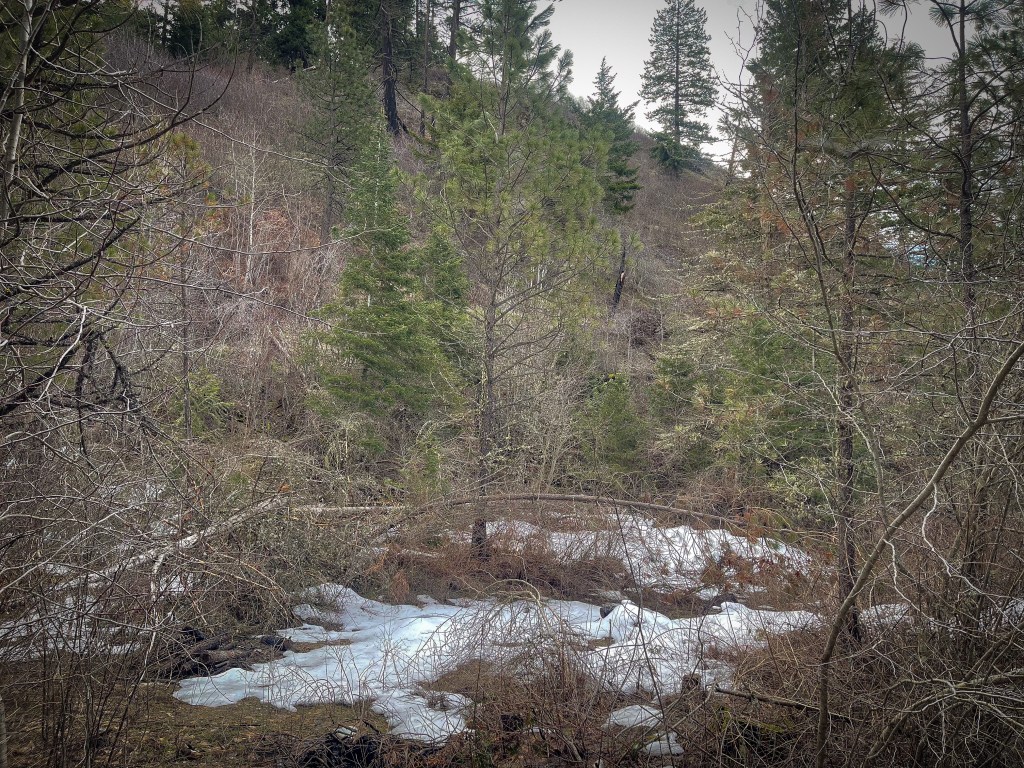
The snow had mostly melted in the creek bottom, save for the toe of the eastern slope, which held the right mix of ferns, fruiting shrubs, and blackberries, packed tight against a steep hillside shaded by eroded basalt bands.  

A gated road sliced through the narrow cover, making walking easy, but passing the one-hour mark with no sign of hares left me complacent. I slipped into the clutches of Mother Nature’s charm, hypnotized by golden sun rays streaming through dark timber. Starbursts of sunlight glistened through water droplets that hung delicately from seafoam-tinted fruticose lichens. Steam rose from thawing frost. The stunning details held my attention as Doug and Rob focused on the hunt.

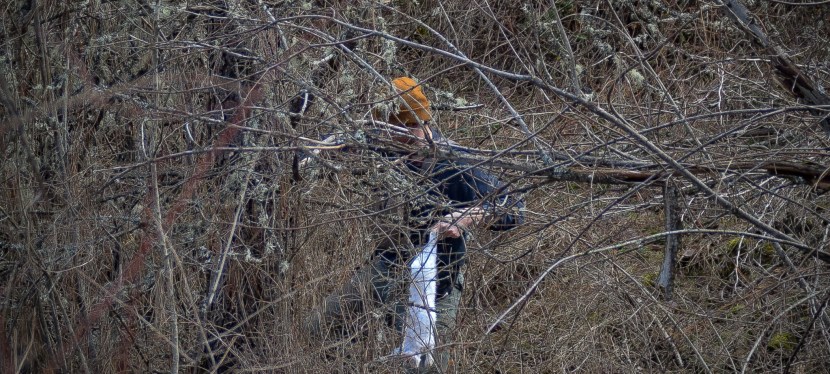
A short distance ahead, Rob walked a line through the thicket where raspberry, rose, and ferns created a dense ground cover. The faint metallic “click” of a gun safety roused my attention while a snow-white hare bounced across the trail directly between Doug and me, leaving us staring at one another in disbelief. 

Doug melted into the timber behind the hare while I back-tracked to find an opening in the greenery. A sudden bark from Doug’s Ithaca .410 single-shot echoed within the tight fir canopy, and he soon reappeared with a wide grin, carrying a beautiful young hare. 
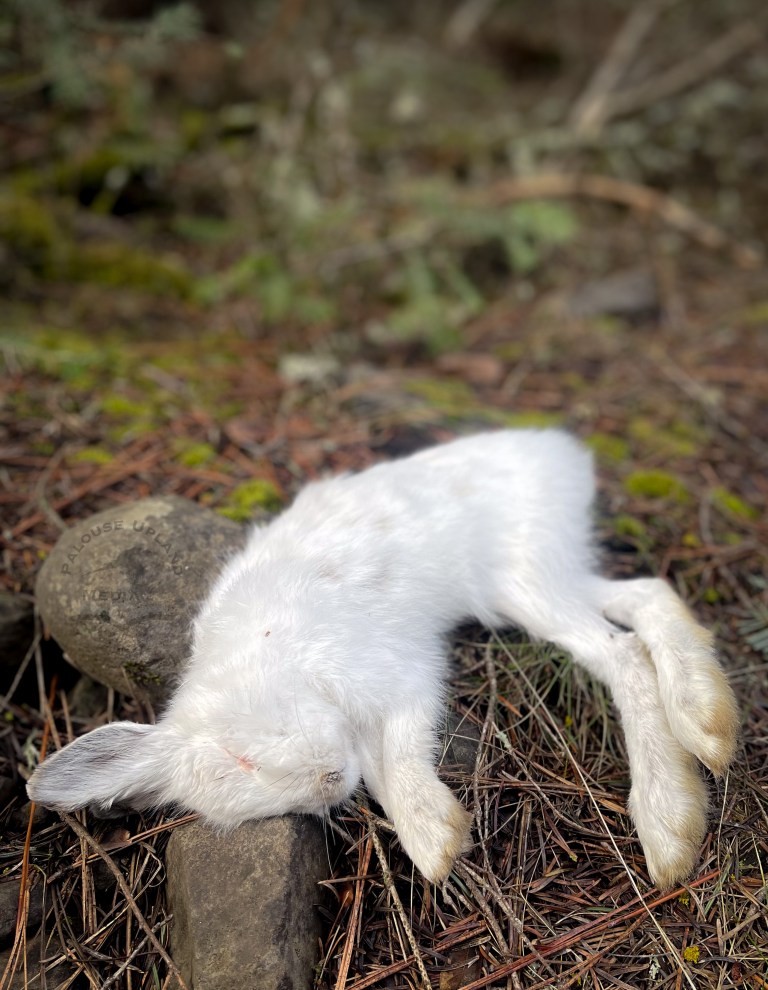
“It took me a moment to figure out why the snow was moving,” Rob said with a laugh as he emerged from the briars and ferns opposite Doug and me. Had the hare not run our way, it may have been Rob’s bunny.

We marveled over the silky softness of the hare’s flawless winter coat and poked fun at its comically large hind feet. A critter well equipped to thrive in deep snow and evade predators like Canada lynx, bobcats, and coyotes.  

Doug swapped places with Rob and moved quickly to the snowy toe of the slope. Moments later, the sudden discharge of his shotgun startled Rob and me. A second hare sat conspicuously beneath a fir just above head height on the slope as Doug approached—a reward for being at the right place and time. 

We called the hunt with two hares in the bag and shared a jovial hike out beneath the warming late-morning sun. That first hunt taught us that elevation is not a singular element in finding hares. The right habitat can be shrubby creek bottoms, given that hares eat twigs, buds, and bark in winter. A mix of deciduous and coniferous forest stands offers a good variety of food sources and cover. 

Look for “browse lines” where hares create trails in heavy snow. Always have a “Plan B,” as conditions and access can change yearly. And never forget your snowshoes.

Palouse Outdoors – Stay Safe Outdoors with a Satellite Communication System

Published April 4th, 2024, in The Waitsburg Times

Hunting, fishing, and hiking always seemed vanilla to me when it comes to the potential for injury and death. That could be one reason that a passion for the outdoors hit me when I was a child. My brothers chided me for being a “sissy,” and the best escape from the ridicule was avoidance somewhere beneath the trees on the neighboring woodlots.

I began tree-stand hunting for white-tailed deer in my late teens and quickly realized the dangers of the activity. I took the proper precautions with ropes and harnesses and always let someone know when and where I was headed and returning. Aside from that, trail running and mountain biking alone in the Appalachians never appeared dangerous, partially because testing the limits of gravity or intelligence for a thrill never appealed to me. When I moved west and began wilderness hiking and hunting routinely, I realized the dangers in the backcountry, even for the careful and prepared outdoors enthusiast. Middle age likely played a role as well.

Elk and mule deer country is steep, rugged, slippery, and riddled with deadfalls. Add 60-plus pounds of quarters and backstraps to your pack and start back to camp exhausted and sometimes in the dark, and you have a recipe for trips and falls that can lead to impalement on pine branch stubs, torn ligaments and cartilage in knees and shoulders, broken limbs and ribs, and possible tumbles over cliff faces. Navigating all this alone is absurd, yet we’ve all done it and will do it again. All to secure food, experience the beauty and solace of the wilderness, and bestow honor upon the wild life we took to feed our families and memory bank by pursuing them on their terms.

Fortunately, today’s technology offers life safety for average and extreme outdoor enthusiasts via affordable, reliable, and easy-to-use satellite communications devices.

Above are screenshots of the Garmin inReach Messenger device status panel (left), an example of the text message interface (middle), and a weather forecast for a given location (right). This device is user-friendly and works through your smartphone via Bluetooth without a data connection.

Since 2011, Garmin Corporation, among others, has been producing satellite communicators that can summon emergency medical and rescue services through the touch of the “SOS” button using your global position system location coordinates. Should you experience a fall, get lost, or have Mother Nature throw a curveball, location information is transferred through a satellite network to “Garmin Response” in Montgomery, Texas. According to Garmin, “all SOS monitoring, communication, and emergency response coordination are handled at this location.”

A global emergency response system capable of reaching remote locations and saving lives. Sounds great, right? But how does it work?

“Garmin Response maintains a global database of local first responders and emergency services. As soon as an SOS activation is received, the Garmin Response team pulls up the precise location of the SOS alert, a corresponding list of emergency response organizations for that area, and a map overlay of agency jurisdictions. The Garmin Response team contacts the local organization and works with them to dispatch resources to the incident site as necessary[1].”

 In 2023, Garmin coordinated emergency responses for over 10,000 SOS calls made from Garmin devices around the globe. While the number of Garmin subscribers is unknown, a breakdown of activities for which an SOS was transmitted suggests that hiking/backpacking makes up approximately 40 percent. Nearly 20 percent of transmissions are from automobile, motorcycle, and boating accidents. Hunting makes up only about five percent of SOS transmissions.

Overall, more than 70 percent of SOS transmissions could have been made from remote wilderness area situations. Physical injuries caused most SOS transmittals, while medical emergencies, being stranded or stuck (data include offroad vehicle activities), and being physically lost were the other most common emergencies.

“Responses…from New Zealand to Norway to Argentina to Canada were coordinated for plane crashes, grizzly bear encounters, sinking sailboats, skiers in avalanches, stranded divers, injured climbers, and many more1.” 

Over the past few years, getting older, fatter, achier, and spending most of my time outdoors alone were nagging at the back of my mind to get a satellite communicator. I finally pulled the trigger when a remote work trip came up shortly after my wife had major surgery. I settled on the Garmin inReach Messenger because it allows text messaging with friends and family via the Iridium satellite network. During my time in the Idaho mountains, I checked my wife’s health status routinely and could receive immediate notice from her in an emergency.

Whether you’re into extreme mountain sports or leisurely hikes, carrying a satellite communicator makes good sense. With the door to summer recreation opening quickly, now is the time to prepare for your safety while escaping civilization, particularly when going solo. Hopefully, you’ll never need to summon a wilderness rescue, but come wildfire, grizzly attack, or loss of common sense due to hypothermia or elk hunting exertion-induced delirium, carrying a satellite communicator provides a lifeline when faced with the unexpected.

Packing my Garmin inReach Messenger is no different than grabbing my hunting and fishing license – it goes everywhere outdoors with me.


[1] 2023 Garmin inReach® SOS Year in Review

Birds, Books, Setters, and Upland Hunting

I’ve had the great pleasure to chat with the Crew at Harvesting Nature about Wingshooting the Palouse, and I believe you will enjoy the conversation. Give it a listen on the Wild Fish and Game Podcast.

Wingshooting the Palouse is available at Amazon.com.