Steppe Outside – Home Waters Flow Gentle on My Mind 

Published in the Walla Walla Union Bulletin November 9th, 2024

A mountain trout stream gently winds through the back of my mind. Its headwaters begin near the Oregon border and drop precipitously north. Picking up tributaries as it rolls, the creek reaches third-order status, where it begins building year-round trout habitat. Its twists and turns, log jams, and pools are all familiar. 

My parents would tell you that I was a fishing addict as a kid, which I cannot argue, but the fact that a trout creek flows into my stream of consciousness at the height of the upland bird season is telling. I’ve suffered as a “jack of all trades” my entire life, meaning I find fulfillment in nearly anything fish, wildlife, and outdoors related, especially now with a love for photography. As an adult, however, the closest thing I’ve experienced to addiction is upland bird hunting. 

This trout stream is near home and was my muse before my first setter pup arrived. We saw each other weekly, regardless of whether the fishing season was open. It’s close enough to be worth the trip but far enough to require commitment. Too far for killing a half-hour, but a morning, afternoon, even a whole day can be amply invested.

I cut my trout teeth on the blue lines descending from the George Washington National Forest and Shenandoah National Park. Eventually, one stream took priority – my home stream. The stream that I could see from my parents’ front room vista. It wasn’t the best or easiest fishing around, but it was close and offered a mile of worthy wild trout water. To say that I knew that water well would be an understatement. It was hard to leave it when I moved west, and even harder in 2020 when I caught my last Appalachian brook trout in those stair-step plunge pools. My beloved valley home overlooking the drainage sold a month later. 

The beauty of home waters is the intimacy one can establish with them. It is not entirely different from the intimacy between lovers, although the relationship appears one-sided on the surface. The angler walks the banks, noting the curves, the sweet spots and transition zones, the seasonal moods, where to tread lightly, and where to take charge. Meanwhile, the stream flows with the lifeblood that the mountain feeds it. It rearranges the furniture here and there and thrusts a hip this way or that following the spring freshet, but the angler who pays due diligence is rewarded with more than wild trout.

There’s an old saying that “an elephant never forgets.” I’ve found the same true for bird dogs and trout bums. Bird dogs catalog every bird they’ve ever found and will visit those spots whenever they hunt the same property. Identically, trout fishermen recall every rise and catalog the log jam, flow seam, backwater, or grasses overhanging the run where the hookup occurred. This plays into the intimacy a trout angler develops with their home waters. These are the sweet spots that are revisited time and again. After a few years of fishing their home waters, a trout bum can identify the pools and runs by the sound of the water pouring over rocks and wood.

October is arguably one of the best months for mountain stream fishing—the heat of summer breaks, giving way to seasonal change. The riparian corridor is decorated in autumn gold. Cooler water invigorates the speckled gems fining in the tail-outs and prompts giant October caddis to flutter clumsily over the creek, offering a royal meal as they dip in to lay eggs. I rarely missed an October weekend on the stream in what feels like an alternate life. Now, the opposite is true. 

It had been two Octobers since my last autumn visit. With unusual heat putting the brakes on upland bird hunting plans, my mind scrolled through the many productive uses of time. The notion of fishing the home waters trickled in and caught fire like pouring gasoline on a flame. The only decision was where to start, but the decision was already made. A preferred reach continually lingers upon one’s subconscious, awaiting the opportunity to surface.

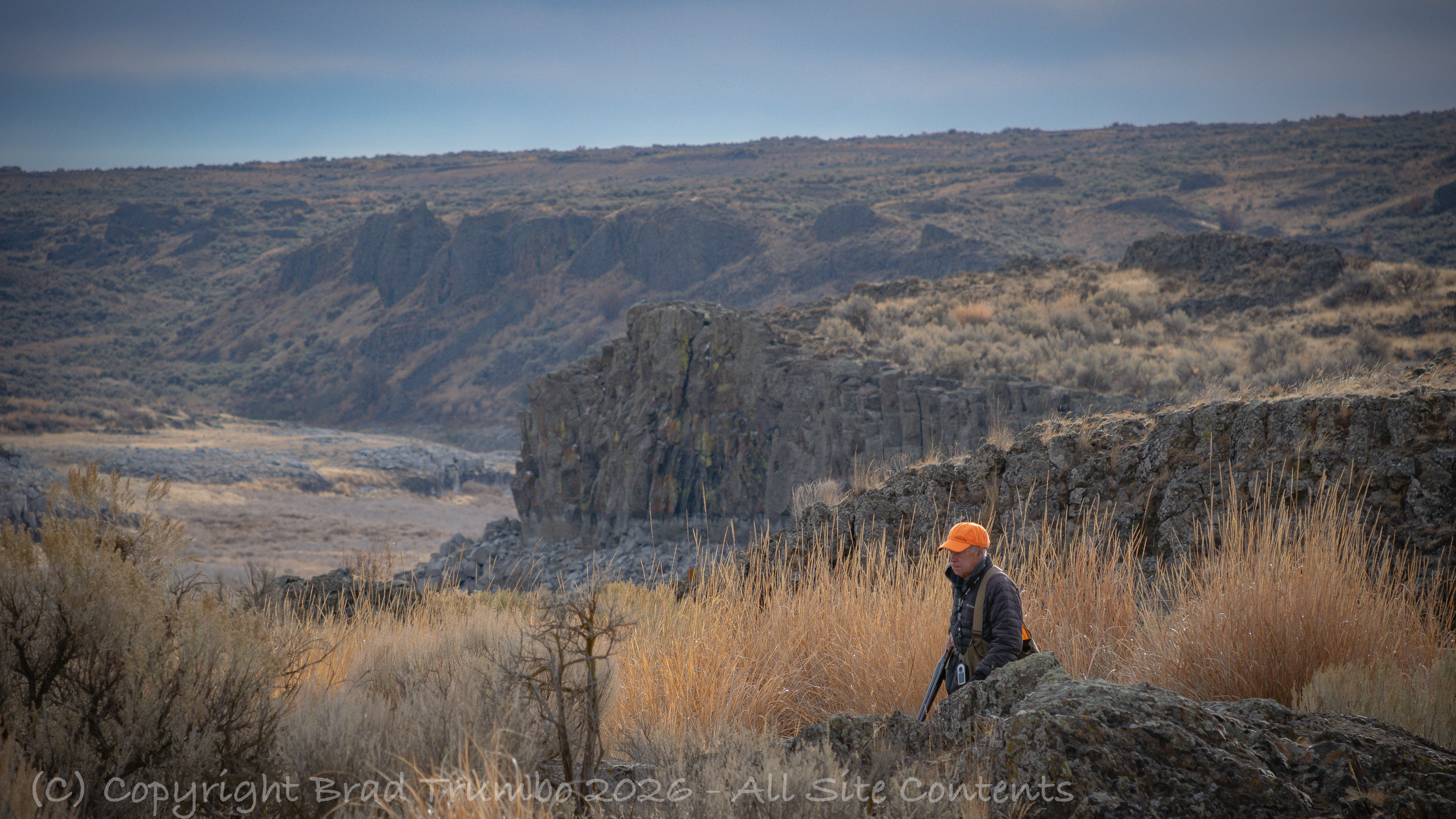
My waders swished, and sweat soaked the brim of a blaze orange ball cap as I approached a lesser-fished stretch of water that’s difficult to navigate and has relatively little fishy habitat compared to other reaches. Three specific pools in this reach speak to my flavor of fly presentation when the water is low, and this autumn has been unusually dry. Casts would be short, and line control would be critical.

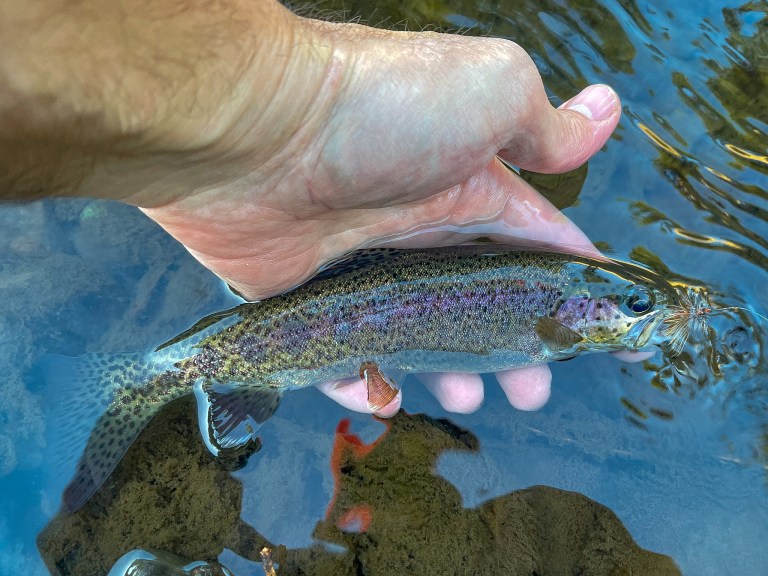
A thirteen-foot tenkara rod with an equal length of fly line represents an effective, simplistic, centuries-old Japanese fly-fishing method developed for mountain streams. Using the grasses, trees, and woody debris to creep within ten feet of a beautiful log jam pool, I gently flopped an absurdly-sized “stimulator” fly into the still waters beside the flow plunging over the logs. Within seconds, a ten-inch rainbow pounced on the moth-sized fly.

The feisty rainbow came to hand, and like every other from this river, the deep purple of the lateral line and olive-shaped parr marks beneath a dusting of black speckles presented a masterful work of art. I studied the fish briefly, admiring its features and glistening silver, gold, and olive scales, each individually defined. Then, freeing the fish from the fluffy fly, it darted back into the shadow of the log.

Trout are a marvel of nature regardless of the time of year, but mountain stream trout glow with a particular radiance in fall, as if reflecting the seasonal color change of the riparian flora. They are muscular from a spring of high water and spawning, and a summer of eating hoppers, caddis, and stoneflies. Their rise is deliberate, calculated, and executed with precision and efficiency to avoid expending energy unnecessarily.

Rainbows have risen to a fly in this pool for years, but the pool wasn’t always present. Before stream restoration efforts, this reach was characterized by shallow riffles and slightly deeper runs with little wood or boulder cover and no pools. Juvenile Chinook salmon and tiny rainbows rose to any small fly along the flow seams, but bigger fish were few and far between. Fortunately, constructed log jams and the 2020 flood cooperated to provide more quality habitat throughout the mainstem.

Having fished mountain trout streams across nearly a dozen states and 3,000 miles in several directions, I can offer that good water is good water, regardless of where you fish. Sometimes, that’s easy to describe. Other times, the popular cliché “when you know, you know,” is all there is to be said. Fly placement is somewhat universal, born of experience reading water and, occasionally, dumb luck. Deciding which to thank for a trout rise is hard, but experience pays on home waters. 

“I bet that fish spooked the entire pool,” I thought, confident that no other fish would bite after blowing up the thirty-six-square-foot pocket of skinny flow. “Well, what the hell. I’m here,” I thought, flopping the now waterlogged fly into a tucked-away spot slightly closer to the shore where I stood.

Using the rod’s length to keep the line high and the fly afloat, I bounced the fly atop the water like an October caddis laying its eggs. To my surprise, another similar-sized rainbow rose for the fly. It’s possible that another seasoned angler could find equivalent success on a new waterbody in a scenario like that. Still, I take comfort in telling myself that an unlikely second fish rose because I know how to fish “my stream.” 

 The following pools fished the same, and I even discovered a new side channel pocket that has scoured over the past several years to form a beautiful bend pool. I had seen that side channel before but ignored it for bigger water. The pocket is exceptionally tight, with no casting room. I merely dangled the fly from a high stick posture about ten feet away, tempting a rainbow to emerge from nearly underfoot to inhale the fly. 

“This will never work. It’s too close,” I thought as I laid the fly on the water’s surface. Being wrong isn’t always bad.

My visit was brief. Just long enough to land a half-dozen gorgeous rainbows. Glenn Campbell’s “Gentle on My Mind” aptly played in my subconscious in time with the tumbling water. 

In his most recent and final book, “Dumb Luck and the Kindness of Strangers,” renowned fly-fishing author John Gierach explicates on his home waters, as in many of his twenty-one previous volumes.

“On rare days, it’s something as vague as a quality of light or certain stillness in the air that seems to make the water vibrate with possibility, but I think that’s less mystical than it sounds. It’s just that some of the things you know about your home water operate beneath the level of full consciousness and only reveal themselves disguised as intuition.”

Gierach’s experience came from intimately knowing his home waters, and his gift for sharing that intimacy through a conversational read inspired generations of fly anglers, myself included. There’s something to be said about the feeling one gets when standing streamside, influenced by the sun, temperature, breeze, cloud cover, and the carefree notion of having already succeeded in the endeavor without yet wetting a fly.

Catching fish in the home waters is not the point but is generally accepted as a scientific law. “If” is not a question, nor is the fish the reward. Wild turkey hens shepherd their chicks through the upland riparian edges among violet lupine in spring, and birdsong envelopes the stream. Ruffed grouse drum, valley quail call from the blackberry tangles, and black bears gorge on the sweet, dark berries. Salmon flies and October caddis predict the seasons, and a number sixteen Adams is always welcomed. Somewhere between the roar of the rushing waters and a pointed focus on landing the fly in “the spot on the spot,” one’s true self appears, completely at ease, in a world secluded from reality—a state of being achieved only on the home waters. 

While I don’t spend nearly the time on my stream compared to a decade ago, our relationship is steadfast. I’ve learned her language. She patiently awaits, her waters forever flowing gentle on my mind.

Footnote – John Gierach died on October 3rd, 2024, at age 77. An average man with an appreciation for the average angling experience and hot coffee, he possessed an extraordinary ability with words and inspiration. This story presents a style slightly different than Trumbo’s norm. A tip of the hat to Gierach for developing friendships with his readers by writing as if he were engaged in conversation.

Gift Guide for the Discernible Outdoor Enthusiast

Originally Published in Walla Walla Lifestyles Magazine, November 2024.

Crisp air, pumpkin ale, fresh-squeezed apple cider, and hunting seasons have finally returned, and you know what that means. Yes, we are living our best months of the year, but this time train we all ride is screaming toward Christmas and holiday shopping. If you have an outdoors enthusiast in your life who is “hard to shop for,” i.e. buys whatever gear they need when they need it and has a particular taste, here are a few ideas that might be right up their alley.

Vintage Shotguns

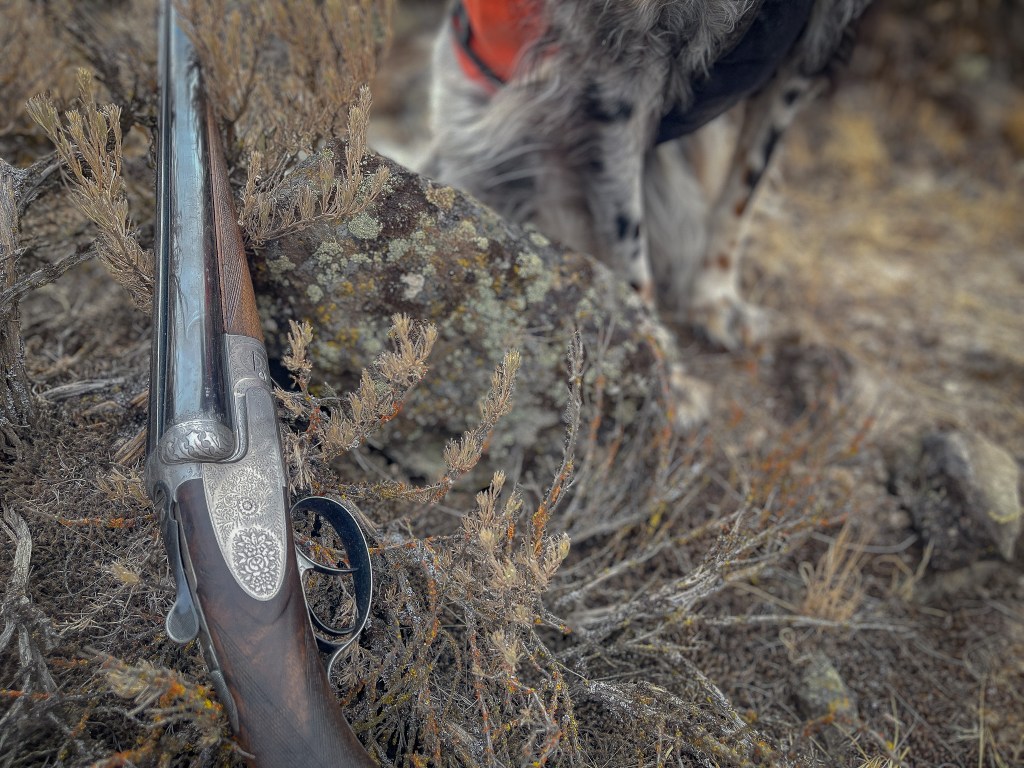
This beautiful 1951 Belgium-made CF Dumoulin 16-gauge is a fine and affordable vintage double for the traditional upland bird hunter.

Nearly every upland bird hunter dreams of carrying a vintage double-barrel shotgun. Whether their fascination originated at a young age with a family heirloom or the quality craftsmanship of vintage guns connects them to a long-standing tradition, bird hunting with a piece of American sporting heritage enhances the experience. Maybe your bird hunter has a particular brand in mind, like an A.H. Fox, L.C. Smith, Lefever, or Ithaca. Each of these can be found online and at gun shops with regularity. The Spokane area has several gun shops with a good selection of used shotguns. They even turn up in Cabela’s “Gun Library” from time to time.

I was browsing the Eugene, Oregon, Cabela’s once for no particularly good reason when a long, pewter-colored side-by-side caught my eye. It was a beautiful L.C. Smith Field Grade 00 made in 1911. I asked to see the gun out of curiosity, assuming the price tag was above my pay grade. Conversely, the gun was affordable due to a small dent in the left barrel and a refinished stock. Playing it cool, I haggled a little (yes, that’s acceptable), noting the dent and stock work, then strolled out with the superb specimen sporting an action smoother and tighter than any newer gun that I own. Whenever I swing the “Elsie” on a passing quail, I feel giddy, like it’s stolen property. The bird hunter in your life would likely feel the same.

A great source of information and where to find “hot buys” for vintage double guns is at dogsanddoubles.com.

Custom Knives

This pair of small, packable, attractive knives from the Upland Knife Company are a fine addition to any hunter’s gear collection.

Speaking of craftsmanship, all outdoorsy folks need a quality knife or two—maybe three. Knives are a dime a dozen from any typical outdoor retailer, but the blades are often made of lesser-quality steel and fail to hold an edge or take one when sharpened. Fortunately, there are knife makers nearby with a fine reputation.

Three custom knives from the same maker in Hamilton, Montana, are floating around in my upland hunting gear. Two are lightweight and slim for easy packing in a hunting vest. The third is a little larger, boasting a custom wood handle, precisely designed, cut, and pieced together with painstaking detail. The blades are of the highest quality, hammered out, and sharpened onsite—one hundred percent heirloom-worthy.

Who is the knifemaker? Michael Thomspon, owner of the Upland Knife Company (www.uplandknives.com). He accepts custom order requests, and if you’re lucky, you can find a knife or two of his design ready for purchase on the website. Follow him on Instagram @upland_knife_co for sneak peeks and product drops.

Outdoor Journals

More than a simple journal, “The Rambler” by Freeman and Sons Supply comes with an Opinel #8 knife and offers many pockets for a variety of needs.

Considering gifting the average human with a journal may not seem like a slam dunk, but I assure you, the outdoorsy folks in your life will like this recommendation. It’s a rare hunter or angler these days that doesn’t at least keep technical notes on their outings. More often, they tell a bit of the story when fish and game come to hand. If Instagram provides any reliable evidence, nearly everyone posting a pic with a fish, buck, bull elk, or brace of birds with their dogs will offer a few lines about how it all came together. That’s why “The Rambler” field journal from Freeman and Sons Supply (https://www.etsy.com/shop/Freemanandsonssupply) makes a fine gift.

The Rambler is a handsome, high-quality, handcrafted leather tool that comes with a Field Notes brand journal and iconic Opinel No. 8 pocket knife, made in the French Alps since 1890. The front pockets are designed for a pen and pocket knife. The rear pockets hold business cards, cash, or whatever else you decide to tuck into them. The Rambler goes where I go to capture the details of every outing. Sometimes, I take it to meetings where business cards and other notetaking needs are handy. Slip one into your special someone’s stocking this year. They’ll be glad you did.

Custom Fly Rods

Custom fishing rods like these Batson Enterprise Rainshadow fly rods provide a one-of-a-kind fishing experience and a beautiful, quality tool for the fisherman or woman in your life.

Okay, let’s agree that fishing rod-making technology has flooded the market with high-quality products at most price points, from the Echo starter package to the Orvis Helios. It’s truly hard to go wrong. However, a handcrafted fly rod, made to spec or off-the-shelf, takes excellence to a new level. Where to find one? The “Red Shed Fly Shop” in Peck, Idaho (www.redshedflyshop.com).

Why is it called the Red Shed? Take an afternoon drive up the scenic Clearwater River and see why you shouldn’t judge a book by its cover. The weathered little shed has a few fly-fishing gear banners on the front but looks more like a backwoods beer-drinking cabin from the outside. Open the door, however, and stare in awe at the wealth of gear and knowledge that packs the little shed to the gills.

Owners Mike and Linda Cummins offer everything from waders, flies, and nets to custom Burkheimer rods that line the ceiling. Handle one of the Burkheimers, inspect the detail in the guide wraps and grip, and note the rod’s balance, as it feels weightless in your hand. Whether sending dry flies or streamers or throwing “the meat” for steelhead on a two-handed rod, it will fish like a weapon if it came from the Red Shed.

Commissioned Artwork

Capture that magic moment with artwork, like this painting by Alan Rasmussen of a wild rooster that young Llewellin setter Zeta pinned on of our favorite and difficult public coverts.

Like fishing rod-making, technology has put the power of photography at our fingertips with every smartphone, and people are documenting everything. But one thing that cannot be replaced with technology is an artist’s touch. Commissioning a painting for that magic moment in the wilderness, a big buttery brown trout, Snake River steelhead, or a bird with your best pointing dog can cement the memory with elegance.

One such moment happened last fall when my youngest setter, Zeta, pinned a wild rooster pheasant in one of the toughest covers I have hunted because the birds have such an advantage. I had not taken a bird in seven years of hunting those bunchgrass hills, but Zeta held the bird while I waded through 200 yards of Great Basin wildrye for the flush. I sent a photo of Zeta and her rooster standing above the property to Alan Rasmussen (www.alanrasmussenartwork.com), a phenomenal wildlife artist in Utah. My one request was to make the fall colors pop on the deciduous trees behind Zeta. Alan returned to me a picturesque interpretation of the scene and a perfect portrayal of Zeta, right down to the freckles on her muzzle. See his work online or on Instagram @alan.d.rasmussen.

If your special someone has a favorite style of artwork, there’s an artist willing to deliver it for you at an affordable rate. You can find them on Instagram, for example, by searching terms like “commissioned art,” “upland art,” and “oil painting.” Many of these artists also offer affordable prints of their original pieces as an alternative.

These few gift ideas encompass built-to-last craftsmanship, stunning good looks, and superior skill and utility that every hunter, angler, hiker, biker, climber, etc., will appreciate, so check them out. If nothing else, they will help get your creative juices flowing. Remember, commissioned items take time to complete, so contact those vendors early if you wish to have them for the holidays. Happy shopping!

Northern Long-eared Bats Survive White-nose Syndrome in Man-made Habitats

Published in August 2021 @HarvestingNature

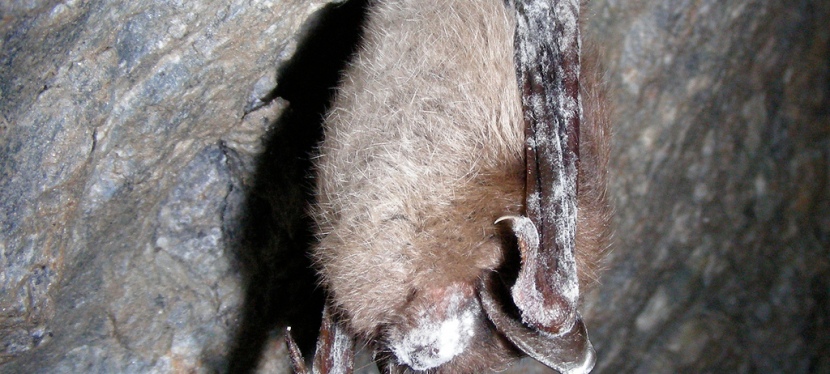
Since its first identification in a cave in New York in 2006, white-nose syndrome (WNS) in bats has caused significant population declines. White-nose syndrome is caused by a fungus, Pseudogymnoascus destructans, that infects the skin of the muzzle, ears, and wings of hibernating bat species across 35 states and seven Canadian provinces at present[1]. The fungus thrives in cold, damp conditions, perfectly suited for winter cave hibernacula. As it grows, the fungus causes changes in hibernating bats that make them become more active than usual and burn fat they need to survive the winter[2].

Northern long-eared bats (Nyctophilus arnhemensis) suffered a 95 percent population decline in New England between 2006-2012 due to WNS, and are now listed as “threatened” under the Endangered Species Act. Similar declines have been document in the little brown bat (Myotis lucifugus), among others.

While studying WNS and bats in their winter hibernacula, researchers tracked a small number of bats hibernating in home crawl spaces, basements, and other structures like concrete culverts in Martha’s Vineyard, Nantucket, and Long Island, New York. Luanne Johnson with Biodiversity Works reported that these bats were surviving the winter even when affected by WNS.

Crawl-spaces with dirt floors and homes with block foundations and BILCO style hatch doors are attractive bat hibernacula. Uninsulated foundations provide the proper temperature and humidity, allowing bats to hibernate all winter, where insulated foundations were used occasionally. Bats were tracked leaving the hibernacula occasionally in late winter in Martha’s Vineyard where water was available year-round, but the bats returned to continue hibernation and survived to spring.

Unlike WSN-affected bats wintering in cave hibernacula, bats also affected by WSN and utilizing man-made hibernacula maintained good weight and overall health throughout the winter. Some bats were tracked for up to three years without suffering severe complications from WNS. Another behavioral distinction between cave-dwelling bats and those selecting human homes is that the bats wintering in crawl spaces were tracked foraging much later in the fall, meaning these bats may have entered hibernation with better fat stores for a shorter hibernation period.

Additionally, Auteri and Knowles (2020)[3] found genetic evidence of little brown bats evolving with WNS. Allelic frequencies showed significant shifts in survivors for regulating arousal from hibernation, fat breakdown, and vocalizations.  Studies by Biodiversity Works and their partners suggest that bats hibernating in homes are less likely to succumb to WNS, allowing more time for bats to evolve to survive the disease. Therefore, Biodiversity Works is working with homeowners tolerant of bats to potentially treat the WNS fungus on their property and construct new hibernacula onsite if homeowners want the bats out of their basement. Also, they are working with contractors and homeowners to heighten awareness of bats hibernating in homes to minimize potential harm from construction or remodels.


[1] White-Nose Syndrome (usgs.gov)

[2] White-Nose Syndrome (whitenosesyndrome.org)

[3] First genetic evidence of resistance in some bats to white-nose syndrome, a devastating fungal disease — ScienceDaily

Is it too Late for the Western Monarch Butterfly?

Is it Too Late for the Western Monarch Butterfly? – Harvesting Nature

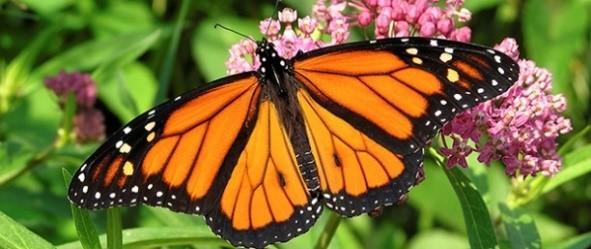
The monarch butterfly presents a continent-wide icon of the butterfly genera. Its red-orange wings with defining black outlines and white freckles once danced over pastures, thistle and milkweed across their North American range, but land use changes since the 1980s have dramatically affected monarch populations.

Monarchs make a marvelous migration to winter “hivers” based on their summer breeding range in the U.S. and southern Canada. The Rocky Mountains, of course, divide the major migration routes. Eastern monarchs overwinter in southern Florida and Mexico, while western monarchs overwinter on the southern California coast.

Their reliance on milkweed makes for an easy classroom experiment, collecting the vibrant, yellow, black and white-striped caterpillar with a few leaves and watching it turn into a chrysalis, then mature and hatch into the adult butterfly. But, at present, the monarch population has declined more than 80 percent in the past 30 years; the western population facing extinction.

In 1997, the Xerces Society established the Western Monarch Thanksgiving Count, similar to the Audubon Society Christmas Bird Count, where “citizen scientists” document monarchs on their western winter hiver. According to Washington State University, the 10 million monarchs documented in the 1980s declined to 30,000 in 2018, and fell below 2,000 this past winter.

Monarchs on the winter hiver (photo in public domain)

Dramatic loss of the western monarch population led to special interest groups petitioning the U.S. Fish and Wildlife Service (FWS) to protect the butterfly and their habitat with a listing under the Endangered Species Act (ESA). A FWS status review determined that “…listing the monarch butterfly as endangered under the ESA is warranted but precluded by higher priority actions.” In other words, there are more than 100 species ahead of the monarch in need of FWS resources and protection.

Additionally, under the ESA, an insect species cannot be segregated into subpopulations such as birds, mammals and fishes. Therefore, the FWS must consider the status of the monarch butterfly as one population across its North American range. If the western monarch were to be carved off as its own “distinct population segment”, it’s ESA listing priority would likely be much higher.

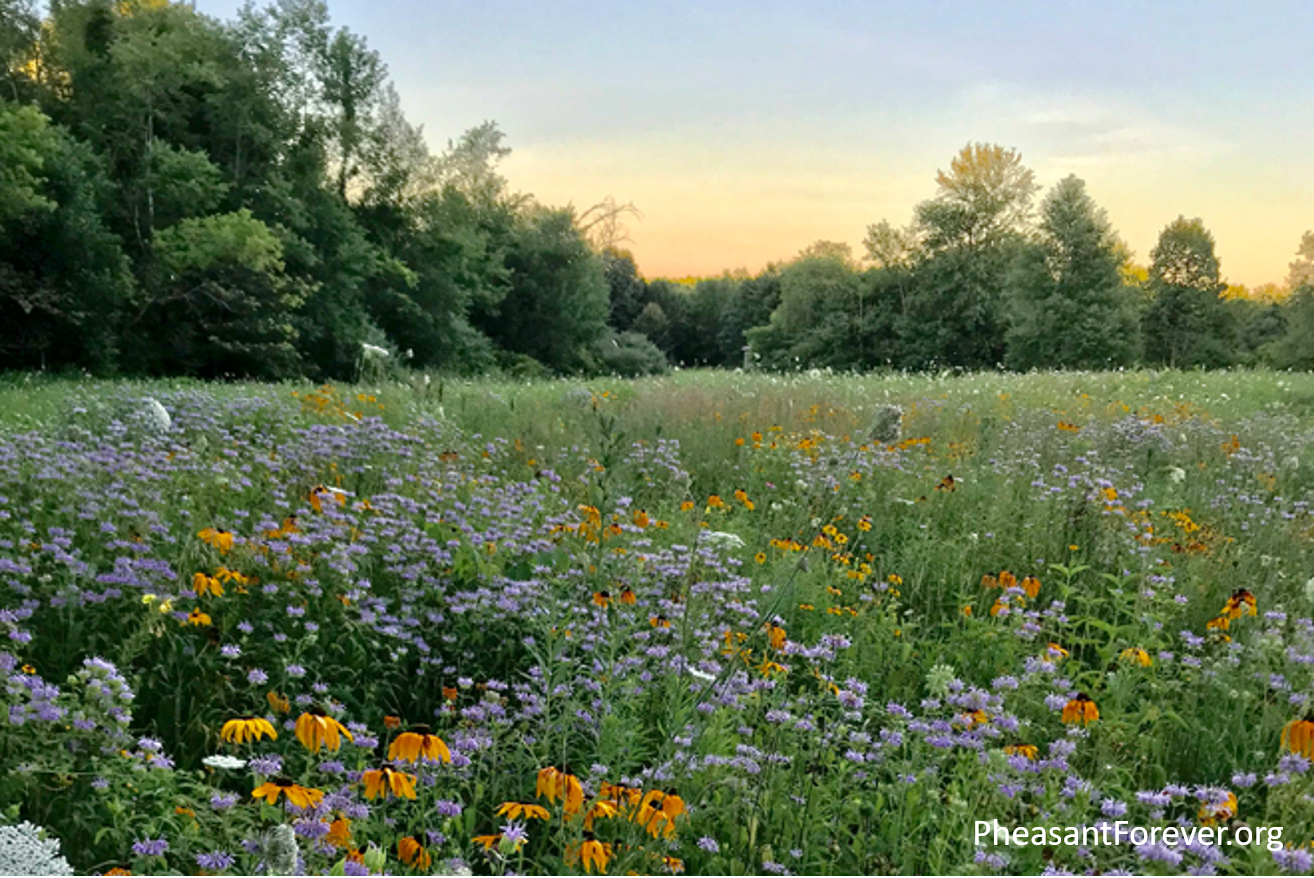
While the western monarch faces a dire future, Pheasants Forever, Quail Forever and the Xerces Society promote pollinator initiatives that benefit monarchs among other pollinator species. Many Pheasants Forever and Quail Forever chapters are willing to cost-share on pollinator enhancement projects.

Additionally, two congressional bi-partisan bills, the Monarch Action, Recovery, and Conservation of Habitat (MONARCH) Act, as well as the Monarch and Pollinator Highway Act, were recently introduced to avoid the extinction of the western monarch.

The MONARCH Act would authorize $62.5 million for western monarch conservation projects, and another $62.5 million to implement the Western Monarch Butterfly Conservation Plan, paid out over the next five years.  The Monarch and Pollinator Highway Act would establish a federal grant program available to state departments of transportation and Native American tribes to carry out pollinator-friendly practices on roadsides and highway rights-of-way.

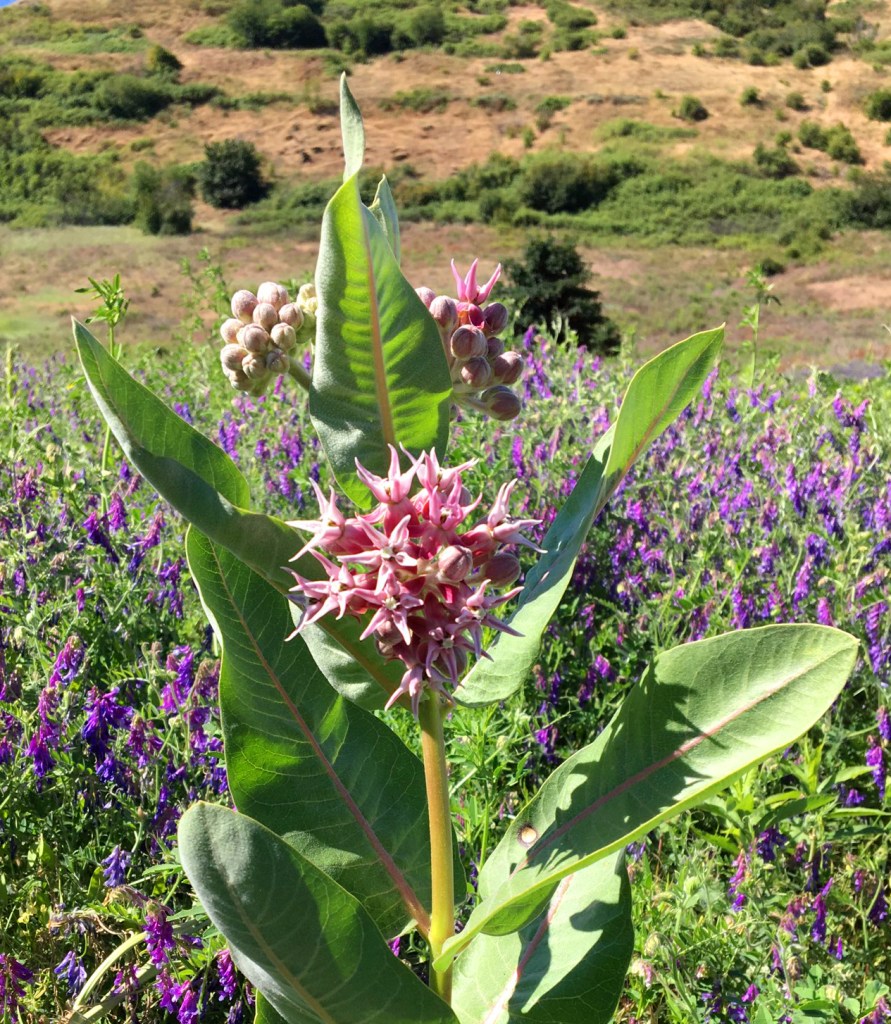
At the local level, milkweed promotion could have a positive influence for the western monarch. Various studies suggest small patches of milkweed, as small as two- to five-square-yards in area, could be affective for increasing reproduction. Patches that small area easily managed in a backyard flowerbed or garden, and the western native “showy milkweed” boasts a beautiful spiked ball of pink bloom, worthy of being added to any pollinator seed mix.

Showy Milkweed

Recent conservation initiatives are late to the table for the western monarch, and the upcoming reproduction season is critical to their long-term survival. Will this iconic pollinator population boast a success story similar to species like the greater sage grouse or bald eagle? Time and a few congressional votes will tell. 

Raising Pheasant from the Ground Up

Sustainable farming practices to benefit wildlife is a topic for discussion in grain capitols across the country. To the farmer, the mention of sustainability may trigger consideration of production and bottom line. To the biologist, thoughts of crop rotation and managed fallow lands provide wildlife food, water and shelter. And to the economist, efficiency and bang-for-the-buck in the form of yield versus effort/acreage sewn would likely provoke a back-of-the-napkin chart explaining the benefits.

So how does one actually define sustainable farming? A combination of all of the above. Sustainable farming includes economics, reducing production acreage to focus on the most productive for maximum yield. The less productive ground can be leased into CRP or to an NGO like Pheasants Forever to manage for wildlife.

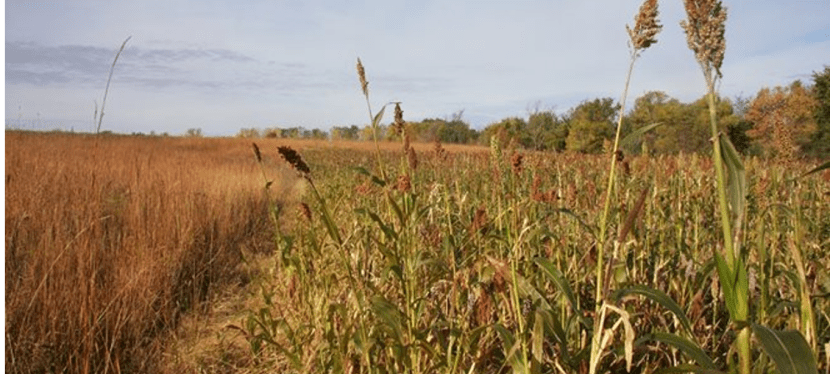
To take it one step further, habitat-minded agriculture may provide a mix of no-till planting and forage and cover crops built into rotation schedules. This permits soil replenishment and works to combat invasive species by providing different plant competitors, insects, and invasive plant treatment options. Forage or cover crops can be sewn alongside winter cover like cattails and other wetland habitats to reduce energy expense and vulnerability critters may experience when seeking food and cover in winter. Pollinators benefit as well.

Picture2

Sounds great, right, but are the benefits actually attainable? Absolutely. Case-studies have proven the benefits to the farmer and wildlife through these sustainable practices. Midwest farms have shown production of preserve-scale wild pheasant through habitat-minded farming practices while maintaining or increasing their bottom line. And who out there would argue that they don’t enjoy wildlife like upland birds? If you answered “no one”, we couldn’t agree more!

If you find this encouraging from any perspective, reach out to your local Pheasants Forever or Quail Forever Chapter. In southeast Washington/northeast Oregon area, contact us at bmpf@bmpf258.com for more information.