Steppe Outside – The Search for Washington’s Dancing Grouse

Published May 18th, 2024, in the Walla Walla Union Bulletin

Rain hammered upon the camper roof throughout the night, robbing me of the restful sleep I envisioned when planning a trip to the north-central scablands. Spring in the scablands is purely magical, and I often find myself float-fishing for trout on the many good fishing lakes. This trip was something different, however.

Rousing groggily to the 4:00 a.m. alarm meant my sleepless night would soon be rewarded with a cold, wet sit in the dark. Surrounded by Columbian sharp-tailed grouse habitat, I was about to embark on my first-ever lek survey to assist the Washington Department of Fish and Wildlife (WDFW) in monitoring one of this species’ seven fragile populations in Washington State.

We’ve all heard the adage that Columbia River salmon once returned so abundant that one could “walk across their backs.” Well, the story is similar for the Columbian sharp-tailed grouse. When the west was settled, sharp-tailed grouse numbered in the millions. Eastern Washington was largely shrub-steppe habitat and supported hundreds of thousands of the subspecies “Columbian” sharp-tailed grouse. They were commonplace. But, like the passenger pigeon, no one considered they would ever face extinction.

A tragedy of being human is that we often fail to notice a gradual decline in something so familiar until we’ve slipped past the point of recovery. The bird’s initial decline was noted as early as the 1950s, and as the vast Washington shrub-steppe disappeared an acre at a time, the Columbian sharp-tailed grouse followed.

The temperature plummeted with the falling rain, which soon turned to heavy snow. The veil of large white flakes impaired visibility on the greasy gravel road, not to mention the waves of muddy water splashing over the windshield from large puddles.

Thirty minutes later, Malika, George, and I sat in the snow overlooking a several-hundred-acre basin supporting a handful of historic and active sharp-tail “leks”. North American grasslands grouse – sharp-tails, sage grouse, and prairie chickens – use these traditional habitat areas year after year where males perform courtship rituals and compete for mates. The word “lek” combines the idea of “mating” (from the Swedish “lek”) and the notion of a “place” (from the Swedish “ställe”). In Swedish, “lekställe” directly translates to “mating ground”[1].

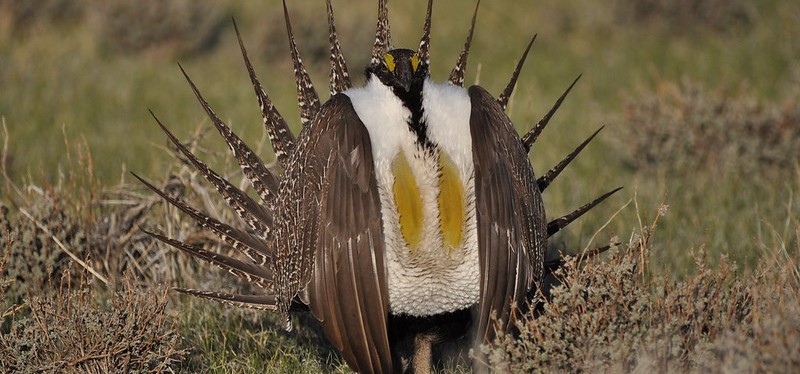
Sharp-tail males flash their “superciliary combs,” or sunflower-yellow eyebrows, and their “drum nape,” which are violet-colored air sacs on either side of their neck, while bowing with their tails high and wings extended, looking like a plane dropping onto the runway. They shuffle and tap their feet swiftly and click their two namesake pointed tailfeathers as they dance. Their tailfeathers clicking sounds like an old film reel movie playing as the birds spin about. In areas with strong sharp-tail populations, grasses on the lek can become beaten down from weeks of morning dancing, “hooting, clucking, and gobbling” rituals.

While I knew we overlooked an active lek, sharp-tails would only dance in my head this morning. We eagerly awaited dawn, listening for any hint of these mythical birds while snowflakes noisily pattered our synthetic jacket hoods. I had seen sharp-tails by the dozen in Montana and the Dakotas, but to see Columbian sharp-tails on their native Washington soil was a spectacle I longed to behold.

Survey protocol was to walk the lek about 45 minutes after sunrise. By then, any birds on an active lek would at least be heard if not seen, and the lek activity would be waning for the day. Flushing the birds provides more accurate counts and allows surveyors to search for scat and feathers; the feathers can be used for genetic testing. Due to the snow and no sign or sound of the birds, we left the lek without bothering to walk it as no feathers or scat would have been visible.

Back at camp, we all returned to our respective mobile shelters and wiled away the day, watching the snow fall, reading, and preparing for another cold morning.

The next morning dawned frigid cold, crystal clear, and with a million shimmering stars. Malika and I went alone to the same lek as before and again awaited dawn while a chorus of wildlife warmed their voices. 

“If I were a grouse, I would be dancing on a morning like this,” I said as we plopped down in the dark with our ears tuned to the sharp-tail channel.

Canada geese, mallards, and a hundred other waterfowl competed with a pack of coyotes in every compass direction for the award of “most obnoxious morning song,” but something different drifted in from our left. The low, two-pitched cluck from what sounded like a single bird somewhere in the grasses was a new sound for both of us.

“I think that’s a sharp-tail,” Malika whispered.

“So do I,” I replied while shifting to scan the lek with my binoculars.

We never spotted the birds from where we sat, but around 7:00 a.m., we strolled down onto the lek in search of scat and feathers. The sun glistened upon the frost-encrusted bunchgrasses in the 27-degree stillness. We walked more than 100 yards of what appeared to be prime lek without a speck of sign, but as Malika turned to make a pass back, the slap of upland bird wings grabbed my ears. My head snapped right so fast that I nearly pulled a neck muscle. The tell-tale flushing “chuckle” of a sharp-tailed grouse was so exciting that I yelled, “Sharp-tailed grouse!” while pointing at the fleeing bird. Moments later, a second bird lifted off, chuckling as it raced toward the horizon.

We finished walking the lek with no further sign of birds, but the sun shining warmly upon our shoulders fortified our sense of triumph. Malika was a 20-year-old college undergrad with a fresh notion of becoming a wildlife biologist. Before that weekend, she had no clue what a sharp-tailed grouse was, much less any awareness of the bird’s struggle for existence in Washington State. The experience was unique for us in different ways, although seeing a sharp-tail in Washington was a first for us both.

For Malika, it was a cool “sciency” encounter with an upland bird. For me, it was like stumbling upon delicate frost flowers or catching a glimpse of UFO-shaped lenticular clouds. These natural phenomena exist, but they are rare enough that it’s unlikely to experience them.

That chuckling sharp-tail flush echoed through my mind on the drive home. Just seven remnant populations of Columbian sharp-tailed grouse remain in Douglas, Lincoln, and Okanogan Counties. The total Washington population is fewer than 1,000 birds, and the largest individual population remains on the Colville Reservation. Columbian sharp-tails occupy approximately three percent of their historic Washington range, making habitat loss events like the September 7th, 2020, Whiney Fire that torched over 127,000 acres a significant threat. That’s a large enough area to wipe out one of the remaining populations completely.

The Colville Tribes are deeply invested in Columbian sharp-tailed grouse conservation efforts, working alongside the WDFW, Bonneville Power Administration, and local Public Utility Districts in the upper Columbia River. According to the WDFW, the Colville Tribes began assisting with translocation efforts as far back as 1999 (possibly before) by providing birds from the Reservation to be released at the WDFW 9,000-acre Scotch Creek Wildlife Area in Okanogan County. The BPA paid for the Scotch Creek land acquisition with mitigation funds for the operation and electricity sales from Chief Joseph and Grand Coulee Dams.

The Columbian sharp-tailed grouse is classified as “endangered” in Washington and protected from hunting. With ongoing efforts by the Colville Tribes, WDFW, and non-profits, Washington’s sharp-tailed grouse can hang on, but how long is unknown.


[1] Lek – Words For Things You Didn’t Know Have Names, Vol. 3 | Merriam-Webster

Cover Photo by the US Fish and Wildlife Service

Birds, Books, Setters, and Upland Hunting

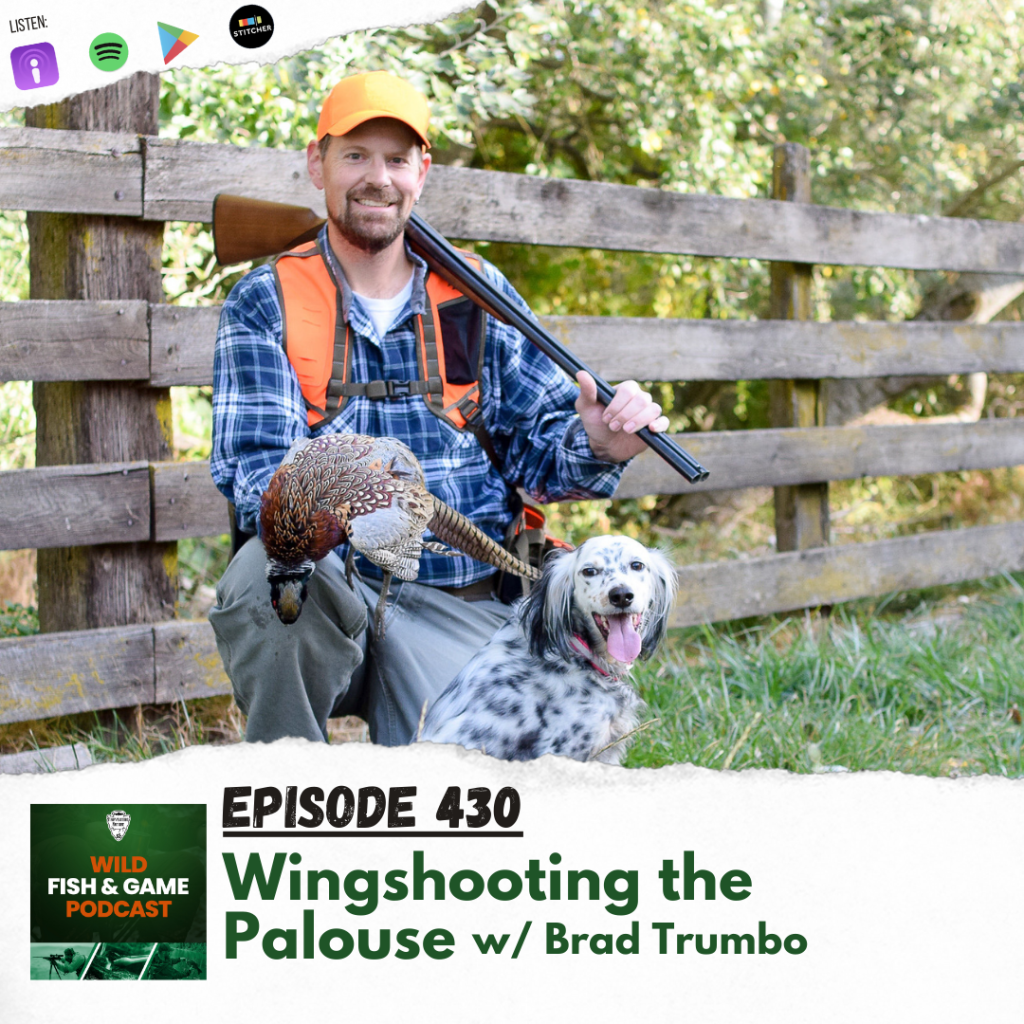
I’ve had the great pleasure to chat with the Crew at Harvesting Nature about Wingshooting the Palouse, and I believe you will enjoy the conversation. Give it a listen on the Wild Fish and Game Podcast.

Wingshooting the Palouse is available at Amazon.com.

Sage Grouse Translocation Reverses Population Decline

Published at Harvesting Nature, November 26th, 2021.

Think you’ve heard it all when it comes to greater sage grouse conservation? Think again. When an icon of the sagebrush ecosystem becomes imperiled, conservation dollars flow to the far corners of habitat and population research to find solutions to species sustainability and persistence.

Mary Meyerpeter and colleagues with the US Geological Survey and Idaho State University are currently studying translocation to stabilize or even grow two declining sage grouse populations on opposite fringes of their North American distribution. The “Bi-State” population on the California-Nevada border was selected as a small, isolated group facing low hatch success and overall decline. A North Dakota population was selected after a suffering a severe West Nile Virus outbreak, reduced the population.  

Wildlife translocation has been a tool in the scientific toolbox longer than the words “science” and “research” have been in existence, and with this tool comes many benefits to imperiled populations. Declining genetic diversity and abundance of reproductive individuals are two challenges recipient populations typically face that may be overcome by translocation. Precisely what Meyerpeter et al. had in mind, coupled with estimating the population-level effects of introducing new individuals to the imperiled populations, and removing individuals from the donor populations.    

From 2017 through 2019, the Bi-State population received 68 adults and 125 chicks from a nearby source population, while the North Dakota population received 137 adults and 66 chicks from an interior Wyoming population. The populations were monitored across the translocation period and continue to be monitored.

Photo by the US Fish and Wildlife Service
Preliminary study results suggest that translocation efforts have been successful for the recipient populations. The Bi-State population increased 160 percent with egg hatch success increasing from 31 percent to 86 percent. Similarly, the North Dakota population increased 188 percent compared to pre-translocation estimates.

The Bi-State donor population declined 31 percent following translocations, which may have been attributed to that population also being relatively small, among other potential factors. The Wyoming donor population showed no change.

Translocation results are considered preliminary until a monitoring period of up to five years has documented population responses, but the results appear promising. Additionally, successful translocation coupled with habitat restoration can perpetuate the species and play a role in range expansion into historic habitats.

Flurries and Tail Feathers Inspire Future Upland Hunters

The Blue Mountain Pheasants Forever Chapter (Chapter) held their annual youth hunt at Clyde Shooting Preserve November 8th. The Chapter-sponsored event is typically held in September during the early Washington Department of Fish and Wildlife-designated youth hunt weekend, but fire danger this year resulted in the September hunt being canceled. A lucky break for this year’s attendees.

An inch of snow blanketed the Walla Walla Valley as folks awoke in preparation for the hunt. Twenty youth attendees and their families arrived from as far as Tri-Cities to attend the coveted event. Kit Lane, owner of Clyde Shooting Preserve, welcomed his guests in fine fashion with a bonfire outside, and a shelter with seating and large fire pit surrounded by a lovely brick hearth, blazing warmly to cut the chill.

Friends and families scattered about the yard, toasting hands and bottoms over the bonfire. Stories and laughter echoed among the buildings, setting a celebratory mood.

Fields were stocked and parties assembled to follow the skilled and stylish canines careening across the white-washed prairie. Snow fell in force as the initial hunters embarked, many first-timers eager to experience what the upland hype is all about.

Chapter volunteer Randy Snyder explains the retrieving basics to a youth hunter following a successful retrieve by his golden retrievers.

Through snowflakes and windchill, pointing dogs struck statuesque poses while flushing dogs encircled, pushing stunningly-plumed fowl skyward. Wily roosters took to wing as pump guns and doubles tracked.

The occasional bird came to hand by means of luck and skill, sometimes both cooperating harmoniously. Retrieves of all kinds, some at length and some nearby, aided young hunters in securing their airborne quarry. And true to the hunt, a number of birds exacted daring escapes into the hills surrounding the canyon bottom as hunters looked in awe and puzzlement.

Eight waves of hunters passed through the golden range. Experienced mentors handled bird dogs, orchestrated hunts and imparted lessons of firearms and shooting safety. All in attendance enjoyed opportunity and real-time coaching to improve accuracy.

Bird hunting is a balance of chaos for the well-seasoned, let alone someone new to working dogs and kicking up a colossal, boisterous, flailing bird capable of reaching 55 miles-per-hour flight speed in seconds.

While some first-timers were unable to connect, their skill across the hunt improved markedly, becoming accustomed to their scatterguns, dog behavior and the adrenaline-pumping rush of an explosion of cackles and tail feathers trailed closely by a flash of driven fur and wagging tails.

A savvy yellow lab retrieves a rooster to hand.

Hunters were all smiles as they parted the fields, eager for the warmth of the truck heater, excitedly recalling the events with a clarity known only to those stricken with the same fiery passion for the hunt. Fortunate hunters selflessly shared their bounty with their unlucky field mates. And talk of next year already on the lips of those eager for another chance.

The Chapter appreciates Kit and Cindy Lane, our membership and the assistance of other volunteer mentors who selflessly sacrificed their day to share the magic of the uplands. Without the support of these fine folks, and the revenue from Chapter fundraiser supporters, this coveted opportunity to inspire the hunters and conservationists of tomorrow would not be possible.

Raising Pheasant from the Ground Up

Sustainable farming practices to benefit wildlife is a topic for discussion in grain capitols across the country. To the farmer, the mention of sustainability may trigger consideration of production and bottom line. To the biologist, thoughts of crop rotation and managed fallow lands provide wildlife food, water and shelter. And to the economist, efficiency and bang-for-the-buck in the form of yield versus effort/acreage sewn would likely provoke a back-of-the-napkin chart explaining the benefits.

So how does one actually define sustainable farming? A combination of all of the above. Sustainable farming includes economics, reducing production acreage to focus on the most productive for maximum yield. The less productive ground can be leased into CRP or to an NGO like Pheasants Forever to manage for wildlife.

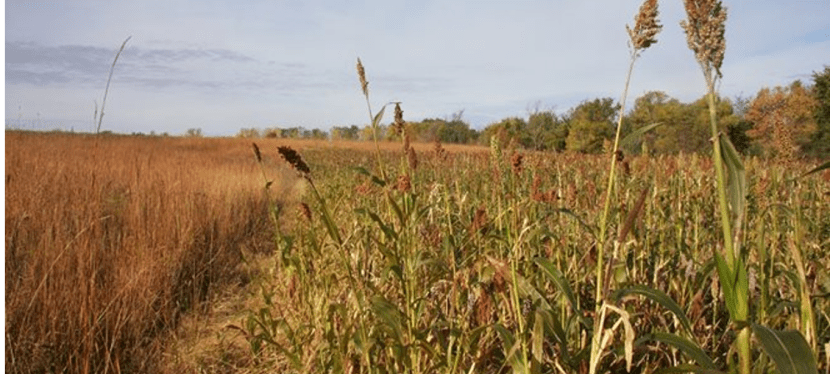
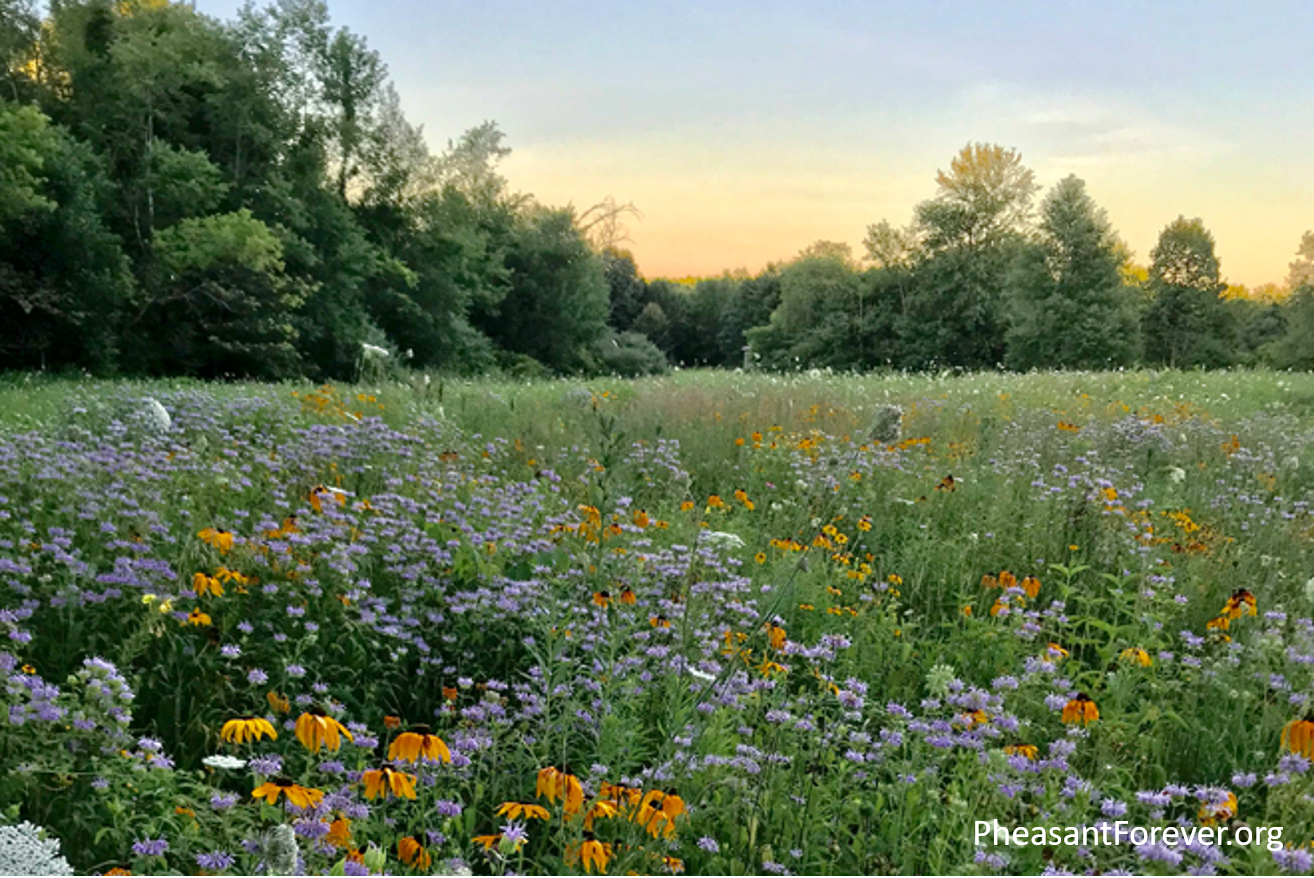
To take it one step further, habitat-minded agriculture may provide a mix of no-till planting and forage and cover crops built into rotation schedules. This permits soil replenishment and works to combat invasive species by providing different plant competitors, insects, and invasive plant treatment options. Forage or cover crops can be sewn alongside winter cover like cattails and other wetland habitats to reduce energy expense and vulnerability critters may experience when seeking food and cover in winter. Pollinators benefit as well.

Picture2

Sounds great, right, but are the benefits actually attainable? Absolutely. Case-studies have proven the benefits to the farmer and wildlife through these sustainable practices. Midwest farms have shown production of preserve-scale wild pheasant through habitat-minded farming practices while maintaining or increasing their bottom line. And who out there would argue that they don’t enjoy wildlife like upland birds? If you answered “no one”, we couldn’t agree more!

If you find this encouraging from any perspective, reach out to your local Pheasants Forever or Quail Forever Chapter. In southeast Washington/northeast Oregon area, contact us at bmpf@bmpf258.com for more information.

Upland Stewardship Begins at Home

What’s the #1 threat to habitat on undeveloped public lands? If you guessed invasive plant species, you get a gold star for the day. Overall, habitat lost to civil development is a critical threat to fish and wildlife, putting tremendous importance on conservation and management of those precious public acres still intact.

Managing public land is important to provide habitat suitable for wildlife species and is accomplished through taxpayer and sportsman’s funds. For federal lands, this means congressional appropriations must be approved for specific geographic areas and funding limits.

While public lands, both state and federal, are at much lower risk of civil development, the economics of habitat management is a major driver in our ability to maintaining high quality habitat, and here is why.

Invasive species are incredibly competitive and successful at overtaking desired native species. With no natural predator controls (i.e. herbivory and parasitism) and an adaptive edge to the climates in which they occur, many species can create monocultures in short order. What’s more is that the increasing cost of invasive species control detracts from government ability to fund general habitat management and enhancement.

Picture2

Once established, eradicating an invasive plant is incredibly difficult and extremely costly, in the billions of dollars nationwide, annually. Our ability to control invasive species on public lands can change dramatically with political leadership. And when natural resources budgets are cut, our ability to effectively maintain habitat is hamstrung.

Early Detection and Rapid Response is the normal mode of operation for habitat managers, but budget cuts cause vulnerability in on-the-ground effectiveness. Labor cuts can reduce the number of employees and hours spent afield performing Early Detection monitoring. Supply cuts can reduce the available tools to implement Rapid Response once invasive species are detected, as well as reduce the overall time or acreage that biologists can treat.

High-quality habitat is not just nice to have for an easy, clean hunt. It’s a must for sustainable upland bird species and hunter opportunity. Its easy to assume that habitat management and controlling invasive species lies in the hands of qualified biologists, but make no mistake, quality habitat starts at home with you, the general public.

20191020_122336

⇑⇑ The seat cover in my Tundra harbors a number of invasive species ⇑⇑

As our talented canines careen across the grasslands searching for sharptails or cut through brush following a running grouse trail, their fur picks up invasive weed seeds that can be easily spread to otherwise weed free areas. Tailgate checks and post-hunt spa treatments (for those of us who own long-haired pups like setters and Munsterlanders)  are necessary to remove to potentially harmful grass awns and bur-like seeds.

Most importantly, uplanders that embark on rooster road trips would be remiss if they failed to clean the nooks and crannies of their bird hunting chariot prior to driving half way across the nation. A single germinated seed from a nasty invader like cheat grass (Bromus tectorum) can quickly threaten native species and impact habitat suitability.

Be sure to clean out the truck bed, pet crates and blankets, truck seats and seat covers, spray down floor mats and vacuum the crevasses that can harbor seeds.

20191020_121840

⇑⇑ Cleaning vests, kennels, truck beds, and interiors is critical ⇑⇑

If your truck cap has a carpet liner, inspect it with scrutiny. Your dog will shake in the truck bed, flinging weed seeds onto the ceiling and anywhere else they may attach, simply waiting to be offloaded in an otherwise clean area 1,000 miles from where they were picked up.

And the cleaning spree should not end with the truck and kennels. Our vests and clothing can trap a terrifying number of seeds. When was the last time you check your hunting vest pockets for seeds? Hundreds of grass seeds can gather in vest pockets as we traverse the prairies. Dog vests can capture a number of species as well, like bur chervil (Anthriscus caucalis), which wreaks havoc on native grasses and even competes with yellow starthistle (Centaurea solstitialis) in the arid west.

20191020_121913a

⇑⇑ A water bottle pocket of my hunting vest captures many seeds and plant debris ⇑⇑

Conservation and habitat management are influenced by each and every one of us. Its your duty as an uplander to exercise your stewardship abilities and battle the spread of invasive species. The future of our public natural resources and habitat depend on it.