Northwest Outdoor Writers Association Gathered in The Dalles, Oregon

The Northwest Outdoor Writers Association (NOWA) held its annual conference Friday, May 2nd through Sunday, May 4th, at the Columbia River Hotel in The Dalles, Oregon. For three days, some of the Northwest’s top outdoor writers, authors, photographers, videographers, and radio and podcast personalities gathered to discuss the future of their industry and craft.

The conference opened with a fine meal at the Portage Grill, followed by a keynote speech by author, poet, and publisher, Rick Steber, who exemplified excellence in storytelling. Rick is not only gifted in his ability to research people and history and share those stories in engaging detail, but the delivery of his many favorite interviews of historical figures (including voice impersonations) was both comical and fascinating.

Image of the twisting historic Oregon Route 30 taken from Rowen Crest with the Columbia River and the rugged Columbia Gorge in the background.

Trumbo captured this image while hiking at dawn on Rowen Crest just south of The Dalles, Oregon.

Over the following days, NOWA members sprinkled across the Columbia River Gorge to experience all The Dalles has to offer, such as the National Neon Sign Museum, hiking among the wildflowers and scrub oaks of the rugged river corridor, visiting ancient petroglyphs at Horsethief Lake, and fishing the spring Chinook salmon rodeo at Washington’s Drano Lake.

When not collecting memories, photographs, and fodder for future publications and videos, the outdoor media professionals gathered to share tips and tricks on improving one’s engagement and reach – facets of “Excellence in Craft”- and share business model ideas and successes. Excellence in Craft presentations included George Krumm, editor of Fish Alaska and Hunt Alaska magazines, who discussed how to land pitches and build relationships with editors. Brad Trumbo shared his rise in the outdoor writing and photography realm and engagement with his readers, thanks to his Llewellin setter bird dogs.

NOWA held its annual Excellence in Craft awards banquet Saturday, May 3rd, where 61 achievements were recognized, ranging from “Column of the Year” to the best outdoor photos, videos and humor pieces. The awards banquet offers an opportunity to see where talented outdoor content creators stand among their peers, provides “street cred” for marketing, and offers a fine payout for those who rank high in many categories. It’s a coveted experience for this highly talented group to share camaraderie with friendly competition.

This year’s Excellence in Craft award winners can be found here: https://nowaoutdoors.com/eic-winners-by-category/.

Black-chinned hummingbird hovering over a burgundy Columbine flower.

Trumbo’s image of a black-chinned hummingbird hovering over Columbine flowers took 1st place in NOWA’s Excellence in Craft “Fauna” photo category.

The weekend closed with NOWA President Troy Rodakowski presiding over Sunday morning’s membership and business meeting. During this meeting, Rodakowski assumed the position of NOWA’s Chairman of the Board of Directors as he passed the gavel to NOWA’s incoming President, Brad Trumbo. 

With the annual conference behind them, NOWA’s new year begins with anticipation of next year’s conference, which is already being planned. Additionally, Trumbo brings new ideas to NOWA’s structure and attempts to engage younger generations as the organization adapts to the evolution of outdoor media.
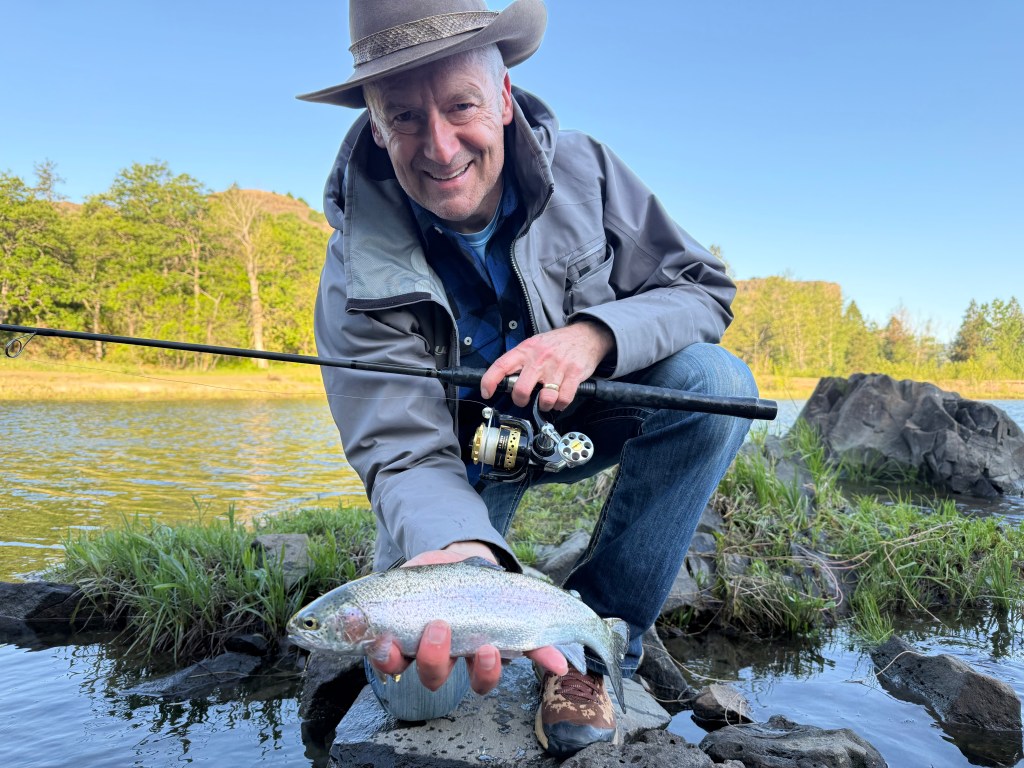
Gary Lewis, award winning author, freelance writer, podcaster, and host of the Frontier Unlimited TV show, found time for trout fishing before the Sunday morning meeting.

If you’re an outdoor content creator living in Oregon, Washington, Idaho, Montana, or BC Canada and want to learn from and contribute to this charismatic and savvy collection of media professionals, email NOWA’s Executive Director, Keith Szafranski, at photogsz@msn.com. Your creativity and energy will be welcomed by this prestigious cadre.

###

            The Northwest Outdoor Writers Association is a society of professional outdoor communicators dedicated to the pursuit of excellence in outdoor media. NOWA strives to further the improvement of professional communications skills and encourage their ethical employment. NOWA also provides a network of professional assistance and support, keeps members informed of news and information pertinent to outdoor activities and industries, and supports the conservation of natural and recreational resources. Visit https://nowaoutdoors.com/ and find us on Instagram @NOWAOutdoors.

Palouse Outdoors – Stay Safe Outdoors with a Satellite Communication System

Published April 4th, 2024, in The Waitsburg Times

Hunting, fishing, and hiking always seemed vanilla to me when it comes to the potential for injury and death. That could be one reason that a passion for the outdoors hit me when I was a child. My brothers chided me for being a “sissy,” and the best escape from the ridicule was avoidance somewhere beneath the trees on the neighboring woodlots.

I began tree-stand hunting for white-tailed deer in my late teens and quickly realized the dangers of the activity. I took the proper precautions with ropes and harnesses and always let someone know when and where I was headed and returning. Aside from that, trail running and mountain biking alone in the Appalachians never appeared dangerous, partially because testing the limits of gravity or intelligence for a thrill never appealed to me. When I moved west and began wilderness hiking and hunting routinely, I realized the dangers in the backcountry, even for the careful and prepared outdoors enthusiast. Middle age likely played a role as well.

Elk and mule deer country is steep, rugged, slippery, and riddled with deadfalls. Add 60-plus pounds of quarters and backstraps to your pack and start back to camp exhausted and sometimes in the dark, and you have a recipe for trips and falls that can lead to impalement on pine branch stubs, torn ligaments and cartilage in knees and shoulders, broken limbs and ribs, and possible tumbles over cliff faces. Navigating all this alone is absurd, yet we’ve all done it and will do it again. All to secure food, experience the beauty and solace of the wilderness, and bestow honor upon the wild life we took to feed our families and memory bank by pursuing them on their terms.

Fortunately, today’s technology offers life safety for average and extreme outdoor enthusiasts via affordable, reliable, and easy-to-use satellite communications devices.

Above are screenshots of the Garmin inReach Messenger device status panel (left), an example of the text message interface (middle), and a weather forecast for a given location (right). This device is user-friendly and works through your smartphone via Bluetooth without a data connection.

Since 2011, Garmin Corporation, among others, has been producing satellite communicators that can summon emergency medical and rescue services through the touch of the “SOS” button using your global position system location coordinates. Should you experience a fall, get lost, or have Mother Nature throw a curveball, location information is transferred through a satellite network to “Garmin Response” in Montgomery, Texas. According to Garmin, “all SOS monitoring, communication, and emergency response coordination are handled at this location.”

A global emergency response system capable of reaching remote locations and saving lives. Sounds great, right? But how does it work?

“Garmin Response maintains a global database of local first responders and emergency services. As soon as an SOS activation is received, the Garmin Response team pulls up the precise location of the SOS alert, a corresponding list of emergency response organizations for that area, and a map overlay of agency jurisdictions. The Garmin Response team contacts the local organization and works with them to dispatch resources to the incident site as necessary[1].”

 In 2023, Garmin coordinated emergency responses for over 10,000 SOS calls made from Garmin devices around the globe. While the number of Garmin subscribers is unknown, a breakdown of activities for which an SOS was transmitted suggests that hiking/backpacking makes up approximately 40 percent. Nearly 20 percent of transmissions are from automobile, motorcycle, and boating accidents. Hunting makes up only about five percent of SOS transmissions.

Overall, more than 70 percent of SOS transmissions could have been made from remote wilderness area situations. Physical injuries caused most SOS transmittals, while medical emergencies, being stranded or stuck (data include offroad vehicle activities), and being physically lost were the other most common emergencies.

“Responses…from New Zealand to Norway to Argentina to Canada were coordinated for plane crashes, grizzly bear encounters, sinking sailboats, skiers in avalanches, stranded divers, injured climbers, and many more1.” 

Over the past few years, getting older, fatter, achier, and spending most of my time outdoors alone were nagging at the back of my mind to get a satellite communicator. I finally pulled the trigger when a remote work trip came up shortly after my wife had major surgery. I settled on the Garmin inReach Messenger because it allows text messaging with friends and family via the Iridium satellite network. During my time in the Idaho mountains, I checked my wife’s health status routinely and could receive immediate notice from her in an emergency.

Whether you’re into extreme mountain sports or leisurely hikes, carrying a satellite communicator makes good sense. With the door to summer recreation opening quickly, now is the time to prepare for your safety while escaping civilization, particularly when going solo. Hopefully, you’ll never need to summon a wilderness rescue, but come wildfire, grizzly attack, or loss of common sense due to hypothermia or elk hunting exertion-induced delirium, carrying a satellite communicator provides a lifeline when faced with the unexpected.

Packing my Garmin inReach Messenger is no different than grabbing my hunting and fishing license – it goes everywhere outdoors with me.


[1] 2023 Garmin inReach® SOS Year in Review

Blue Mountain Pheasants Forever Receives 2022 National Education and Outreach Award

Shared by the Waitsburg Times and the Walla Walla Union Bulletin.

On February 18th, 2023, the Walla Walla, WA-based Blue Mountain Pheasants Forever (BMPF), Chapter #0258, was awarded the 2022 “National Chapter of the Year” for Education and Outreach, having provided 23 conservation-related events and reaching approximately 450 participants in Southeastern Washington – more than any other Pheasants Forever (PF) chapter across the nation.

“Just being nominated for this national award was an honor, but to actually receive it – to stand out among over 800 chapters – left us speechless. Taking a step back to look at what we had accomplished in 2022 illuminated just how hard this Chapter’s volunteers work, and their personal investment and the value they see in Pheasants Forever’s missions.” Said BMPF Advisory Board Chairman, Brad Trumbo.

PF, a Minneapolis, Minnesota-based nonprofit known as “The Habitat Organization”, was founded in 1982 with a focus on wildlife habitat conservation. The organization relies on the grass-roots efforts of individual chapters to raise funds for and execute on-the-ground habitat projects, and recruit and educate members on conservation, firearms safety, and upland hunting. PF is the only conservation nonprofit that leaves one hundred percent of funds raised by chapters within chapter control to be reinvested in the local communities.

BMPF was founded in 1988 and has since completed approximately 75 habitat projects in Walla Walla and Columbia Counties in Washington, and Umatilla County, Oregon. Each year, BMPF sponsors a youth education and shooting program.

In 2022, BMPF started a “Women on the Wing” program to diversify their outreach and encourage more women into upland hunting and conservation. The program was wildly successful in its first year, drawing participants from as far as La Grande, Oregon, and Missoula, Montana.

BMPF is currently completing six local habitat projects and rolling out 2023 program details. To learn more about BMPF, to make a donation, and to get involved with this highly active and effective PF chapter, visit their website at www.bmpf258.org, send an email to bmpf@bmpf258.org, and find them on Facebook and Instagram (@pheasantsforever258).

Tree Removal Benefits Greater Sage Grouse Population Growth

Tree Removal Benefits Greater Sage Grouse Population Growth – Harvesting Nature

Woody plant expansion into shrub and grasslands poses a significant ecosystem issue for multiple uses. In the Great Basin of North America, pinyon–juniper expansion into the sagebrush biome is threatening the greater sage grouse, a sagebrush obligate species, as well as pronghorn, mule deer, and livestock grazing due a major shift in the vegetation community and associated ecosystem components.

According to Brianna Randall of the Sage Grouse Initiative (SGI), “More than one million acres of sagebrush grazing lands in the Great Basin have turned into pinyon-juniper forests in the past two decades alone.”

This is problematic for sage grouse because they avoid landscapes with trees, likely because trees provide raptor perching and nesting habitat. Additionally, trees crowd out and take precious water from perennial grasses, forbs, and other plants that a variety of wildlife rely on, and can effectively reduce habitat carrying capacity and suitability, causing species to relocate.

Protecting and restoring the sagebrush ecosystem is at the forefront of the Natural Recourse Conservation Service (NRCS) mission. Through the NRCS Working Lands for Wildlife program, the SGI was born and includes partnerships with other land management agencies, universities, and landowners. As a collective, these entities work to enhance the sagebrush ecosystem for cooperative wildlife and agricultural uses.

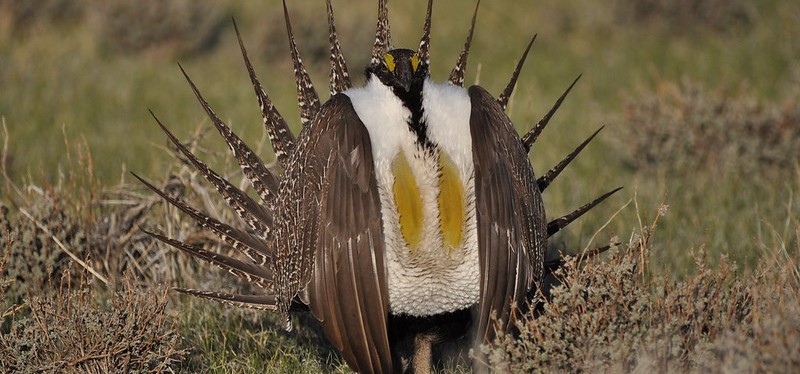
Sage grouse on the lek. (Photo credit USFWS)

Since approximately 2011, a pinyon–juniper removal effort has been underway in the Warner Mountains in south-central Oregon. Concurrently, researchers GPS-tracked 417 hen sage grouse over a 109,000-acre “treatment” area with active tree removal.

Study results published in June (Olsen et al. 2021) show that within the treatment area, sage grouse population growth rates increased approximately 12 percent within five years of tree removal compared to a population within an adjacent 82,000-acre “control” or area with no tree removal. Similarly, a 2017 SGI report identified that 29 percent of tracked hen sage grouse in Oregon returned to restored nesting habitats within four years post-restoration. Encouraging results for the future of sage grouse and the sagebrush ecosystem.

The rarity in seeing such positive population results from habitat management was summarized appropriately by Olsen et al. (2021).

“Examples of positive, population-level responses to habitat management are exceptionally rare for terrestrial vertebrates, and this study provides promising evidence of active management that can be implemented to aid recovery of an imperiled species and biome.”  

References

Olsen, AC., JP Severson, LD Maestas, DE Naugle, JT Smith, JD Tack, KH Yates, and CA Hagen. 2021. Reversing tree expansion in sagebrush steppe yields population-level benefit for imperiled grouse. Ecosphere https://doi.org/10.1002/ecs2.3551.

Sage Grouse Initiative. 2017. Conifer Removal Boosts Sage Grouse Success. Science to Solutions Series Number 12. Conifer Removal Boosts Sage Grouse Success – Sage Grouse Initiative

WDFW takes Important Step in Post-fire Habitat Recovery

Wildfires that tortured the Pacific Northwest in September did a number on the Washington Department of Fish and Wildlife’s (WDFW) Swanson Lakes Wildlife Area (Swanson Lakes), located about 10 miles south of the town of Creston.

Swanson Lakes is a 21,000-acre tract of native grasslands nestled among the channeled scablands of the Columbia Plateau. Shrub-steppe and riparian/wetlands comprise the dominant habitats and much of the area is rangeland, with some old Conservation Reserve Program fields. The undulating landscape is characterized by numerous pothole and rim rock lakes and one intermittent stream.

Z Lake in the Swanson Lakes Wildlife Area is one example of the unique channeled scablands and shrubby habitat. Photo courtesy of WDFW.

In western habitats, wildfire threatens native vegetation in two ways. First, given our rangeland’s generally unnatural fire cycles from fire management and encroaching invasive species, wildfires often burn much hotter than they would in pristine habitats. Fires that are too hot scorch the seed bank and possibly the underground root structure of native shrubs like sagebrush, damaging the plant’s potential to regenerate. Second, invasive weeds are incredibly prolific and competitive. In the case of the earth being blackened down to bare soil, weeds can quickly flourish, outcompeting native plants, often by simply covering the area, effectively shading out the native species.

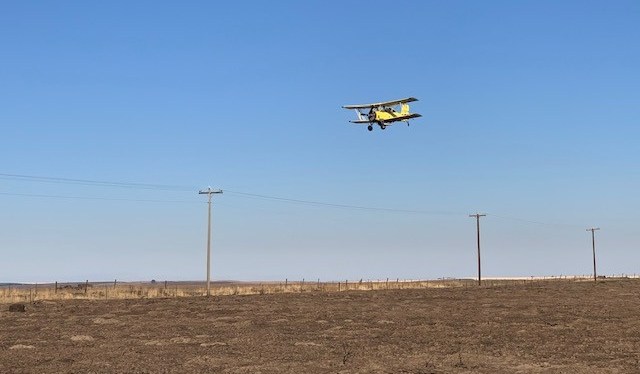
Fortunately, WDFW was poised to respond, leveraging funds in cooperation with the Bureau of Land Management (BLM) to quickly apply native grass seed mix to the charred Swanson Lakes landscape. Aerial seed drops covered about 930 acres on October 22nd, scattering two varieties of bluebunch wheatgrass, Idaho fescue, Sandberg bluegrass, and prairie dune grass across Swanson Lakes and a portion of adjacent BLM lands, said Mike Finch, WDFW Swanson Lakes Wildlife Area Assistant Manager.

Fall is not the ideal season to sow grasses, but the timing could not have been better. The WDFW and BLM made the seed drops in October to ensure native seeds were available to germinate on the exposed soil ahead of any invasive species seeds. Additionally, wet snow that fell October 23rd and 24th worked well to soak the seed into the soil surface, increasing the likelihood of establishment through good seed-to-soil contact. The WDFW plans to return with machinery in drier conditions to scratch the seeds slightly deeper into the soil surface.

Finch mentioned that Swanson Lakes was one of three areas receiving fall seed drops. The areas were prioritized for immediate reseeding due to their deeper soils, being more likely to establish and sustain healthy native grasses by allowing roots to grow down into moist soils for good summer survival. Understanding site conditions and prioritizing restoration efforts is important for project success and the best use of resources, particularly with the cost of native grass seed as high as $200 per acre, plus application time.

Native grass seed being dropped in Swanson Lakes Wildlife Area, October 22nd. Photo courtesy of Mike Finch, WDFW.

Native shrub-steppe communities are a critical part of the ecosystem in the arid west, providing food and shelter for a wide variety of wildlife. The sharp-tailed grouse, for example, is an iconic western prairie grouse species that thrives in shrub-steppe habitat. Precisely why maintaining quality native habitat in Swanson Lakes is of critical importance. The area was acquired by the Bonneville Power Administration, primarily as a wildlife mitigation project for Columbian sharp-tailed grouse, a state “threatened” species.

By leveraging funding and relationships with the BLM, and making smart decisions on the use of available resources, WDFW can sustain unique and important shrub-steppe habitat areas like Swanson Lakes to benefit wildlife and the public user well into the future.

Raising Pheasant from the Ground Up

Sustainable farming practices to benefit wildlife is a topic for discussion in grain capitols across the country. To the farmer, the mention of sustainability may trigger consideration of production and bottom line. To the biologist, thoughts of crop rotation and managed fallow lands provide wildlife food, water and shelter. And to the economist, efficiency and bang-for-the-buck in the form of yield versus effort/acreage sewn would likely provoke a back-of-the-napkin chart explaining the benefits.

So how does one actually define sustainable farming? A combination of all of the above. Sustainable farming includes economics, reducing production acreage to focus on the most productive for maximum yield. The less productive ground can be leased into CRP or to an NGO like Pheasants Forever to manage for wildlife.

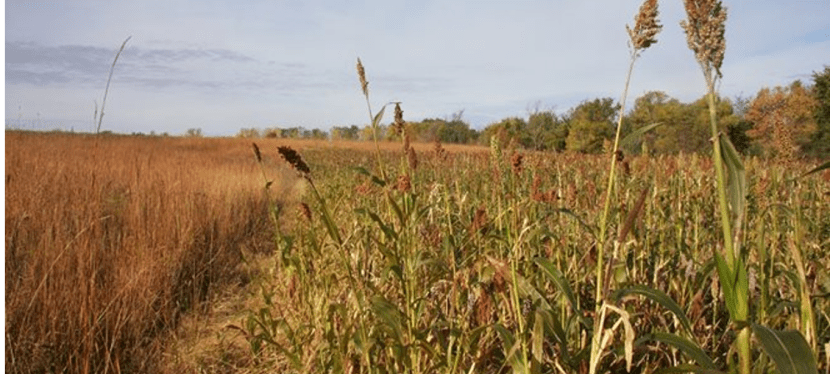
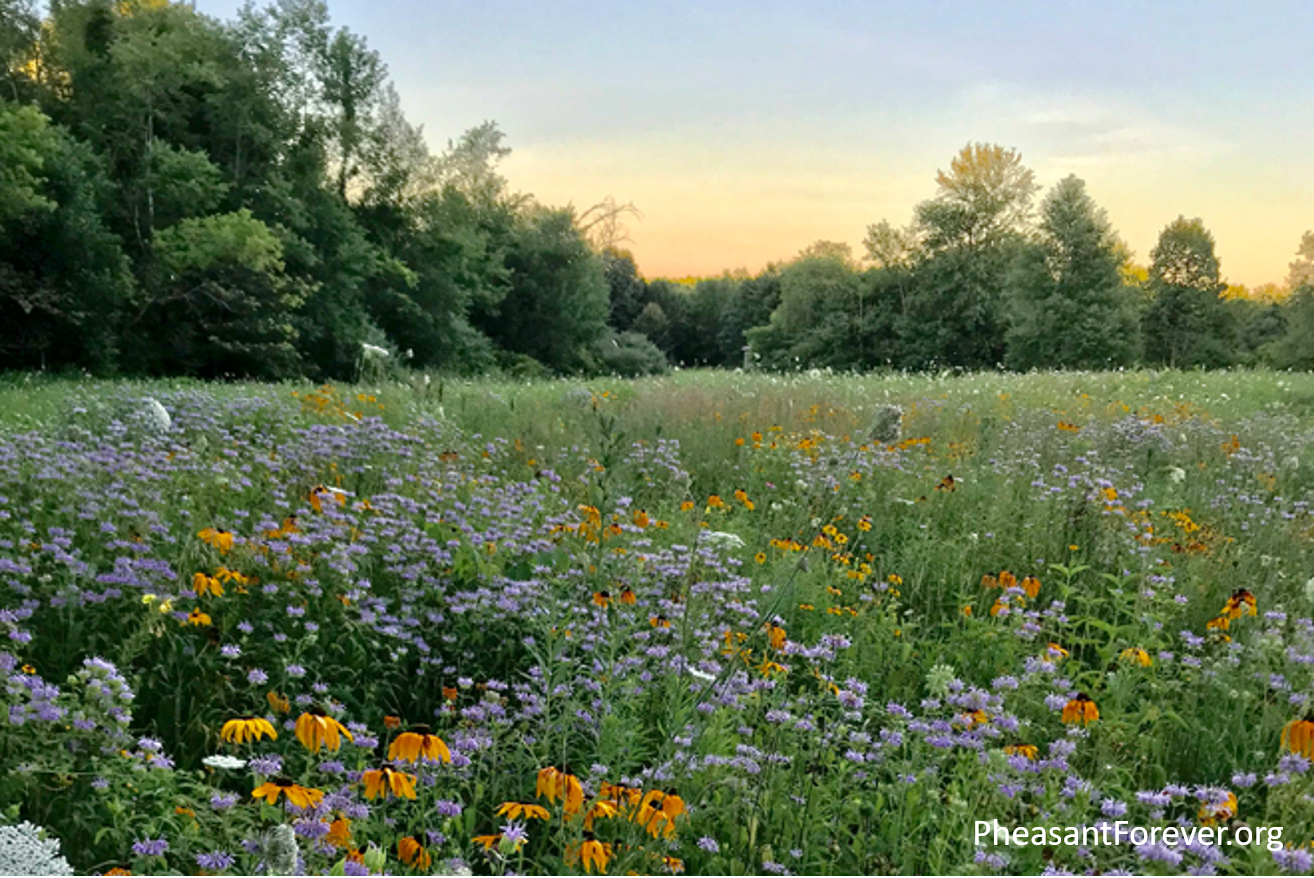
To take it one step further, habitat-minded agriculture may provide a mix of no-till planting and forage and cover crops built into rotation schedules. This permits soil replenishment and works to combat invasive species by providing different plant competitors, insects, and invasive plant treatment options. Forage or cover crops can be sewn alongside winter cover like cattails and other wetland habitats to reduce energy expense and vulnerability critters may experience when seeking food and cover in winter. Pollinators benefit as well.

Picture2

Sounds great, right, but are the benefits actually attainable? Absolutely. Case-studies have proven the benefits to the farmer and wildlife through these sustainable practices. Midwest farms have shown production of preserve-scale wild pheasant through habitat-minded farming practices while maintaining or increasing their bottom line. And who out there would argue that they don’t enjoy wildlife like upland birds? If you answered “no one”, we couldn’t agree more!

If you find this encouraging from any perspective, reach out to your local Pheasants Forever or Quail Forever Chapter. In southeast Washington/northeast Oregon area, contact us at bmpf@bmpf258.com for more information.

Upland Stewardship Begins at Home

What’s the #1 threat to habitat on undeveloped public lands? If you guessed invasive plant species, you get a gold star for the day. Overall, habitat lost to civil development is a critical threat to fish and wildlife, putting tremendous importance on conservation and management of those precious public acres still intact.

Managing public land is important to provide habitat suitable for wildlife species and is accomplished through taxpayer and sportsman’s funds. For federal lands, this means congressional appropriations must be approved for specific geographic areas and funding limits.

While public lands, both state and federal, are at much lower risk of civil development, the economics of habitat management is a major driver in our ability to maintaining high quality habitat, and here is why.

Invasive species are incredibly competitive and successful at overtaking desired native species. With no natural predator controls (i.e. herbivory and parasitism) and an adaptive edge to the climates in which they occur, many species can create monocultures in short order. What’s more is that the increasing cost of invasive species control detracts from government ability to fund general habitat management and enhancement.

Picture2

Once established, eradicating an invasive plant is incredibly difficult and extremely costly, in the billions of dollars nationwide, annually. Our ability to control invasive species on public lands can change dramatically with political leadership. And when natural resources budgets are cut, our ability to effectively maintain habitat is hamstrung.

Early Detection and Rapid Response is the normal mode of operation for habitat managers, but budget cuts cause vulnerability in on-the-ground effectiveness. Labor cuts can reduce the number of employees and hours spent afield performing Early Detection monitoring. Supply cuts can reduce the available tools to implement Rapid Response once invasive species are detected, as well as reduce the overall time or acreage that biologists can treat.

High-quality habitat is not just nice to have for an easy, clean hunt. It’s a must for sustainable upland bird species and hunter opportunity. Its easy to assume that habitat management and controlling invasive species lies in the hands of qualified biologists, but make no mistake, quality habitat starts at home with you, the general public.

20191020_122336

⇑⇑ The seat cover in my Tundra harbors a number of invasive species ⇑⇑

As our talented canines careen across the grasslands searching for sharptails or cut through brush following a running grouse trail, their fur picks up invasive weed seeds that can be easily spread to otherwise weed free areas. Tailgate checks and post-hunt spa treatments (for those of us who own long-haired pups like setters and Munsterlanders)  are necessary to remove to potentially harmful grass awns and bur-like seeds.

Most importantly, uplanders that embark on rooster road trips would be remiss if they failed to clean the nooks and crannies of their bird hunting chariot prior to driving half way across the nation. A single germinated seed from a nasty invader like cheat grass (Bromus tectorum) can quickly threaten native species and impact habitat suitability.

Be sure to clean out the truck bed, pet crates and blankets, truck seats and seat covers, spray down floor mats and vacuum the crevasses that can harbor seeds.

20191020_121840

⇑⇑ Cleaning vests, kennels, truck beds, and interiors is critical ⇑⇑

If your truck cap has a carpet liner, inspect it with scrutiny. Your dog will shake in the truck bed, flinging weed seeds onto the ceiling and anywhere else they may attach, simply waiting to be offloaded in an otherwise clean area 1,000 miles from where they were picked up.

And the cleaning spree should not end with the truck and kennels. Our vests and clothing can trap a terrifying number of seeds. When was the last time you check your hunting vest pockets for seeds? Hundreds of grass seeds can gather in vest pockets as we traverse the prairies. Dog vests can capture a number of species as well, like bur chervil (Anthriscus caucalis), which wreaks havoc on native grasses and even competes with yellow starthistle (Centaurea solstitialis) in the arid west.

20191020_121913a

⇑⇑ A water bottle pocket of my hunting vest captures many seeds and plant debris ⇑⇑

Conservation and habitat management are influenced by each and every one of us. Its your duty as an uplander to exercise your stewardship abilities and battle the spread of invasive species. The future of our public natural resources and habitat depend on it.